
Where can you see and hear Belgian jazzmen/women this summer? In Belgium! More precisely, in the south of the country, a torrid south in these summer heatwaves: at the Gaume Jazz Festival, which takes place at the beginning of August for the forty-first time, in the aptly named little village of Rossignol (Nightingale in English).
Not that Gaume jazz is particularly chauvinistic, but the Belgian scene is so rich that it’s hard to resist the urge to represent it with dignity, especially since it’s not France (to name but one) that should be counted on to program Belgian musicians, especially in summer.
As a result, out of the 26 concerts in this edition, which includes fifteen Belgian and eleven foreign productions, a total of twelve nationalities can be found among the hundred or so musicians present.
Friday 08/08
And it’s pianist Olivier Collette‘s Heptone Colours who opens the ball with a septet featuring original instrumentation: two of the blowers alternate bass flute, C flute, soprano and alto sax for one, bass clarinet and tenor sax for the other.
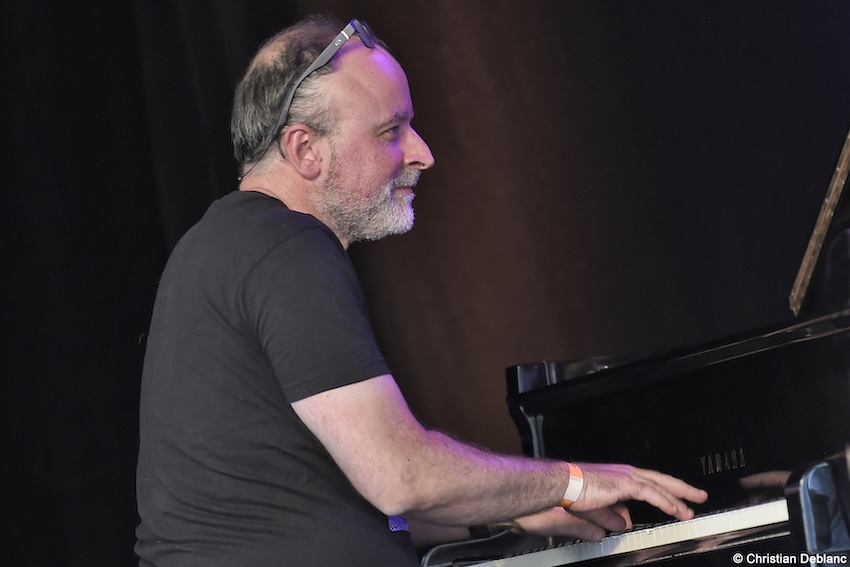
The repertoire is equally varied, including such standards as “Nature Boy”, the Beatles’ “Blackbird” and a Jaco Pastorius theme.
This highly colorful music, boosted by a powerful rhythm section and peppered with inventive solos, makes an excellent aperitif for this festival.
The music of Tom Bourgeois‘s sextet is much more abstract, but just as colorful: the leader’s reeds (soprano sax, tenor sax, bass clarinet) are, along with Vincent Courtois‘s cello, the main soloists, and Veronika Harksa‘s voice is also featured.
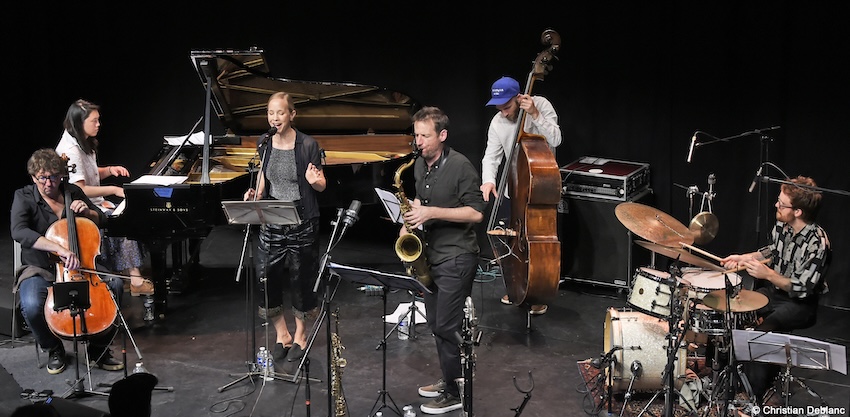
The compositions, by Bourgeois, are partly inspired by themes by classical composer Lili Boulanger. This is highly written, atmospheric music of great intensity, where the group sound predominates over the short solos.
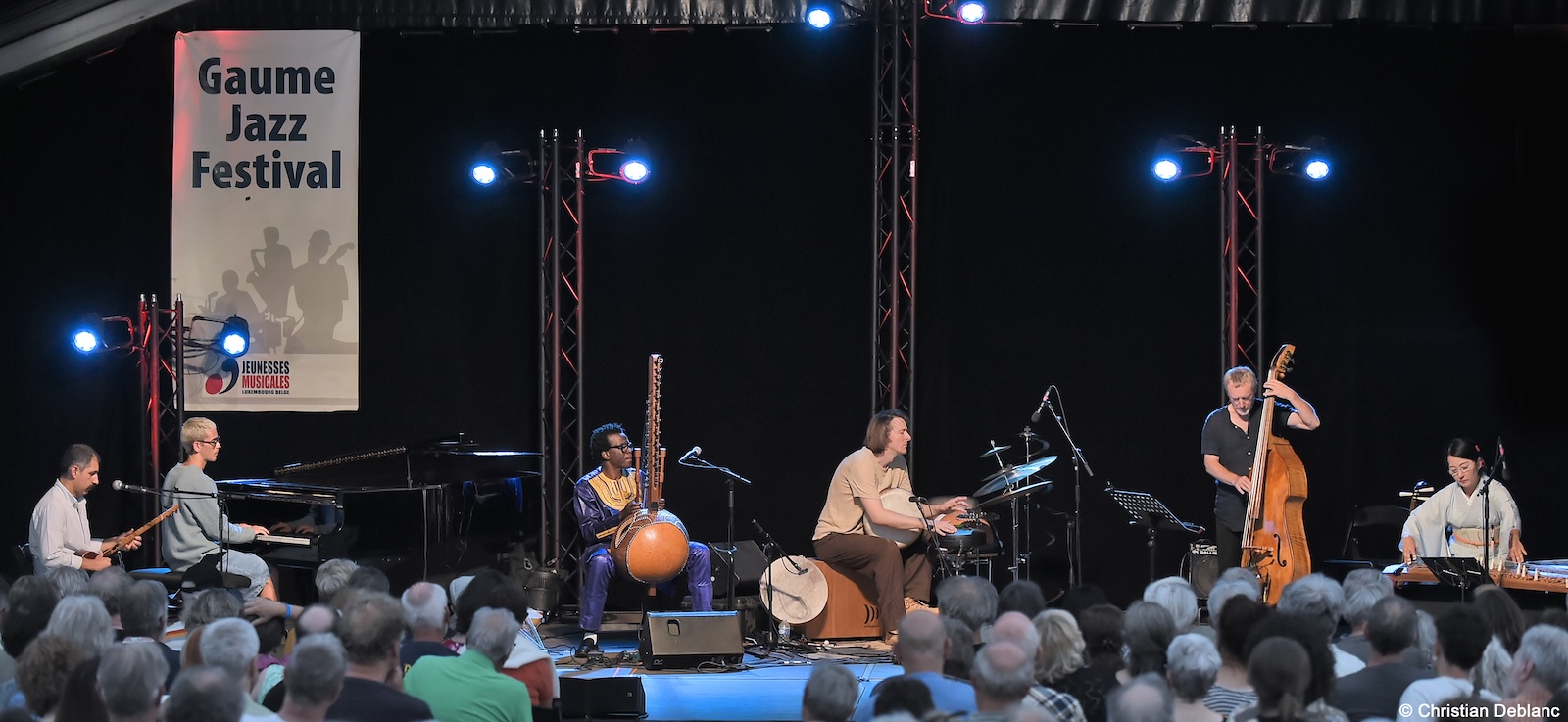
The Auster Loo Collective is a synthesis of world music, featuring a Japanese koto, a Malian kora, flutes, hand percussion, piano and double bass. Several instrumentalists double up on vocals, and leader and percussionist Simon Leleux‘s compositions oscillate between meditative moods and trance-like moments. All the more reason to delight the big top’s packed audience.
And it’s under this same big top that the evening comes to a close with the Black Lives group, led by electric bassist and double bassist Reggie Washington: a multi-faceted, multi-national group that brings together a broad spectrum of the world’s black music.
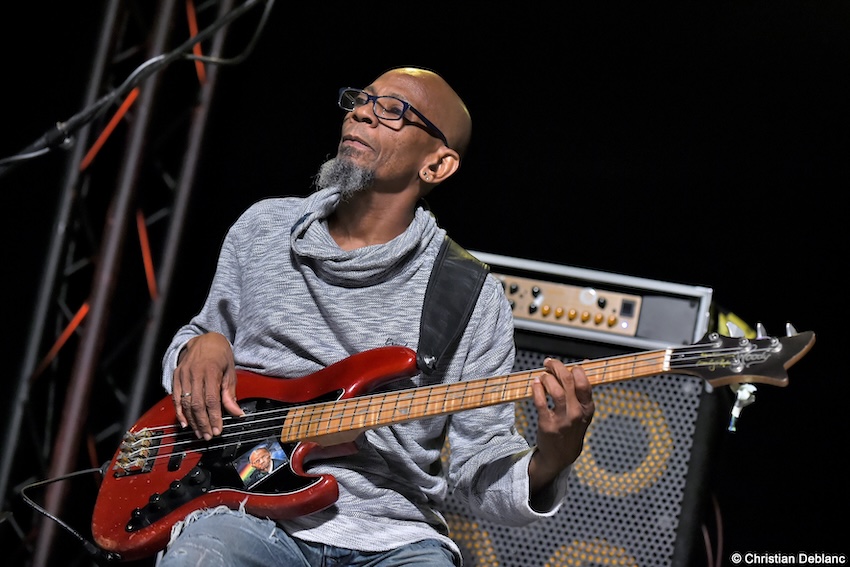
A huge sound where funk, hip hop, jazz and soul rub shoulders in a groovy, abundant melting pot.
Sharrif Simmons‘ spoken word, DJ Grazzhoppa‘s turntables, the inspired solos of Pierrick Pédron‘s alto sax, David Gilmore‘s guitar, Grégory Privat‘s piano and the soulful vocals of Catherine Russell and Georgia Heersbuild up this swaying music. It’s hard to resist the frenzied rhythms, bewitching voices boosted by Washington, percussionist Sonny Troupé and drummer Gene Lake.
A rousing finale to the first evening of the Gaume Jazz Festival.
Saturday 08/09
I had already noticed Belgium-based Tunisian pianist Wajdi Riahi, with the Aleph Quintet, with whom he performed at Gaume Jazz 2024, a group whose CD I also reviewed here.
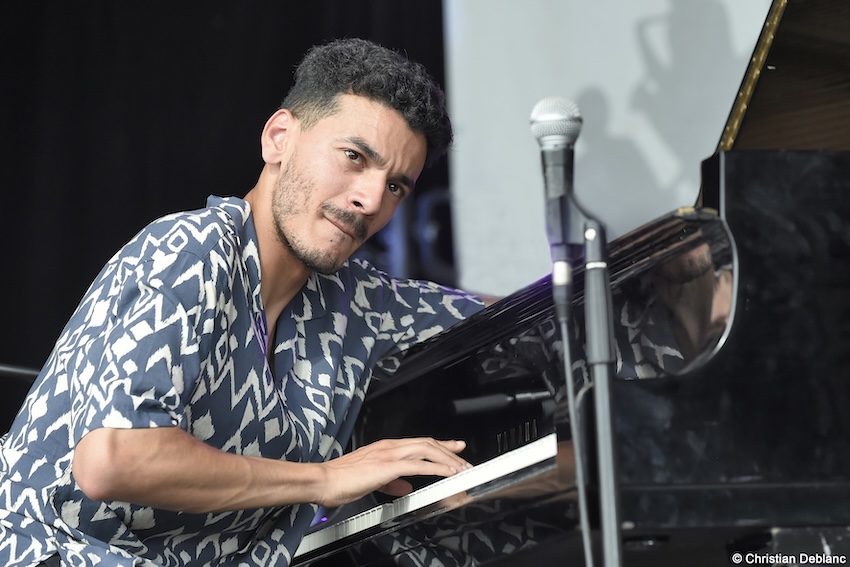
This summer, it’s as a trio — with Basile Rahola on double bass and Pierre Hurty on drums — that he performs under the big top, and what strikes you right away is the pianist’s subtle touch and sense of space, accompanied with finesse by the rhythmic pair.
This is music of great gentleness, but which also knows how to raise the tension that unfolds under the fingers of the three men, whose understanding is obvious.
The piano phrasing is eminently fluid, alternating long melodic lines in the right hand with syncopated chords skillfully sprinkled throughout, weaving a harmonic web of great richness. At times sung and tinged with oriental influences, the repertoire is original and from the pen of the leader, who succeeds magnificently in combining jazz and Maghrebian culture, giving his trio an original coloration that sets it apart from the multitude of formations of this type.
Belgian pianist Eve Beuvens offers us a completely different atmosphere, if only through the composition of her trio, completed by the double bass of Lennart Heyndels and the voice of Lynn Cassiers.
An intimate vision that leaves plenty of room for both silence and electronics. Personally, I’m not very receptive to this rather arid aesthetic, but there’s no denying its originality.
There’s no piano in the Määk quintet, one of Belgium’s leading contemporary jazz groups.
Two saxophones (Grégoire Tirtiaux and Sylvain Debaisieux), trumpet (Laurent Blondiau), tuba (Michel Massot) and drums (Samuel Ber) offer open ears a palette of innovative sounds and rhythms. It’s a highly colorful, festive and noisy music that gives pride of place to humor and virtuosity that these five veterans of Belgian jazz offer us.
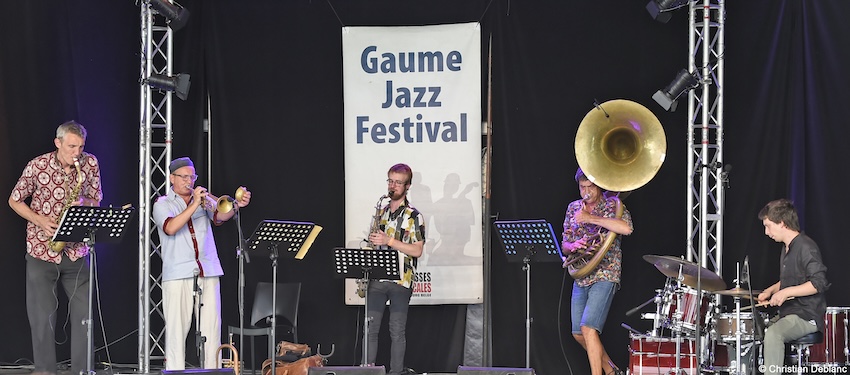
A jazz that offers no room for platitude and whose musicians are both high-level soloists and experienced in a collective practice where the rigor and freedom of a sort of mini brass band mingle.
French-Syrian flutist and singer Naïssam Jalal‘s music is inspired by the landscapes and spirituality of northern India. Although far removed from jazz, Leonardo Montana‘s piano and Zaza Desiderio‘s drums maintain a ternary pulse and Western harmonies, and the leader’s flute is not to be outdone in its lively solos.
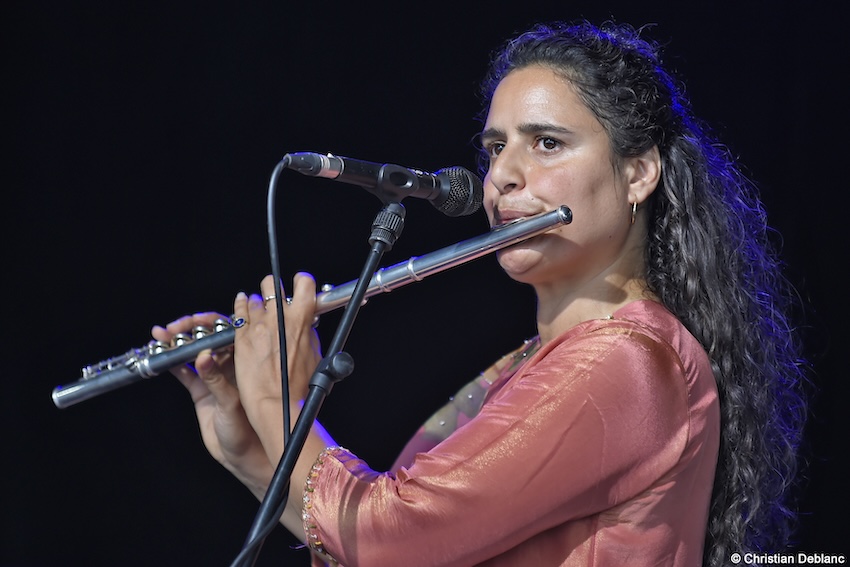
As for her voice, powerful and full of nuances, it cannot leave anyone indifferent. All in all, it’s a music full of feeling and shimmering contours that holds the big top’s numerous audience under its spell.
In a municipal hall a little way from the main festival venues, a duo unknown to most spectators was performing, but it was a full house because of the curiosity it aroused. And the large audience was far from disappointed.
The duo of French saxophonist Frank Wolf and Japanese koto player Mieko Miyazaki is first and foremost a meeting of two distinctive sounds, and as far as the blower is concerned, it’s the soprano sax that marries best with the arpeggios of its partner. The koto has a sumptuous sound, ranging from the softest to the most roaring, and a phrasing of great diversity, sometimes close to rock.
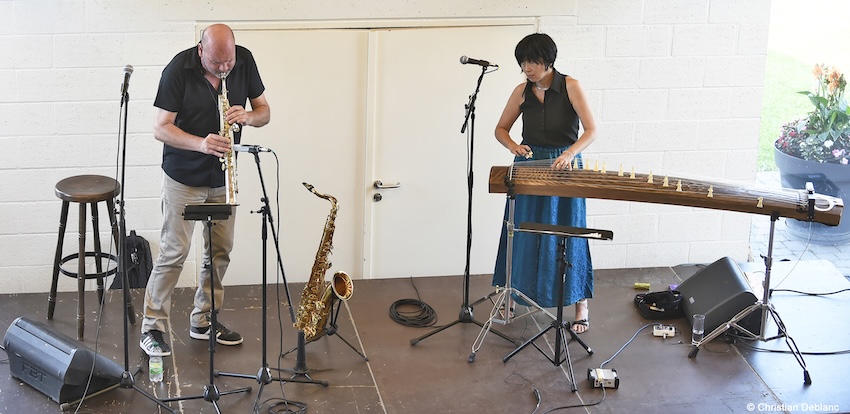
The sax, for its part, deploys a fruity timbre and a phrasing of great fluidity. The repertoire is eclectic and unexpected: original compositions – including a magnificent seven-beat theme – an Alsatian tune by Roger Siffer with Celtic accents, and a fine rendition of Léo Ferré’s “Avec le Temps” as an encore.
A highly original duo, both in terms of instrumentation and repertoire, and without doubt the most interesting group at this part of the festival.
The big top is packed to the rafters for China Moses.
Not surprising, since vocal jazz is the best-selling branch of jazz.
So, what can we say about this singer, who does everything we’d expect of a “classic” vocalist, but brings nothing new to the genre, and falls well short of younger vocalists such as Cécile McLorin or Samara Joy?
That she’s an expert communicator who knows how to win over her audience, to whom she addresses herself abundantly in French, in the tradition of her mother Dee Dee Bridgewater. That if you accept her vision of jazz, there’s not much to reproach her for. But if you like the great voices of jazz, she’s far from being one of the most outstanding. Close the ban.
After several groups with their sights set on world music, it’s a welcome change to discover Ndiaz, a group with an aesthetic rooted in a regional idiom: Breton music.
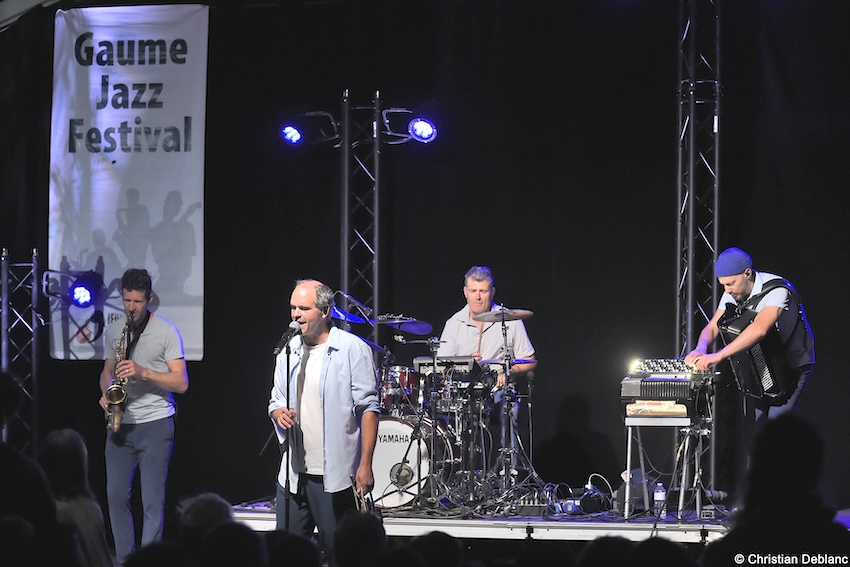
And an idiom revisited in an innovative way, with a sound and energy akin to rock. And the audience in the big top makes no mistake, with several groups of people on their feet and dancing. The instrumentation is original: an alto saxophone (Thimotée Le Bour), a trumpet – which he occasionally swaps for a bagpipe – (Youn Kamm), no bass but an accordion (Yann Le Corre) and drums (Jérôme Kerihuel).
The three melodic voices make for a big sound, with a thick groove that leaves no one indifferent.
Solos are rare, as the group sound prevails, and the melodic lines, willingly repetitive and with traditional accents, are boosted by the rhythmic thunder of powerful drums. A particularly invigorating and exciting way to round off the second evening of the Gaume Jazz Festival.
Sunday 10/08
Part of Sunday afternoon was devoted to some young Flemish bands, as part of a partnership between Gaume Jazz and the Leuven Festival.
It’s true that it’s not always easy for Flemish bands to make a name for themselves in Wallonia, or for Walloon bands to play in Flanders.
Of the three Flemish groups invited, Elis Floreen‘s quintet is particularly noteworthy for its swaying, electric-pop-tinged music, in which the singer’s high, intense voice takes center stage.
As for trumpeter Sam Vloemans‘ Bord du Nord quartet, it skilfully blends a variety of influences (from tango to klezmer to jazz), and its atypical instrumentation (no drums) is a large part of its charm. Each instrument – bass and piano as well as trumpet and accordion – can take on a melodic role in turn on the upbeat tunes.
Belgian clarinettist Aurélie Charneux alternated between a trio with bass and drums, a quintet with Eve Beuvens‘ piano and Marine Horbaczeski‘s cello, and a trio with the latter two.
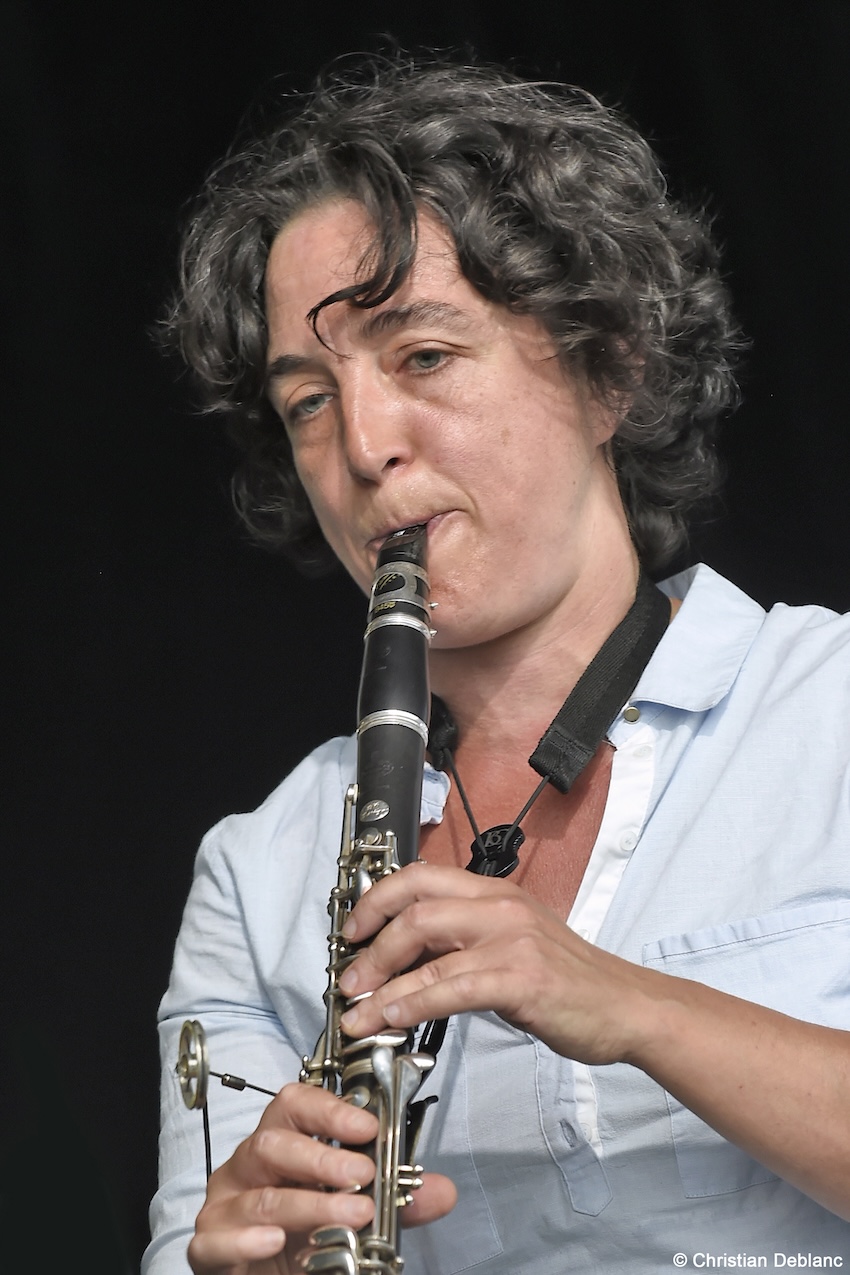
The first trio features a warm sound on both bass and upright clarinet, with themes that often have a Balkan influence. The interplay is solid, with a warmly woody double bass (Nicolas Puma) and a drummer (Simon Leleux) who sometimes leaves his set for hand percussion, in which he excels.
In the quintet, the music takes on a more meditative or dance-like quality, with the sounds of the two guests adding a welcome color. As for the second trio, it offers more repetitive music, with all three musicians playing inspired solos.
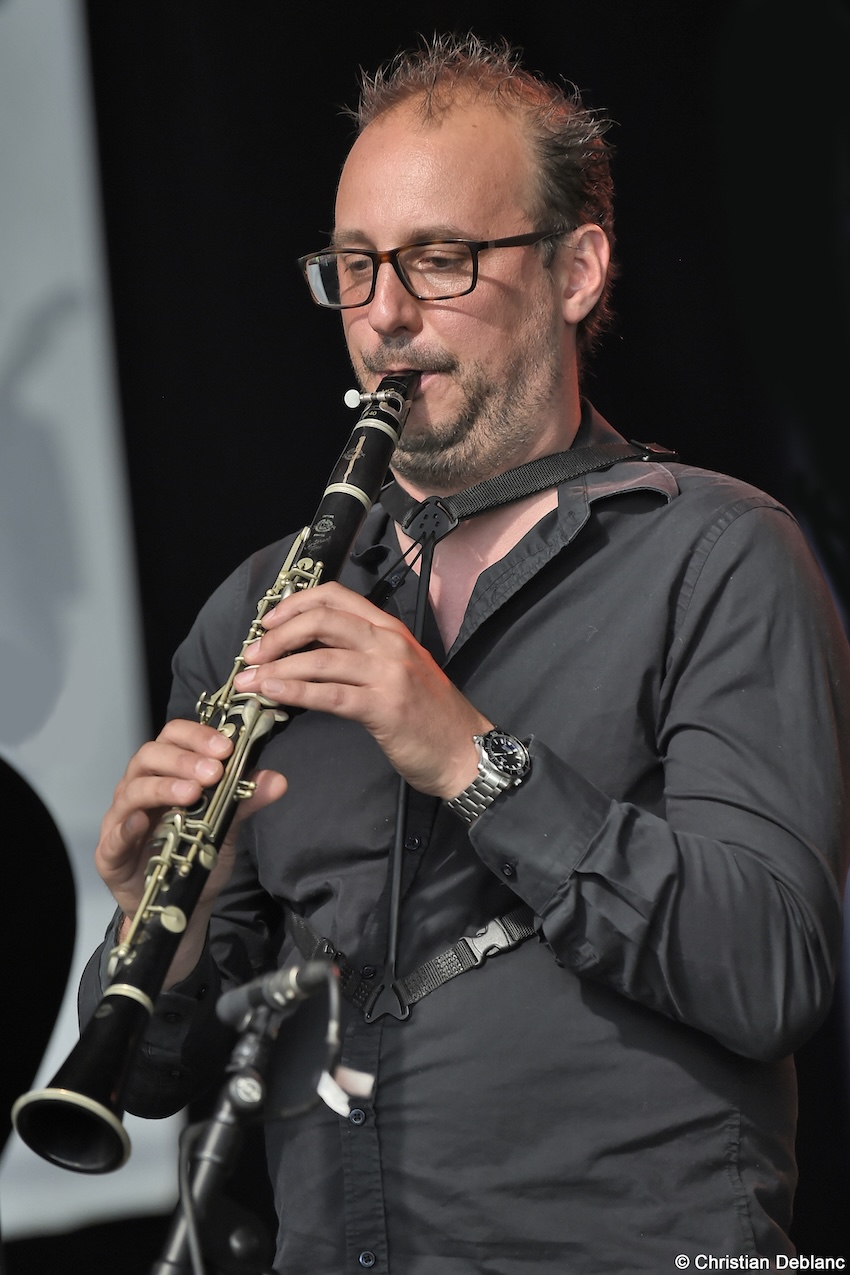
Another clarinet was in the spotlight on Sunday: that of Jean-François Foliez, whose inspiration is more Mediterranean than Balkan.
Each member of the Foliez Amato quartet has a very personal sound: Emeline Planchar has a very romantic approach to the piano. André Klénes‘s gentle double bass is a perfect match for Stéphan Pougin‘s discreet, abundant drums, which can also become more powerful and authoritarian, taking the group down steeper paths. As for the leader, he displays a lyricism full of nuances, a sumptuous woody timbre and a phrasing of great limpidity, which worked wonders in a lively duet with the piano.
The music of Swiss quartet Mohs is both minimalist and densely sonorous.
Zacharie Ksyk‘s trumpet and Erwan Valazza‘s guitar are the main melodic voices, tracing lines of great fluidity, while Gaspard Colin‘s electric bass and Nathan Vandenbulcke‘s drums provide robust, vigorous accompaniment.
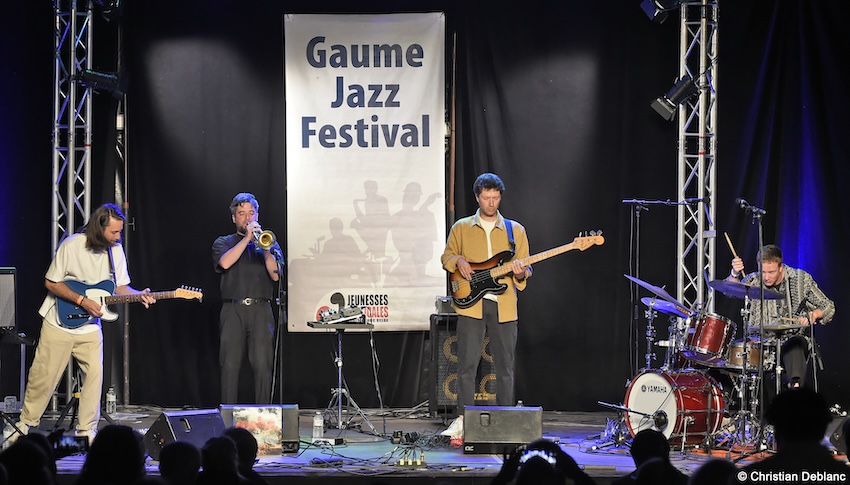
It’s a pleasure to follow their journey, as they have a knack for creating dreamlike atmospheres that are punctuated here and there by a few throbbing electronic loops. The group’s sound oscillates between a dreamy softness and a more brutal tone, but in all cases it’s the concern to shape a collective sound of great sincerity that predominates.
Stéphane Galland‘s Rhythm Hunters rounded off this year’s Gaume Jazz Festival in style.
Best known as the drummer of the Aka Moon trio, Galland has been a key figure in Belgian and European jazz for several decades.
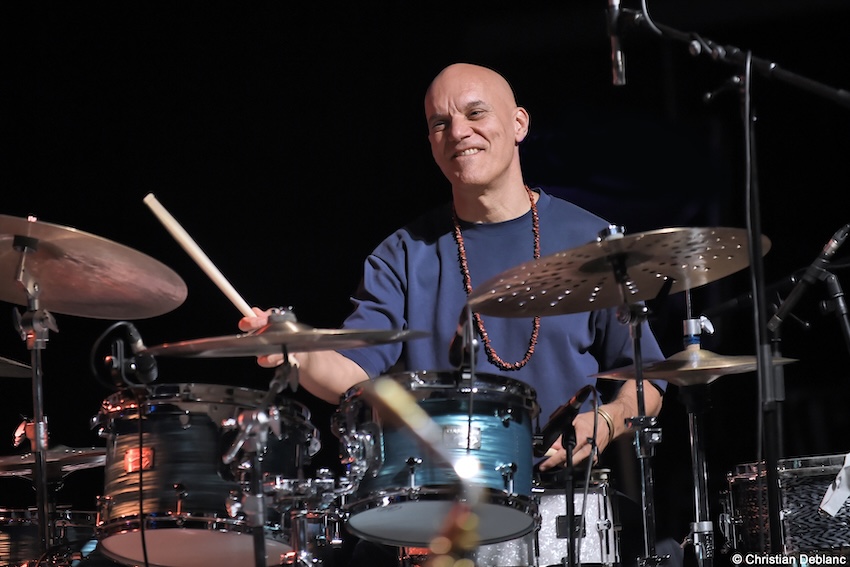
The group he has been leading for several years is a magnificent sextet featuring Wajdi Riahi on piano, three blowers (two saxes and a trumpet) and Louise van den Heuvel‘s electric bass. The incandescent polyrhythm of the drummer-leader irrigates themes with generous harmonies, over which the blowers, piano and bass take it in turns to play lively solos.
This is music of great generosity, dense and abundant, and we never tire of applauding its enthusiastic evolutions.
This group of musicians from various nationalities was an excellent conclusion to a festival that had allowed us to hear a variety of voices from several continents. A skillful and pertinent blend concocted by the indefatigable Jean-Pierre Bissot, creator and director of the festival for four decades.
©All Photos Christian Deblanc







RECENT COMMENTS