
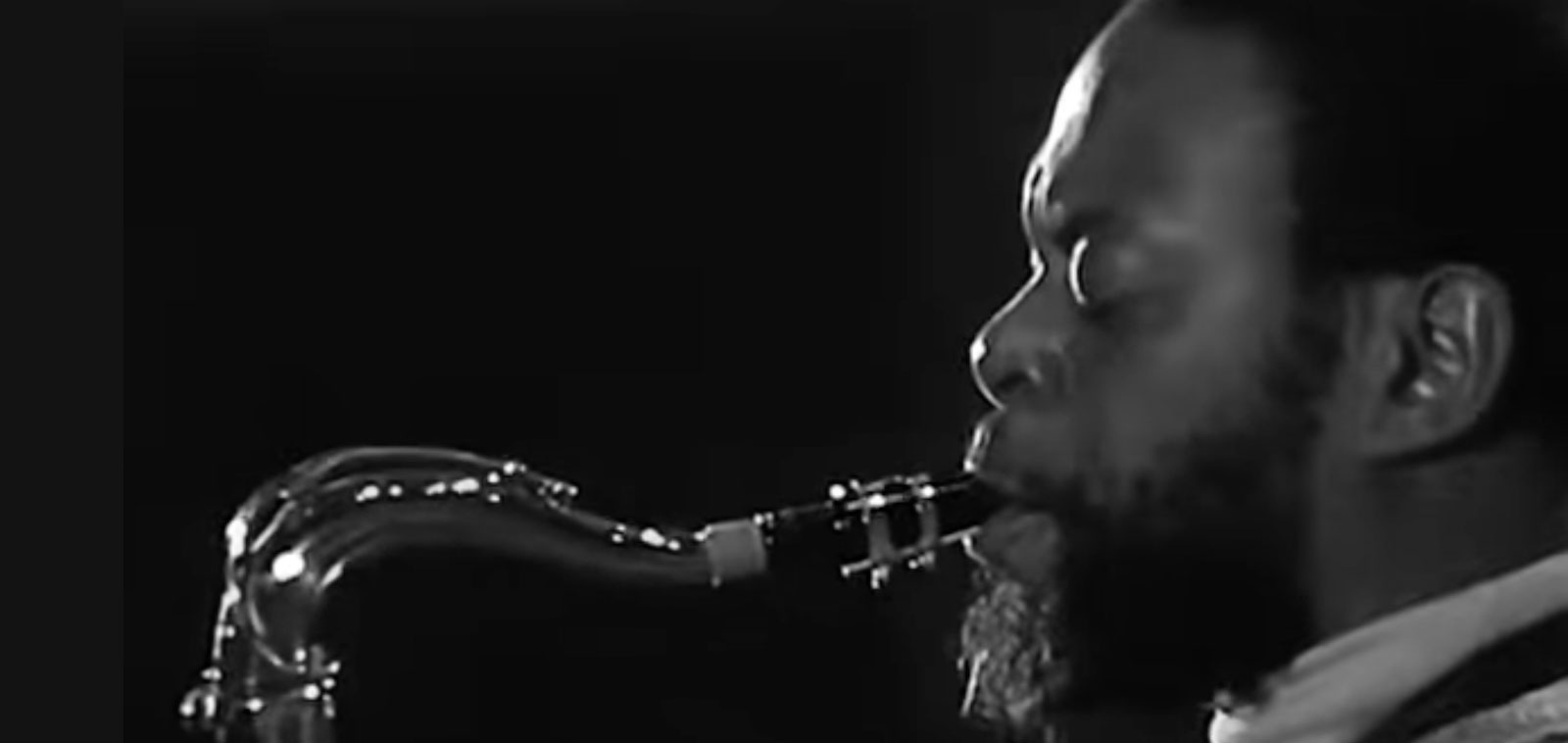
Today, it is widely accepted by the majority of the general jazz-loving public—those who favor vocal jazz, attend concerts, and buy reissues of historic records at bargain prices—that free jazz has harmed the appreciation of jazz as a whole and is unlistenable on record over breakfast.
Far from seeking to refute these positions outright, I propose, on the one hand, to justify them and, on the other, to qualify or even contradict them.
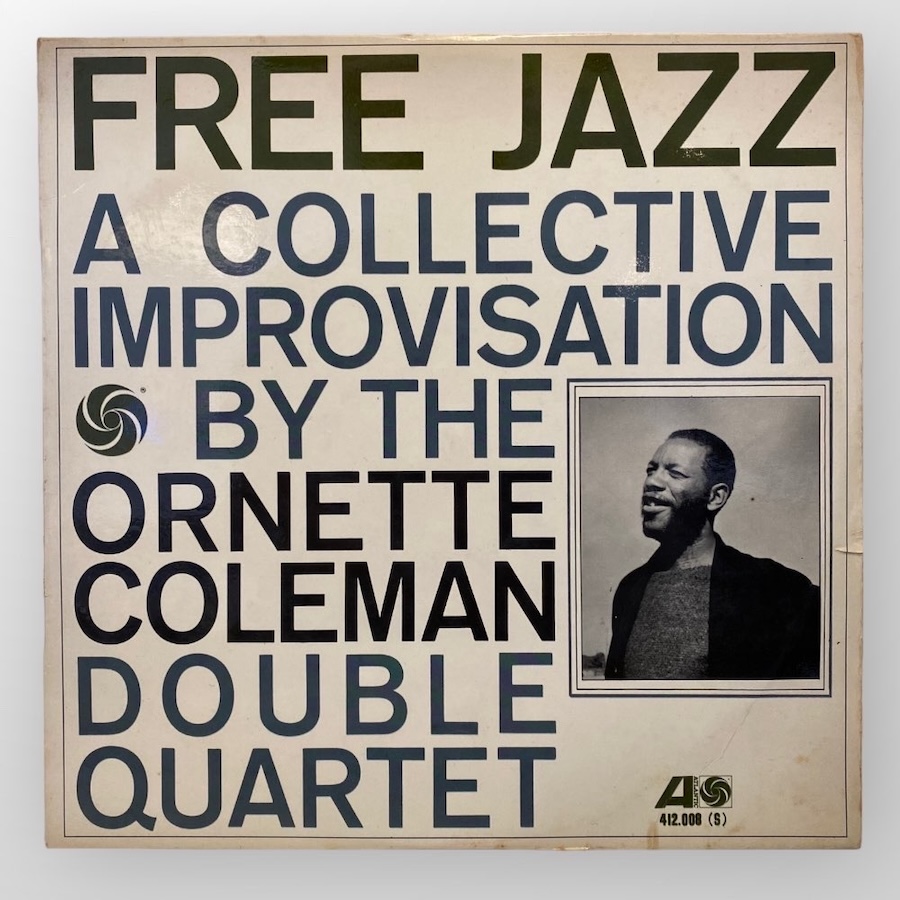
To do so, we must return to the history of jazz and recount the emergence of free jazz in the very early 1960s. But before discussing Ornette Coleman and his album titled “Free Jazz,” it is important to recall that, from a strictly musical standpoint, the first departure from the harmonic frameworks of mainstream jazz and bebop was the work of white musicians: the Chicago pianist Lennie Tristano and his disciples, who recorded two themes without a specific key in the late 1940s.
A “departure” from the norms of the time that did not catch on.
It was therefore Ornette Coleman who first spoke of free jazz, and indeed, his double-quartet recording landed like a bombshell on the American soundscape of the early sixties.
It wasn’t long before negative reactions began to surface from proponents of a less revolutionary style of jazz, and from Louis Armstrong to Charles Mingus or Stan Getz, many musicians denounced the saxophonist with the plastic alto sax, who—to make matters worse—soon added a violin and a trumpet to his arsenal, which he played in a highly unconventional manner that was objectively questionable in terms of pitch.
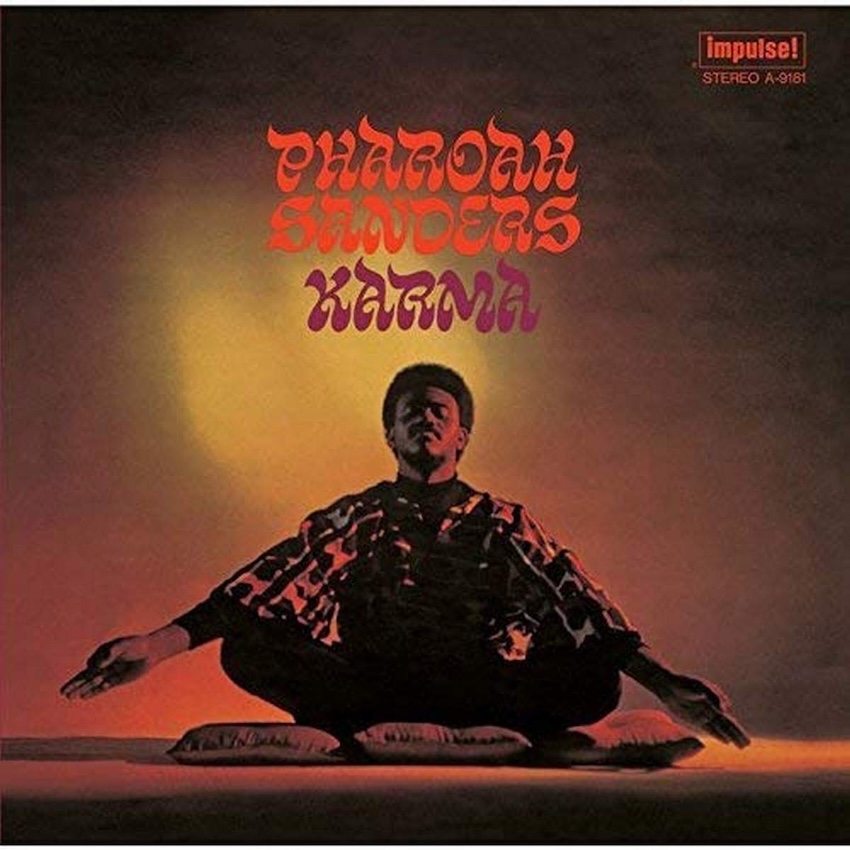
It is worth noting, however, that some musicians hostile to free jazz nevertheless moved closer to it to varying degrees, such as Charles Mingus, who hired instrumentalists aligned with this aesthetic, including saxophonist, clarinetist, and flutist Eric Dolphy and trumpeter Ted Curson. Among musicians with a more “classical” style, some supported Ornette: pianist John Lewis, drummer Shelly Manne, French horn player and musicologist Gunther Schuller… And Sonny Rollins briefly experimented with free jazz by recording in a quartet with trumpeter Don Cherry, then a member of Ornette’s quartet. Similarly, John Coltrane embraced this aesthetic toward the end of his life by inviting saxophonist Pharoah Sanders and drummer Rashied Ali(with whom he recorded his final album, “Interstellar Space,” as a duo for the first time in his career) to join his group
Moreover, if one knows anything about the history of jazz, it is clear that this “revolution” and this “new thing” are in fact a continuation, twenty years later, of the previous one: that of bebop, which, in the early 1940s, also caused a stir and drew sharp criticism in the U.S. and Europe. Thus, in France, the “sour grapes” and the “moldy figs” clashed.
That a young music like jazz should undergo slow or seismic changes every twenty years is nothing out of the ordinary. In classical music, did we not see the Baroque composers reject medieval music, then the Classical composers break away from the Baroque, and so on, all the way to today’s contemporary music, which repels the general public just as much as free jazz?
One could also argue that contemporary music, like free jazz, corresponds to an era in which noise (including that of machines and vehicles) tends to spread and replace—in an increasingly urban environment—natural sounds: birdsong, the neighing of horses, the ringing of bells, the croaking of frogs…
The ability to amplify sound at high volumes in large concert venues or on festival stages also fits this trend, and some heavily amplified genres such as rock (hard or otherwise), funk, punk, metal, and electronic music… have benefited greatly from this and continue to do so.
So, we must acknowledge that free jazz—whether we like it or not—was, in a way, very much a product of its time when it first emerged.
It should also be noted that this era (the 1960s and 1970s) was a period of social and political upheaval: struggles or wars of independence in the colonies, May 1968 in France and Europe, racial riots and massive marches against racism in the U.S., terrorism by the ETA in Spain, the Bader-Meinhof Group in Germany, and the Red Brigades in Italy… all more or less violent demonstrations that led Philippe Carles and Jean-Louis Comolli to title their book “Free Jazz-Black Power.”
And indeed, the proponents of free jazz in the U.S., who were predominantly Black, often had ties to the socio-political movements of the time, including the Black Panthers. So, once again, free jazz fits into a historical context that clearly explains its emergence.
Now let’s examine the phenomenon as it developed in Europe. If free jazz emerged on the Old Continent, it was clearly due to the arrival—in France and elsewhere—of African-American free jazz musicians fleeing racism and the repression of socio-political movements in the U.S. The Art Ensemble of Chicago, Anthony Braxton, Alan Silva, Don Cherry or Bobby Few spent several months or years in Paris, London, Rome, Copenhagen… and they readily played with European musicians, and even with singers not typically labeled as jazz, such as Colette Magny.
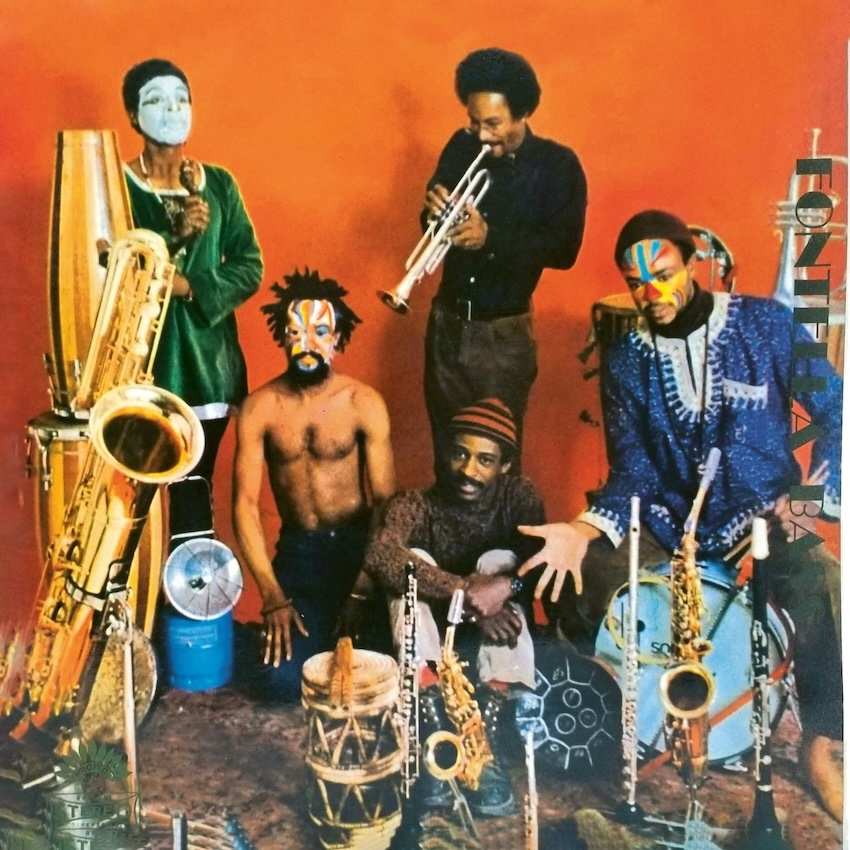
© The Art ensemble of Chicago
This proximity to the local European scene played a major role—and, paradoxically, it would seem—in freeing European musicians from the influence of American jazz.
Indeed, American free jazz had distanced itself from the typically American conventions of mainstream jazz and bebop: standards drawn from Broadway musicals, harmonically sophisticated arrangements, catchy melodies, the ternary rhythm of swing… and had moved closer to the most popular blues and African or Indian music. Having freed themselves from these old conventions, American free jazz musicians helped their European colleagues do the same and break away from classical or bop harmony to rediscover rhythmic and melodic freedom or to draw inspiration from local folk traditions—a concept perfectly captured by the name of the Lyon-based collective ARFI: Association à la Recherche d’un Folklore Imaginaire ( which translates Association Seeking an Imaginary Folklore)— founded in the late 1960s and still active today — whose flagship groups are the Workshop de Lyon and the big band La Marmite Infernale.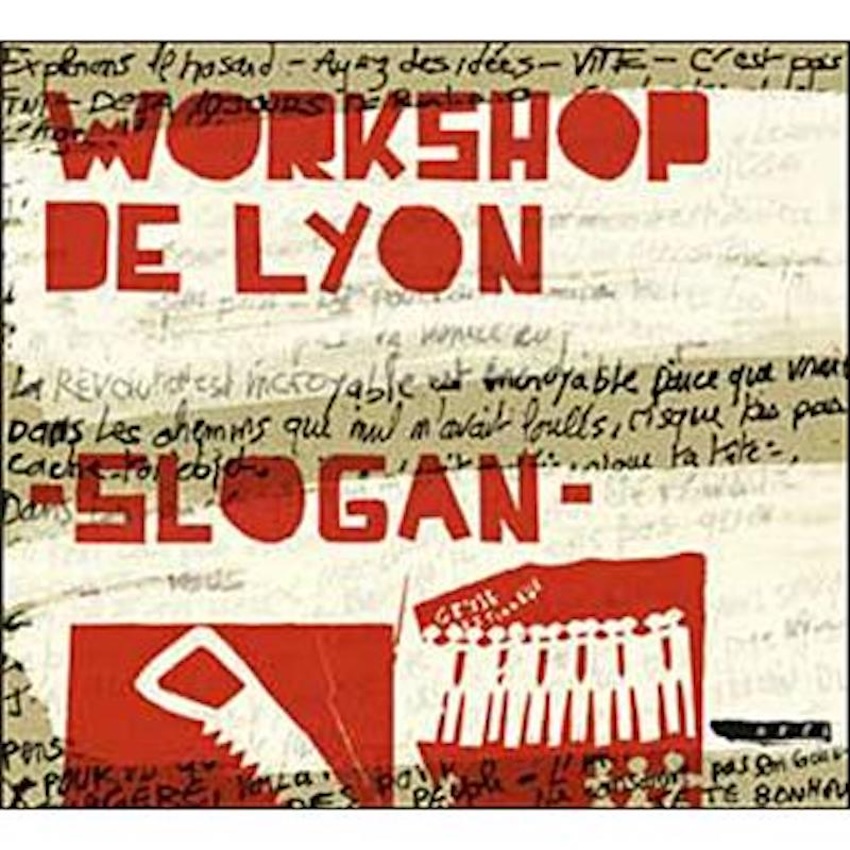 The fact is that, following the model of socio-political struggles in Europe and the U.S., European jazz musicians increasingly came together in collectives: the BIM in the Netherlands (Willem Breuker, Han Bennink, Misha Mengelberg…), the ICP in Great Britain (Derek Bailey, Evan Parker, Tony Levin…), the musicians of Wuppertal in Germany (Peter Brötzmann, Peter Kowald…)… This led these artists to set aside their individual careers in favor of a collective practice and commitment.
Numerous festivals dedicated to free jazz then sprang up across Europe: Moers in Germany, Chantenay-Villedieu in France, Clusone in Italy… and these festivals attracted a broad audience that was not put off by these libertarian sounds—on the contrary—and who also found this noisy, collective, and festive atmosphere in the protests against the Vietnam War or against nuclear power.
An entire era, then, and one cannot meaningfully discuss free jazz without considering the international social and political context in which it was born and developed, only to experience a sharp decline as European and American societies evolved.
So, before examining what remains of free jazz today, we must look at how it constituted a revolution and led to music that was supposedly unlistenable.
To begin with, it is worth noting that, if one listens today to Ornette Coleman’s early recordings on the California-based Contemporary label and later on New York’s Atlantic, one clearly hears a connection to bebop, and it is evident that Ornette listened to and appreciated Bird. Compositions such as “Lonely Woman” or “Rambling” have beautiful melodies and have become standards. Ornette even recorded a George Gershwin standard, “Embraceable You,” and he often alluded to Thelonious Monk and the blues—as in “When Will the Blues Leave? ” or “Monk and the Nun”—in the titles of his compositions which, as the name suggests, are… composed, and thus written rather than “free” of any constraints.
For while free jazz gradually freed itself from notation, the AABA structures of Broadway songs, and the theme/solo/theme alternation of bebop, this can be compared to what the Impressionists and then the Cubists did in painting, freeing themselves from the aesthetic codes and techniques of previous eras.
Jazz—like Western classical music, painting, or architecture—is a “sophisticated” music partly of European origin. It is therefore—unlike traditional music that cultivates and follows tradition—compelled to evolve and undergo metamorphoses. But it never completely breaks with the past, and free jazz has strong connections to the blues and to the practice of collective improvisation in New Orleans jazz.
Without roots, a tree cannot grow. But if it is grafted, it will bear new fruit.
One of the problems with free jazz is therefore that it no longer corresponds to the tastes and practices of contemporary societies, which are individualistic and fond of soothing music—such as many pop songs—or “mechanical” and stimulating music—such as disco, rap, or electronic music.
Some of those who once played free jazz have adopted a new term to describe their music: improvised music. While it has its followers, it remains a niche genre. In fact, the homogenization of tastes—linked to the relatively recent development of audiovisual media, the internet, social media, and streaming—makes it difficult for trends that diverge from the mainstream to emerge or endure.
So, is free jazz an elitist genre reserved for a few ears fond of incoherent sounds? Certainly not. But the best way to discover and appreciate it is to hear and see it live on stage. In this context, watching and listening to musicians deeply immersed in a practice that fully engages the body is likely to resonate with people who aren’t put off by physical, melodic, and rhythmic excesses. Just a few decades ago, a concert by the Art Ensemble of Chicago, the Willem Breuker Kollektief, the Italian Instabile Orchestra, or Sun Ra’s Arkestra was a highly exhilarating visual and auditory experience that was hard to forget.
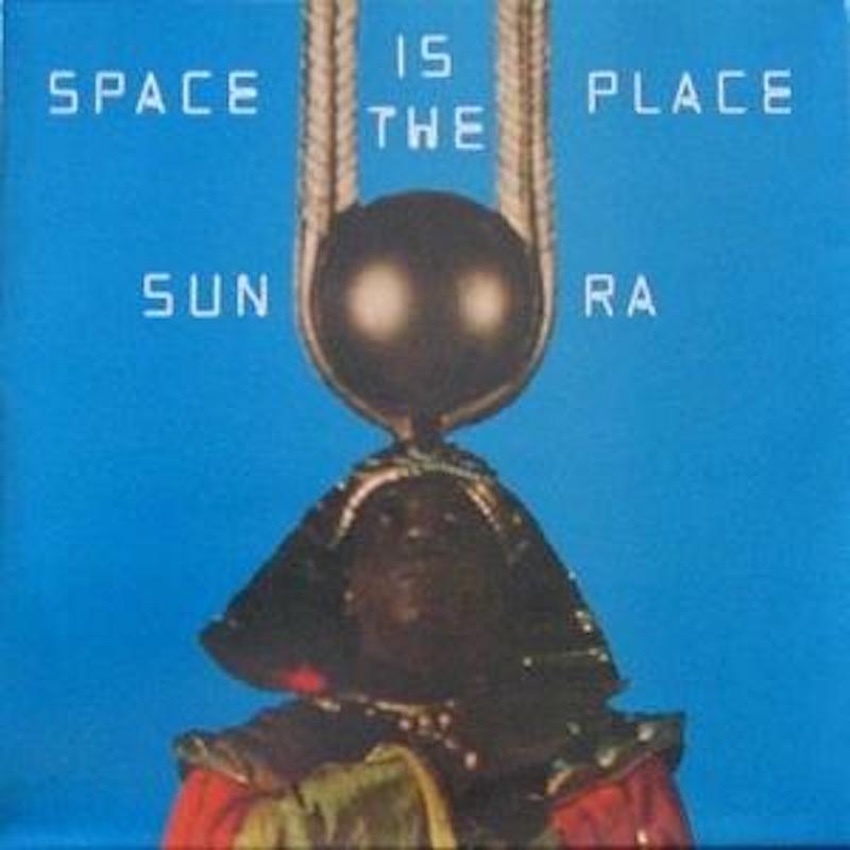
On the other hand, it’s true that this type of jazz isn’t something you can listen to on record at any time of day, and having seen and heard the groups mentioned above on stage didn’t necessarily mean buying their records.
But would you, listeners in Europe or the United States, eat paella, spicy couscous, or an Indian or Indonesian dish for breakfast?
—–======—–
P.S.: A little listening tip to wrap things up: if you’re allergic to free jazz, give a listen to the track “Conference of the Birds” by British double bassist Dave Holland on the ECM label. Shortly after his stint with Miles Davis, who had switched to electric jazz, Holland composed an entirely acoustic, five-beat track featuring Sam Rivers on flute, Anthony Braxton on soprano sax, and Barry Altschul on drums and marimba. Rivers (who collaborated with Miles for a time) comes from a hard bop background, and Braxton is a fan of the cool jazz of Paul Desmond and Lee Konitz.
The four of them offer highly melodic, rhythmically swaying music that has little to do with free jazz but draws inspiration from the freedom of that style. Listening to this track is, in my opinion, the best gateway to free jazz, which—in its extroverted, often noisy or chaotic dynamics—has produced some trash but also some real gems.
It’s up to you to explore, if you feel like it, and put together a free jazz playlist that’s actually listenable (at least to you). Don’t count on me to help you with that: I’m not your dad or your teacher. I’m a freeeeee man, goddammit! ;-)))








RECENT COMMENTS