
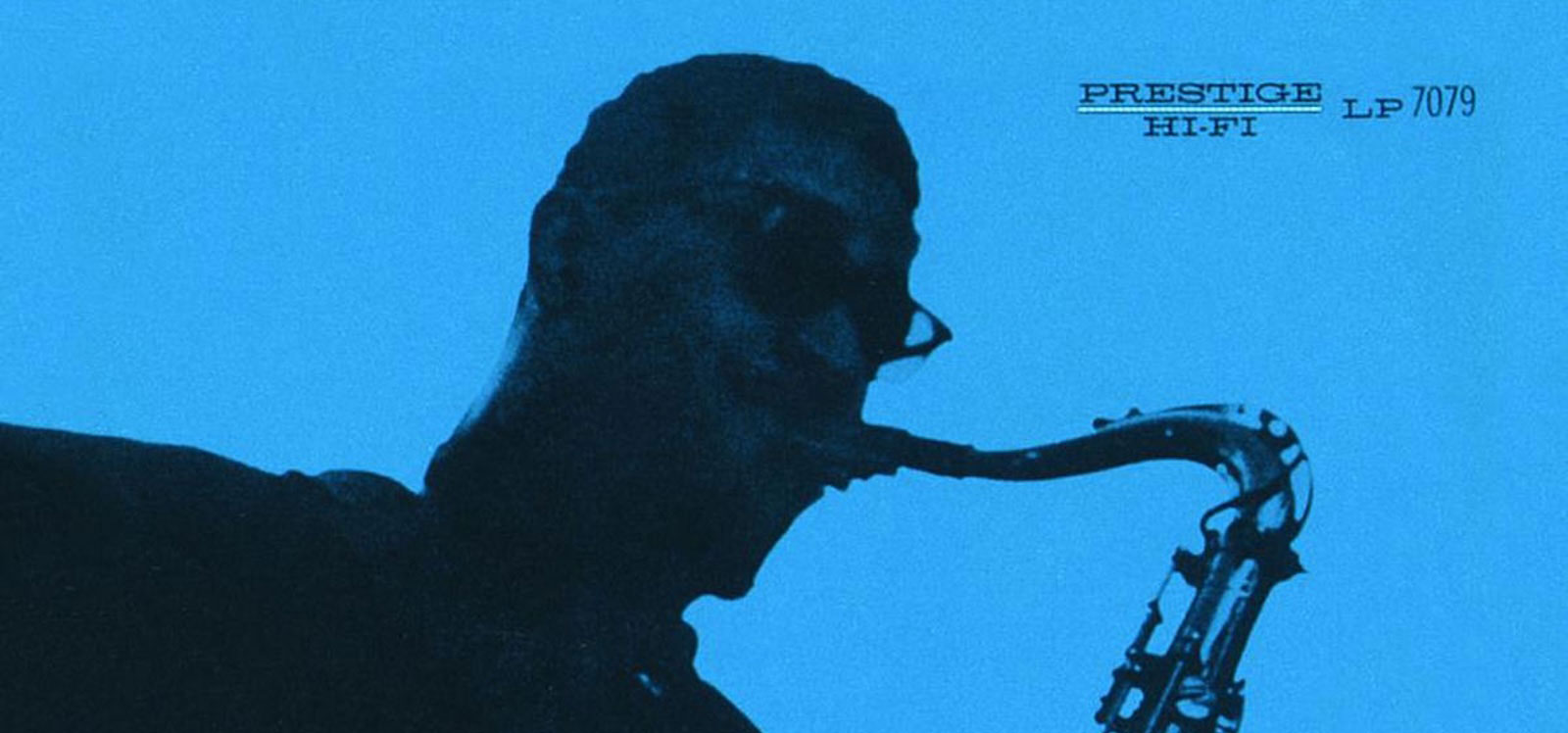
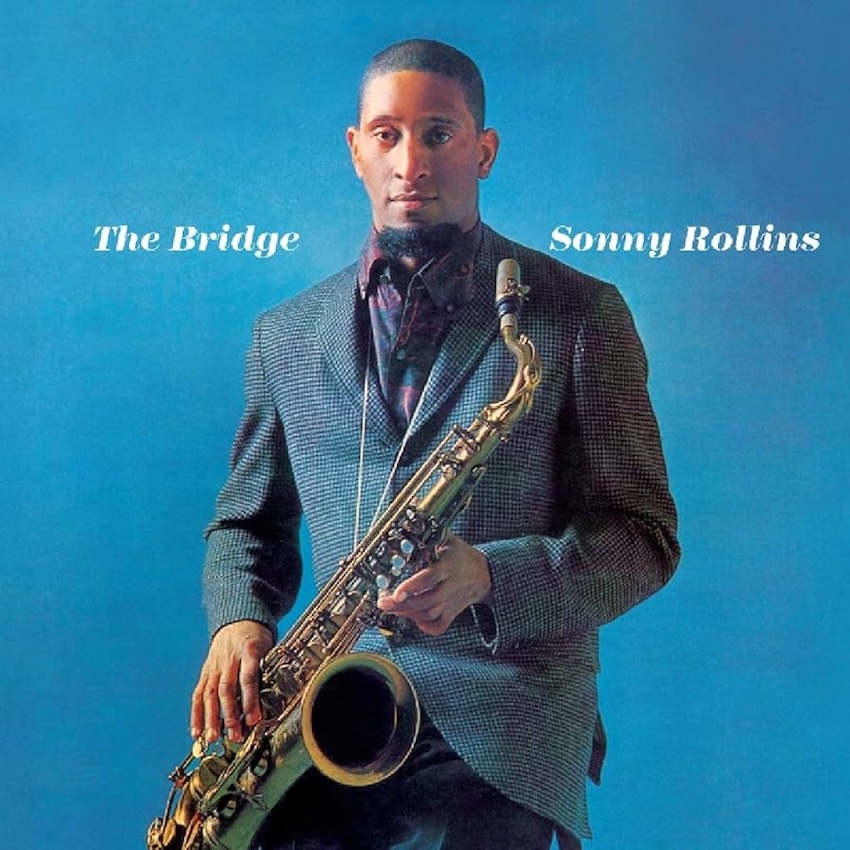
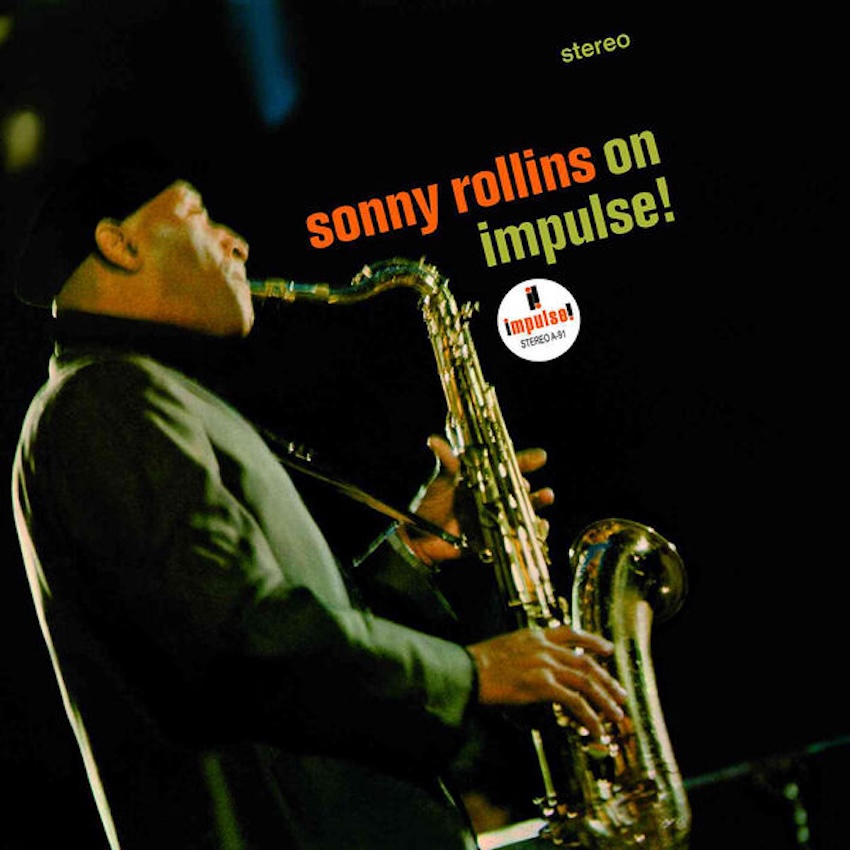
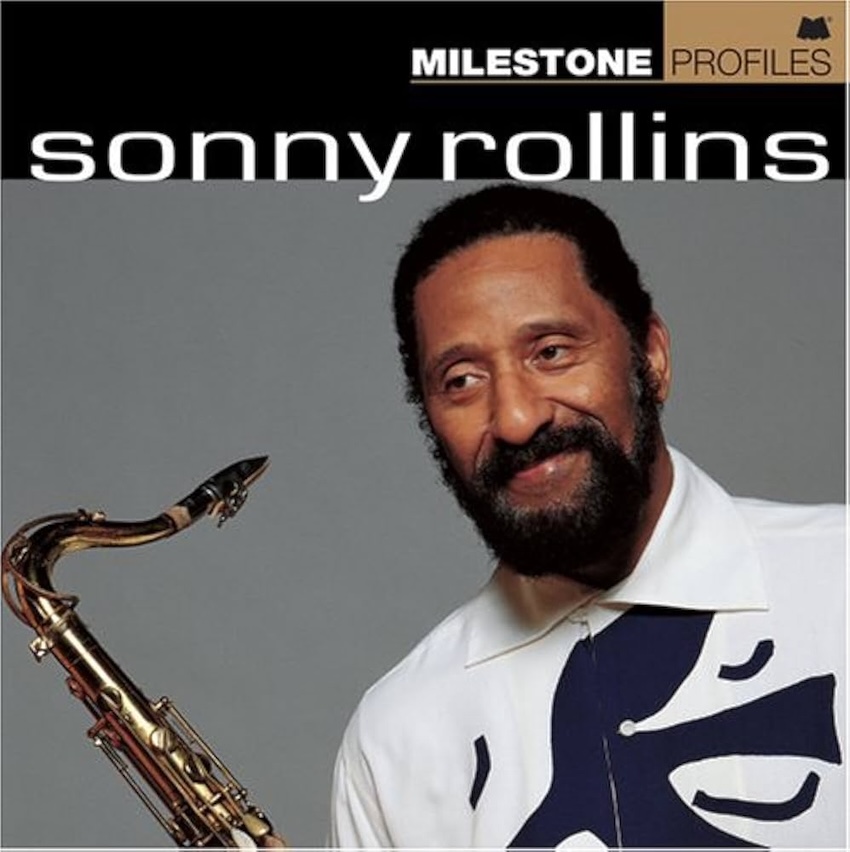
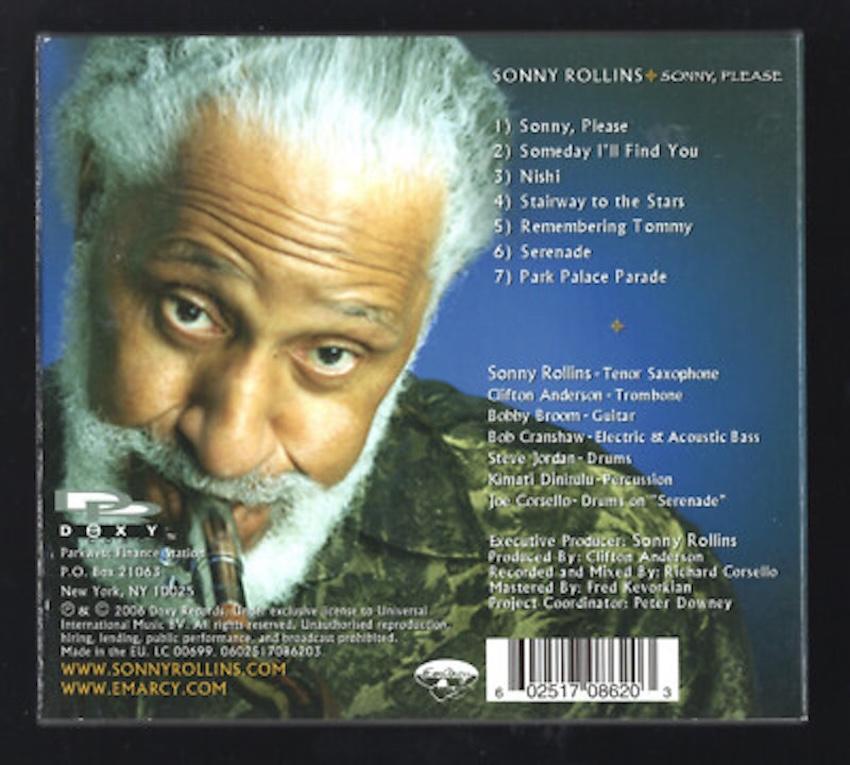
Sonny Rollins was the living memory of postwar jazz. A chameleon who frequently challenged himself, even going so far as to put his career on hold for several years. This colossus with feet of clay, often plagued by doubt, nevertheless managed to maintain his uniqueness over the years and produce major albums.
Seeing and hearing a Sonny Rollins concert was always an experience full of energy, moments of grace, and surprises… and while his albums from the last few decades were sometimes disappointing, on stage Rollins was always a colossus, striding across the stage with giant steps, projecting his tenor saxophone toward the sky, and shaping its sound with undiminished inventiveness.
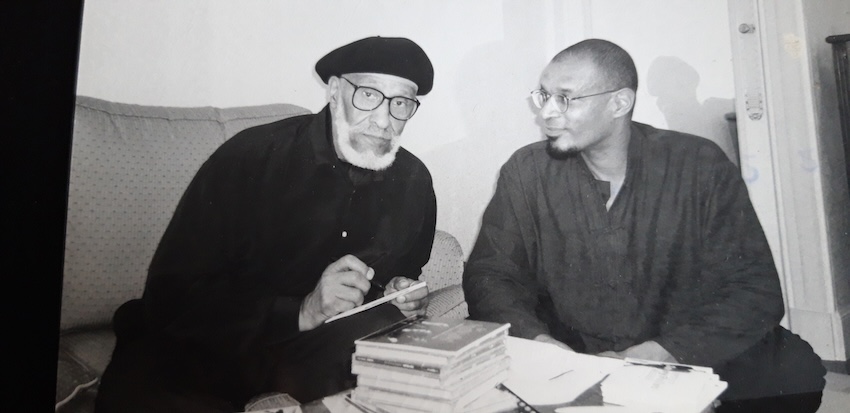
I had the chance to interview him, in 2002 in the lounge of his hotel suite during one of his visits to Paris, and our conversation flowed effortlessly. I discovered a man of great humility, entirely dedicated to music, and open to younger generations. The next two times I interviewed him over the phone, he remembered me, was completely approachable, and seemed barely affected by the health issues that prevented him from playing his tenor saxophone. A wise old man whose spirituality led him toward resilience. RIP Mr. Rollins!
—–=====—–
Sonny, you composed themes like Doxy, Oleo and Airegin in the 50s, when you were part of Miles Davis’ quintet. He continued to play them after you left, whereas you didn’t play them anymore, at least on record, and now you’ve just played Doxy on stage…
It’s true, I played Doxy just recently, at my concert at the Olympia, and I think it’s the first time in my life that I’ve played it since I recorded it with Miles. So I haven’t played those themes very much, but there’s nothing concerted about it, it just happened.
Everybody was surprised to hear you play Doxy at the Olympia, as well as Tenor Madness.
I was surprised myself, but you know – and I don’t want to get too technical – I’m playing these songs because it’s my first tour with a band in a new configuration [no piano or guitar NDLR], so I’m looking for themes that fit that instrumentation. It seemed to me that Doxy corresponded particularly well to what this new group is capable of.
Because of its rhythmic aspect?
Among other things, but also because each group has its own specificity and, like Duke Ellington who composed themes according to the specific qualities and weaknesses of the members of his orchestra, it is necessary to choose the thematic material which will be appropriate to such or such formation. Doxy seemed to me to be a good fit for the group of musicians I’m playing with now. And a lot of people have told me that this is one of the most original and interesting groups I’ve had in a long time, so it’s not surprising that I’m doing unusual things with them.
What about Oleo and Airegin, which have become jazz standards, but which you are one of the few people who never plays them, even though you composed them?
I feel very honored that these themes have become popular among musicians, but as far as I’m concerned I don’t like to play the same things over and over again. I like to change, to move forward. Besides, these themes worked well with the musicians I originally recorded them with. I hear other things since then and I want to continue to evolve … you know, that’s one of the strange things about me: a critic once said to me “Sonny, people have hardly got used to your way of playing and you’ve already gone in another direction! And it’s true: I play one style for a while and people say, “Oh, that’s Rollins,” and then I go on to something else, so no one can really have an idea of who Sonny Rollins is. That’s part of my character. I’m always trying to improve myself. I consider myself an eternal student of music and I don’t feel like I can stop anywhere. I always have to experiment! That’s probably why I haven’t played these themes for a long time.
Another reason is that these themes are very much linked with hard bop, which is both dated and, at the same time, tends to dominate the current production. You still play St Thomas, which is older than these three themes, but it is a more universal, less dated calypso genre.
It is not impossible. But is there really a revival of hard bop at the moment?
Are you not aware of it? It has become the new mainstream of jazz, with all the so-called “young lions”!
Oh well! I’m glad to hear that. That period produced a lot of good music, with people like trumpet player Clifford Brown, and I don’t think many musicians had the opportunity to absorb all that. A revival allows you to listen to all that music again and make it your own.
Do you have much contact with young musicians?
Not really. Some of them come to me, ask me questions about music and I try to help them. I couldn’t give names: these are people I’ve never heard of most of the time and they write to me, send me CDs. I don’t follow their evolution closely, but every time someone writes to me or sends me a tape asking for advice, I try to answer and encourage them as much as I can. That’s basically what my help to young people is all about. But it’s a double-edged sword and I don’t want to go too far in my encouragement because the life of a musician is very hard. I make it clear to them that they shouldn’t expect to make a lot of money doing this job. If they really like it, let them do it, but don’t expect to have a prestigious career and astronomical sales. Jazz is still a subculture, at least in the USA. For some time it has gained a little more respectability, but for a long time jazz musicians were looked down upon, not accepted. Now, the fact that some of them are teaching in universities means that they are more recognized, but I warn young people not to expect great things from a life as a jazz musician.
Two of the young sax players you’ve helped are Branford Marsalis – you invited him on one of your recordings -, and David S. Ware, whom you’ve spoken highly of. It so happens that both of them have recently covered your Freedom Suite. Have you listened to these recordings and do you think – as far as Marsalis is concerned – that one can cover this theme without taking into account the socio-political context in which it was written?
I have listened to part of David’s recording. I was also sent Branford’s, but I haven’t had time to listen to it yet. As a composition, the Freedom Suite can probably be considered as a piece of music among others, without knowing the circumstances in which it was created, but personally I find it hard to imagine that it can be dissociated from its context. On the other hand, does it have a musical value independent of this context? Similarly, can Coltrane’s A Love Supreme – which Branford also covers – be dissociated from its spiritual implications? It’s hard to say. In any case, it’s always very gratifying to have two important saxophonists appreciate my work. I am very honored. David used to come to my house when he was very young, and we spent a lot of time together. It was a kind of guru-disciple relationship. So I can say that, in a way, he was my student. With Branford, the relationship was different. He says he listened to me a lot as a young man and that his decision to become a musician owes a lot to what he heard from me. But when I met him – at a show in NYC, I think – he was already a well-known artist. I invited him on one of my albums after one of these annual concerts that I did at Carnegie Hall or Lincoln Center where I would invite different musicians. Dizzy Gillespie, Charles Mingus or bagpipe player Rufus Harley were among the guests at first, then I took young people like the trumpeters Roy Hargrove or Wynton Marsalis. If David was not included, it’s because at that time his notoriety, the commercial value – if one can say so – that would have allowed him to be hired, was not in line with his artistic value, which would have largely allowed him to appear in these concerts.
I have the impression that if you were to record one day with him, it could be a counterpart to the “Sonny meets Hawk” album, on which you invited Coleman Hawkins!
It’s likely, and it’s not impossible that I might do something with David one day. We played a lot together at my place and it’s true that it’s a pity that there is no record of all the time we spent together in my studio. He is a great musician and it is obvious that he has something that not everyone has.
Do you see a relation between his relationship with you and the one you had with Hawkins? Your playing on this album is very particular. It feels like you’re trying to position yourself in relation to him while acknowledging your debt.
That’s what I tried to do: I was in the presence of my idol and, as you say, it was a challenge for me to pay homage to him while remaining myself. He was someone who was very open to young people, like Miles or Dizzy at the time, and I know that he liked the way I played and that he talked about me around him. It’s always very satisfying for me to be associated with musicians of that stature and have them find something interesting in my playing. It goes beyond anything I could have hoped for. It’s like all those records you brought me where themes I wrote are covered by different musicians. It’s really a great honor that people have taken something from me, because that’s what music is all about: passing it on. I learned from saxophonists Coleman Hawkins & Lester Young, pianists Fats Waller & Erroll Garner, trumpeter Dizzy Gillespie… all these people gave me something that helped me. If I, on my part, have been able to inspire anyone, Keith Jarrett for example, it’s beyond what I could have wished for in my wildest dreams.
You know you deserve it. You have spent your life working, challenging yourself, searching .. Just on the technical level, your current saxophone playing shows, obviously, that you practice the instrument several hours a day.
That’s right: I practice several hours a day, but I’m amazed that you thought I played well the other night.
Are you kidding? It was amazing! A colleague of mine wrote about your last recording that you must have listened to people like James Carter and said, “OK, they play well, but I have to reaffirm that I am the master!” Did you listen to these “young lions”?
(Laughs) Yes, of course, I know James Carter, I even invited him to one of my concerts, in Cleveland!
We talked earlier about the socio-political implications of the Freedom Suite. Around the same time, you wrote Airegin, which is an anagram of Nigeria, to show your sympathy for the independence movements in the African colonies. Have you ever been to Africa?
No, it’s strange, I’ve only been to Egypt – which of course is part of Africa – but I haven’t really been to Africa. I stopped in Egypt on my way back from India in the 1960s, just as a tourist. There was talk of me going there to play at festivals, including in South Africa, but it never came to anything. Anyway, I always like to have a goal to aim for, and I don’t want to rush things. Otherwise you’re always in a situation where you’re constantly being asked, “If you went to Africa… if you listened to all these new records and so on…”. I hope to have the opportunity to go to Africa one day, but this trip will come in its time, I have no doubt about that. For me, it will obviously be a great experience on a spiritual level, especially since some of my ancestors are from Haiti. My parents are from the Virgin Islands, but did you know that part of my mother’s family was from Haiti? You told me that your father is from Benin. This is the country where a large part of Haiti’s population is from, and recently I have become very interested in that part of Africa, in a quest to find my distant roots. Some time ago, I was even about to buy an African statue, a magnificent head that came from Benin, and finally it didn’t happen. But I have a few other statues from that part of the African continent. My current percussionist, Kamate Denezulu, although born in the USA, is also from Africa and he returns there regularly.
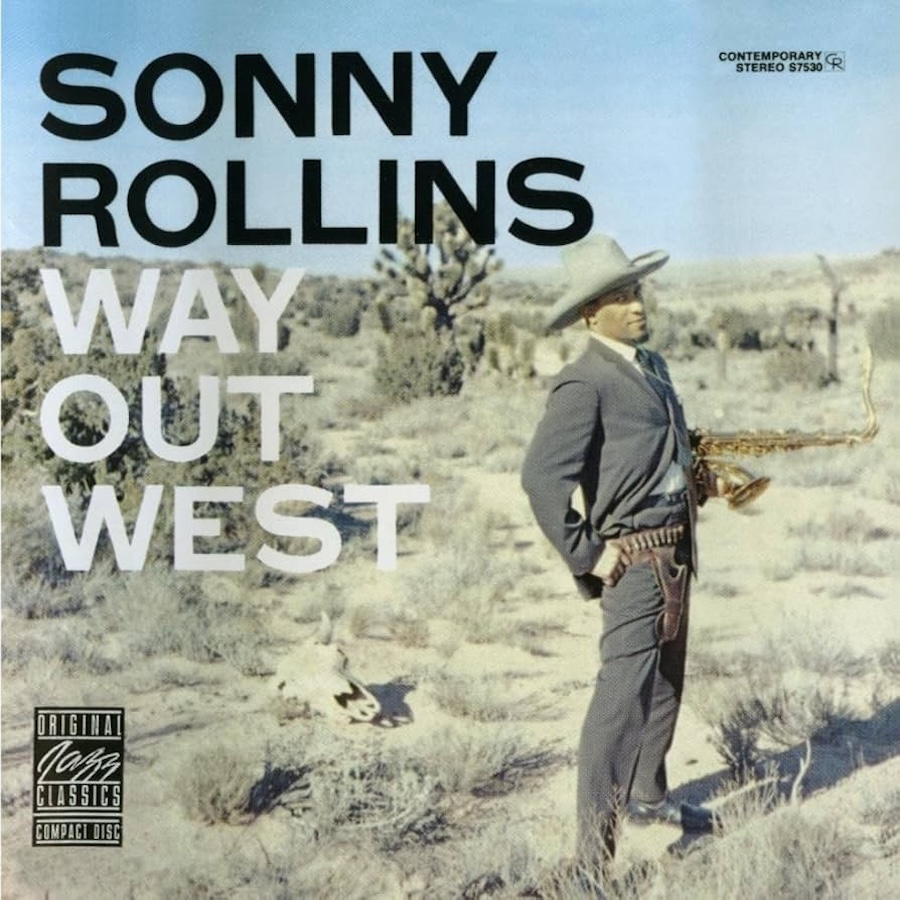
You also recorded these two albums for Contemporary with musicians from the West Coast, which showed, in the middle of the hard bop wave, that it was possible to look westward. The cover of “Way Out West” remains one of the most striking in the history of jazz!
It’s true that I had a good idea to make this cover. You know, when I was a kid I watched a lot of westerns, and there were a few with black cowboys in them. But they were usually pretty bad movies, copying white movies. Later I learned that there really were black cowboys, and that’s kind of what I had in mind when I did this cover picture. I’m glad it was so successful. For example, that black British saxophonist whose name I can’t remember…
Courtney Pine ?
That’s right: Courtney told me that it was that cover that got him into jazz. So to go back to what we were saying, I’m very eclectic, and as long as I like the music, I don’t care where it comes from.
Since we’re talking about Europe, your Haitian origins may perhaps explain in part your privileged relationship with France? You once recorded Mademoiselle de Paris with Gilbert Rovère and Art Taylor, but do you know Claude Nougaro, a French singer who covered St. Thomas?
Yes, I know him: I met him and I like his song. My wife tells me that I have a Latin sensibility, different from the one you find in Germany for example, and that’s what the French public appreciates. But I also have many fans in Germany and elsewhere. It is true that I am very happy when I play in France and that I feel that the public appreciates me a lot there.
Let’s go back to music: what do you think of the fact that people associated with the so-called cool movement – Bill Evans or Lee Konitz, for example – have taken up themes like Oleo or Valse Hot? And do you find these distinctions (“cool”, “hard bop”…) relevant?
I don’t really make any important distinction between these styles or schools. I don’t know if you consider Dave Brubeck “cool”, but I like some of his compositions, and some not so much. If I like something, I accept it, wherever it comes from. You know, for example, that I play a lot of strange themes that I find here and there.
You also recorded these two albums for Contemporary with musicians from the West Coast, which showed, in the middle of the hard bop wave, that it was possible to look westward. The cover of “Way Out West” remains one of the most striking in the history of jazz!
It’s true that I had a good idea to make this cover. You know, when I was a kid I watched a lot of westerns, and there were a few with black cowboys in them. But they were usually pretty bad movies, copying white movies. Later I learned that there really were black cowboys, and that’s kind of what I had in mind when I did this cover picture. I’m glad it was so successful. For example, that black British saxophonist whose name I can’t remember…
Courtney Pine ?
That’s right: Courtney told me that it was that cover that got him into jazz. So to go back to what we were saying, I’m very eclectic, and as long as I like the music, I don’t care where it comes from.
Since we’re talking about Europe, your Haitian origins may perhaps explain in part your privileged relationship with France? You once recorded Mademoiselle de Paris with Gilbert Rovère and Art Taylor, but do you know Claude Nougaro, a French singer who covered St. Thomas?
Yes, I know him: I met him and I like his song. My wife tells me that I have a Latin sensibility, different from the one you find in Germany for example, and that’s what the French public appreciates. But I also have many fans in Germany and elsewhere. It is true that I am very happy when I play in France and that I feel that the public appreciates me a lot there.
Let’s go back to music: what do you think of the fact that people associated with the so-called cool movement – Bill Evans or Lee Konitz, for example – have taken up themes like Oleo or Valse Hot? And do you find these distinctions (“cool”, “hard bop”…) relevant?
I don’t really make any important distinction between these styles or schools. I don’t know if you consider Dave Brubeck “cool”, but I like some of his compositions, and some not so much. If I like something, I accept it, wherever it comes from. You know, for example, that I play a lot of strange themes that I find here and there.
You also recorded these two albums for Contemporary with musicians from the West Coast, which showed, in the middle of the hard bop wave, that it was possible to look westward. The cover of “Way Out West” remains one of the most striking in the history of jazz!
It’s true that I had a good idea to make this cover. You know, when I was a kid I watched a lot of westerns, and there were a few with black cowboys in them. But they were usually pretty bad movies, copying white movies. Later I learned that there really were black cowboys, and that’s kind of what I had in mind when I did this cover picture. I’m glad it was so successful. For example, that black British saxophonist whose name I can’t remember…
Courtney Pine ?
That’s right: Courtney told me that it was that cover that got him into jazz. So to go back to what we were saying, I’m very eclectic, and as long as I like the music, I don’t care where it comes from.
Since we’re talking about Europe, your Haitian origins may perhaps explain in part your privileged relationship with France? You once recorded Mademoiselle de Paris with Gilbert Rovère and Art Taylor, but do you know Claude Nougaro, a French singer who covered St. Thomas?
Yes, I know him: I met him and I like his song. My wife tells me that I have a Latin sensibility, different from the one you find in Germany for example, and that’s what the French public appreciates. But I also have many fans in Germany and elsewhere. It is true that I am very happy when I play in France and that I feel that the public appreciates me a lot there.
Maybe we could go on about the singers : you haven’t recorded much with vocalists, except Abbey Lincoln, and on the cover of “Tattoo You” by the Rolling Stones, your participation is not even mentioned.
(Laughs) That’s an interesting comment! I really like singers. Listening to them is a natural thing for me and inspires me a lot. Billie Holiday and Nat King Cole are two of my favorites, Billy Eckstine too. So it’s strange that I’ve played so little with singers, although you may remember that I made a record with Earl Coleman, who made that wonderful recording with Charlie Parker on which Erroll Garner plays piano. But it’s true that other than him and, as you said, Abbey Lincoln, I haven’t recorded with singers. It’s not actually a concerted choice on my part: it’s just that opportunities have been lacking. Diana Washington, for example, was a very nice person besides being a great singer, and when I play What a Diff’rence a Day Made, it’s in reference to her version of that theme. As for the Rolling Stones, it was my wife Lucille – who liked them in the 60’s – who urged me to respond favorably to their request. I had heard of them, of course, but I wasn’t very interested by this meeting. Encouraged by Lucille, I accepted anyway and it was an interesting collaboration, insofar as I like to broaden my horizons and undertake new things. But I didn’t think that this collaboration would cause such a sensation. Recently in Berlin I met some Rolling Stones fans and they told me about “Tattoo You” again. I also read somewhere that the Stones said it was their last good record! And in that sense, I think it’s a good record. As far as my name being on the cover, I didn’t want it because I didn’t want to be associated with it any more than that. In a way I tried to play in a neutral way, without affirming my personality as much as if I had played in another context.
Finally, let’s talk about your political and social commitment: at the Olympia concert, you alluded to the bad things that are happening in the USA at the moment, and the title of your latest record (“Global Warming”) refers to global warming. A couple of minutes ago, you also expressed some pessimism about the future of humanity…
I don’t like to say I’m a pessimist because I don’t think I’m informed enough to take that position. But I think that people who believe in love rather than hate have to fight for their point of view. You have to fight not to be overwhelmed by greed, technology … I don’t believe in this life: I believe in the life of the spirit, in the afterlife, but as long as I am on this earth, I think you have to fight the good fight. That we must fight against hate with love. It is, in the last instance, the task which falls to us: whatever happens, it is necessary to continue to play one’s instrument to keep practicing!
Interview by Thierry Quénum
Discography references:
Miles Davis : Bag’s Groove (Riverside/Warner)
Branford Marsalis : Footsteps of our Fathers ()
David S. Ware : Freedom Suite (AUM Fidelity/Import)
Bill Evans : Everybody Digs Bill Evans (Riverside/Warner)
Lee Konitz : Round & Round (Limelight/ ?)
Claude Nougaro : Le Jazz et la Java (Philips/Universal)
René Thomas/Bobby Jaspar : Thomas-Jaspar Quintet (RCA/BMG)
Jim Hall : Dedications & Inspirations (Telarc/Socadisc)
Mel Tormé : Swings Shubert Alley (Verve/Universal)
Keith Jarrett : Tribute (ECM/Universal)
The Rolling Stones : Tatto You (Virgin/Virgin)










RECENT COMMENTS