
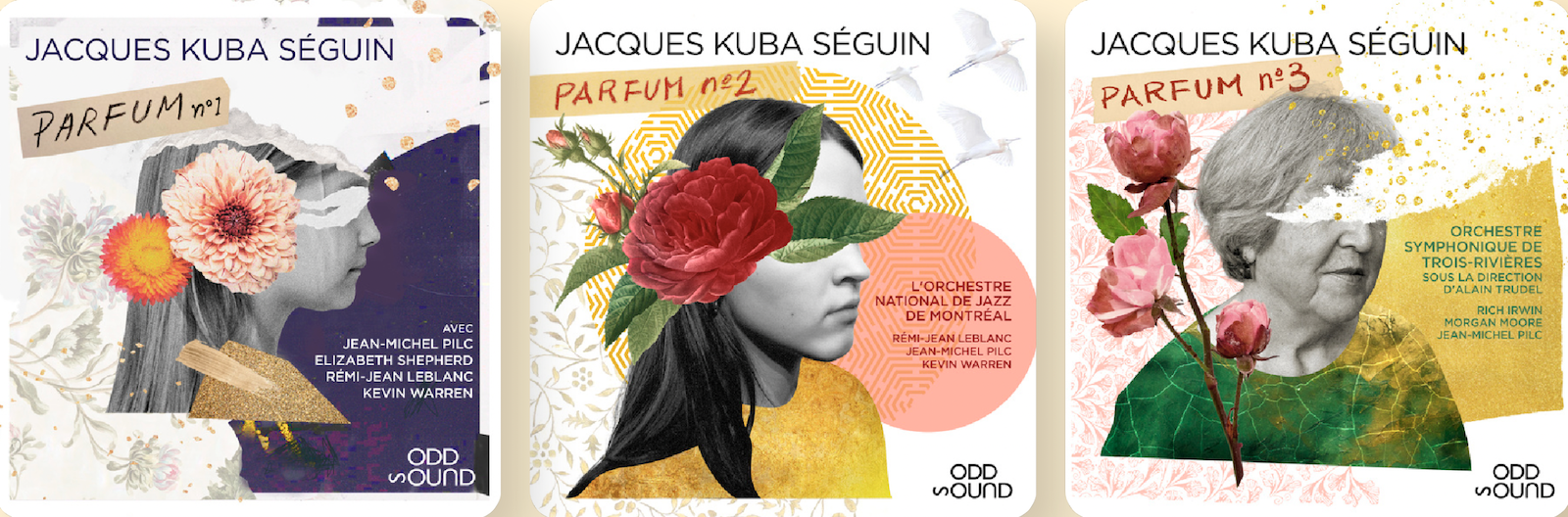
Some projects go beyond simply adding albums to a discography: they chart a genuine artistic journey. With La Trilogie des odeurs (The Trilogy of Scents), Canadian trumpeter and composer Jacques Kuba Séguin has embarked on a daring and ambitious musical adventure, built around a sense rarely evoked in this art form: smell.
A sense intimately connected to hearing, in his view, through their shared ability to awaken buried memories, stir emotions and transport us, sometimes in an instant, back to moments in our lives.
Following the first instalment (Parfum no. 1, 2023), whose qualities we were pleased to highlight in these very pages a work of great delicacy, carried by his regular quartet and an intimate atmosphere, the composer continues his exploration with two further albums that progressively broaden the sonic horizons of the project.
With Parfum no. 2 (2024), Jacques Kuba Séguin takes us deep into the world of scents, where the events that shape a life settle and leave their mark, their own distinctive fragrance. Having explored the natural materials and earliest childhood memories in the opening chapter, he now turns his attention to sensations that are more vivid, more direct, more powerful. The musical statement is equally assertive, with a stronger dose of groove.
To bring this new chapter to life, the trumpeter retains the chemistry of his quartet, featuring pianist Jean-Michel Pilc (whose Proust-Jazz Questionnaire we were delighted to publish in these pages), Rémi-Jean Leblanc on double bass and Kevin Warren on drums, while adding the Orchestre national de jazz de Montréal. This change of scale considerably expands the possibilities of the writing and the orchestral palette. Saxophones, trombones, trumpets and woodwinds broaden the composer’s range of colours without ever obscuring the project’s jazz heart. The dialogue between the compact quartet and the orchestra thus becomes one of the driving forces behind this second instalment.
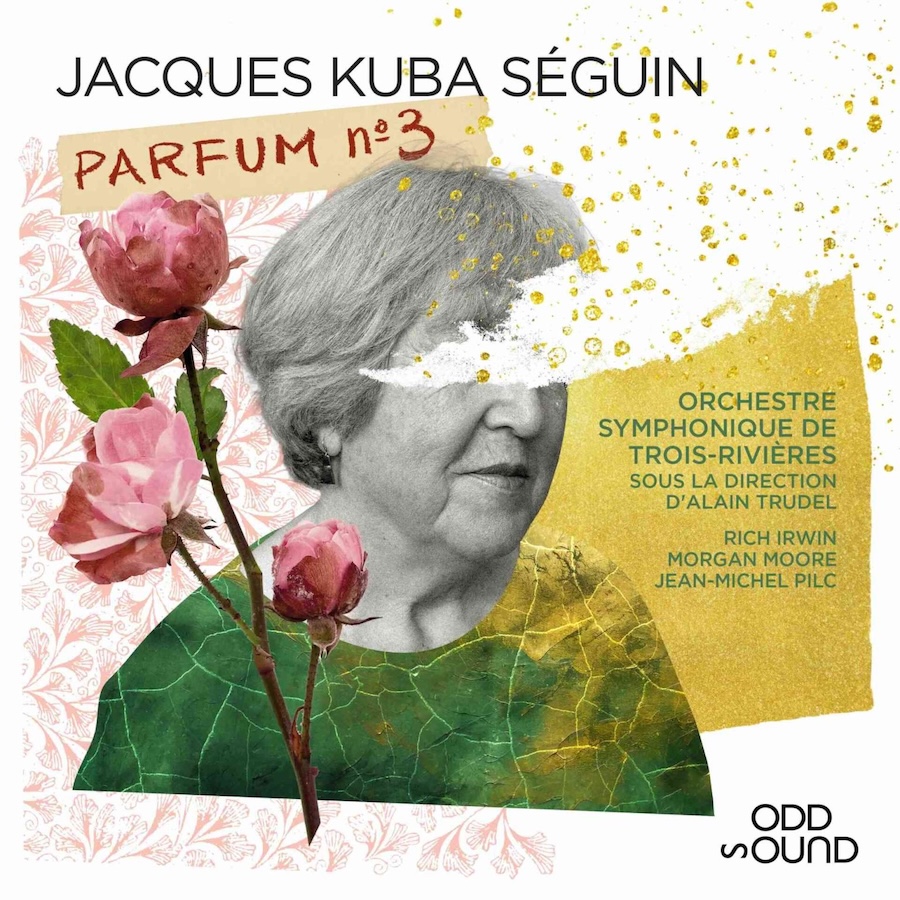
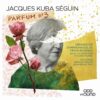
Then, in 2026, comes Parfum no. 3, the final chapter, unveiled at Dièse Onze upon its release during the Festival International de Jazz de Montréal.
This time, Jacques Kuba Séguin takes another significant step forward, joining forces with the Orchestre symphonique de Trois-Rivières, under the direction of trombonist and conductor Alain Trudel. Alongside them, the quartet brings together the ever-faithful Jean-Michel Pilc on piano, Rich Irwin on drums and Morgan Moore on double bass.
In the olfactory pyramid, this third element corresponds to the base notes, sometimes called earthy notes: those that linger, seep into things and eventually cling to the skin. A fine metaphor for the passing of time, accumulated memories, the weight of experience and the wisdom we tend to associate with old age.
The composer has therefore chosen to bring in a symphony orchestra to give these recollections their full scope. Movements answer one another, themes unfold and extend, while certain motifs from the first two instalments reappear, taking on a new dimension within the orchestral setting.
The ambition is considerable. At times, one is reminded of Gil Evans’s great orchestral designs, notably La Nevada, but also of Duke Ellington and his suites, from Togo Brava Suite to My People, and even Far East Suite. The point is not, of course, to suggest a direct lineage, but rather to recognise that same art of bringing orchestral writing into dialogue with the freedom of jazz, allowing the sections to breathe without reducing the soloists to mere supporting players.
Jacques Kuba Séguin has a firm command of the language of composition and the art of film scoring. Surprises keep coming as the album unfolds. Il n’y a pas de hasard opens with an introduction that establishes a genuine film-noir atmosphere. In Le Maître des lieux, the strings provide the solos with massive, almost hypnotic support. The orchestra never merely serves as decorative upholstery for the quartet: it becomes a partner in its own right, an additional voice in this wide-ranging musical conversation.
Elizabeth Shepherd, already part of the first instalment, provides another connecting thread throughout the trilogy. She returns on How We Start Again, where her voice, by turns moving and feline, is brought into particularly striking relief by the symphony orchestra, and especially its string section. Her contribution fits naturally into this music of memory and recollection.
And since we are talking about fragrances, let us linger over Le cortège des fragrances. The piece suddenly transports us into an airy, sensitive strain of West Coast jazz, imbued with a certain voluptuousness. Jean-Michel Pilc is on typically inventive form, while certain orchestral colours evoke the mists of Sketches of Spain.
Jacques Kuba Séguin, meanwhile, seems at this point to be looking more towards Clifford Brown than Miles Davis. A fine reminder that, behind the sheer scale of the undertaking, jazz remains its true beating heart, its pulse.
With this third instalment, Jacques Kuba Séguin brings to a close a creative cycle that has demanded years of work, conviction and unwavering determination. From the birth of a fragrance, its top notes, through its maturation, its heart notes, to the base notes that linger long after the initial impression has faded, the composer has fashioned a sensitive metaphor for the passage of human life. A multitude of voices, timbres and fragments of existence come together here to bring this story to its conclusion.
Parfum no. 3 is a generous, richly textured work, brimming with remarkable themes and orchestral treasures. The composer himself describes it as a “sensory experience”. The phrase hits the mark: this trilogy is not simply something to listen to; it is something to breathe in, to inhale. And when the final notes fade away, a gentle fragrance remains in the air.









RECENT COMMENTS