
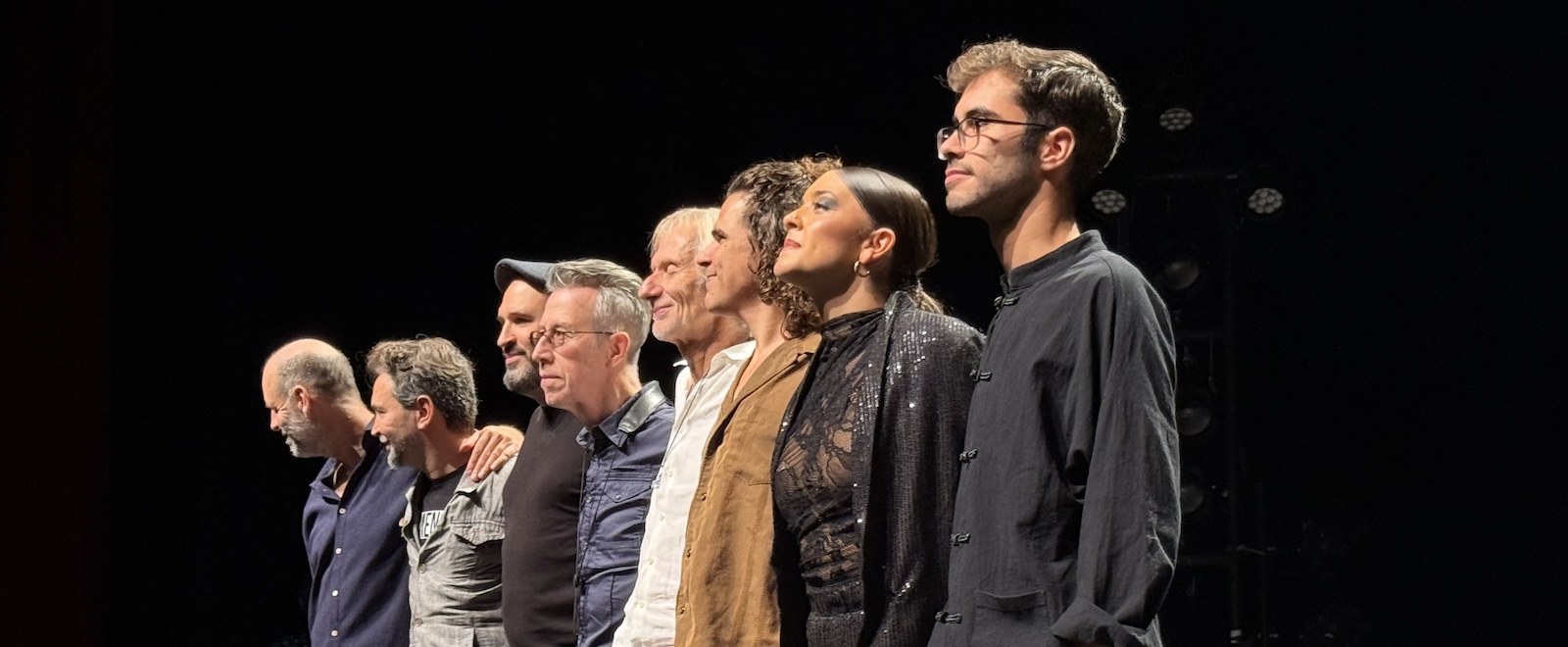
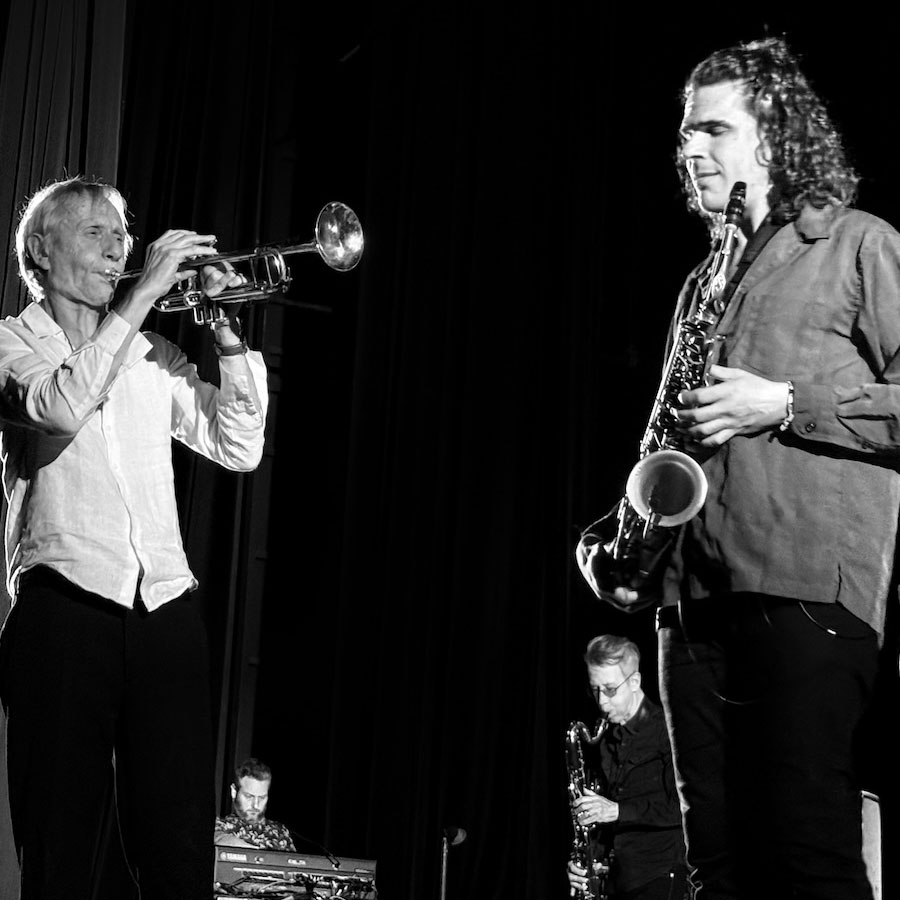
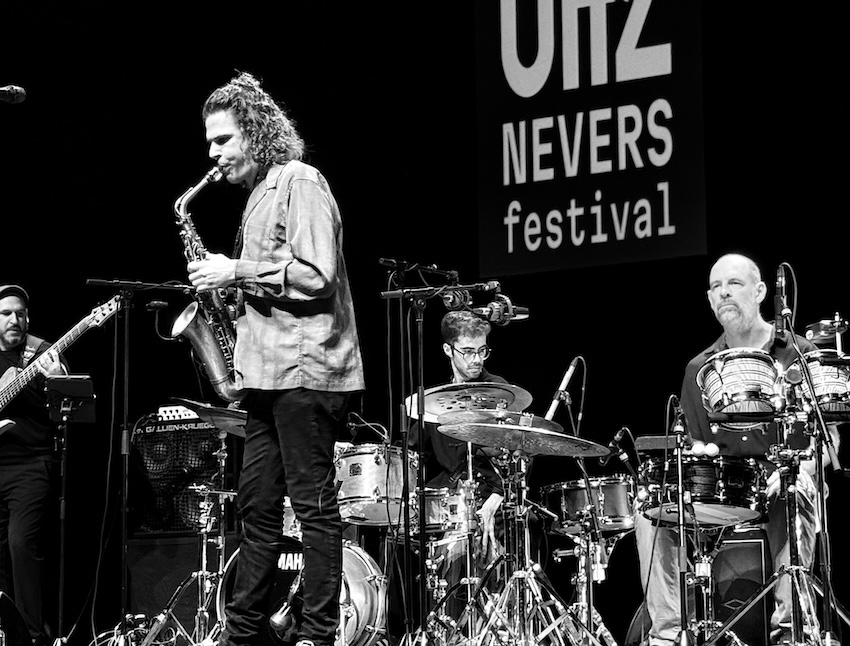
An outstanding performance by the octet led by Erik Truffaz and Antonio Lizana at the opening night of the 2026 D’Jazz Nevers Festival, in the Loire-side town of Nevers, right in the heart of France.
The audience was unanimous in its response, rewarding this deeply moving, almost timeless experience with a standing ovation.
The virtuosity of every musician, the fusion of a jazz tribute to Miles Davis with authentic flamenco, and the sheer quality of the interplay all came together to make this far more than a concert: a truly exceptional performance. El duende was in the air, quickly filling the vast auditorium of La Maison and remaining there until the very last trumpet note.
We were fortunate enough to meet and interview the key figures behind this remarkable project in their dressing room, shortly before they took to the stage.
Exclusively for the regular readers of Couleurs Jazz magazine and the loyal listeners of Couleurs Jazz Radio, on Couleurs Jazz Media:
INTERVIEW
Erik Truffaz, Antonio Lizana & Vincent Thomas
To Erik Truffaz – The origins of the project
Sketches of Spain, the legendary album by Miles Davis and Gil Evans, occupies a unique place in the history of jazz. What inspired you to take on this repertoire and offer a fresh interpretation? Is it a tribute, a continuation, or a desire to tell a different story of Spain?
Erik Truffaz: Well, it’s a continuation, and a desire to tell a different story of Spain. That’s it! What brought us together is that we like each other. I love the way he sings, and he loves the way I play. We really like each other.
It’s a love story, a story of two people meeting. You become captivated by someone…
I was captivated by Antonio’s voice, by his saxophone playing, by his whole approach to music. It really struck me. When something like that happens, I fall in love at first sight! That’s just the way I am. I go and talk to people, I try to plant a few little markers, if I may put it that way, for the future, little stepping stones that help me find a path. That’s it, little pebbles along the way…
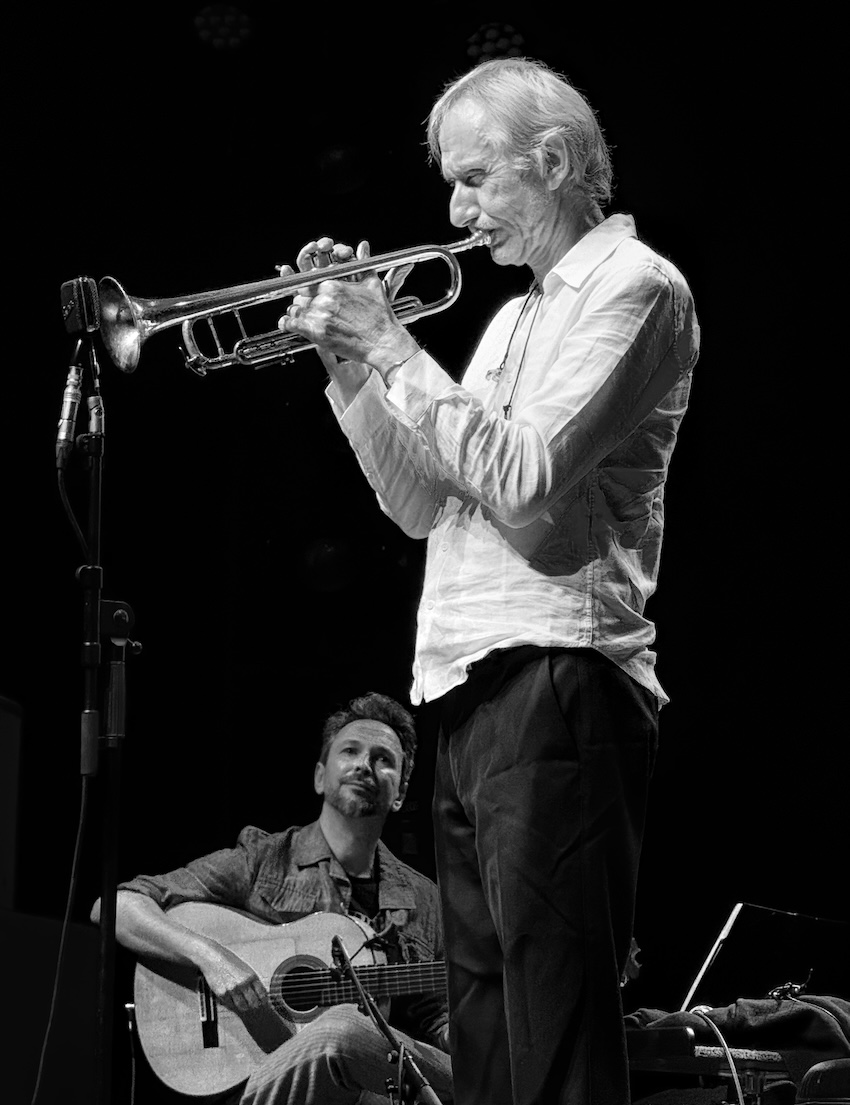
Couleurs Jazz: Yes, little steps that can indeed lead to major projects!
Erik Truffaz: Yes, yes, exactly!
Erik Truffaz – The legacy of Miles Davis
You have often been compared to Miles Davis, particularly in your approach to silence, space and sound. Is this artistic lineage something you embrace? And how do you find your own voice when revisiting such an iconic work?
Erik Truffaz: Listen, I think the two greatest trumpet sounds in the world belong to Chet Baker and Miles Davis.
And frankly, I’m somewhere between the two, so that makes me one of the world’s greatest trumpet sounds! With all due modesty… Not one of the world’s greatest players, mind you.
But why am I telling you this? Because I’m not… I’m not some big-headed guy. I’m actually quite modest. But don’t get me wrong: when it comes to playing, rhythm and phrasing, I’m a long way from Chet and Miles, unfortunately.
What happens, though, is that I’ll hear something I like, something I’ve played, and then I’ll put on a Chet Baker recording afterwards… Or my partner, for instance, will listen to something I’ve done and say: “Oh, are you listening to Chet Baker?”
But what really attracted me to Antonio, and what we have in common, is that there’s soul in our sound. There’s soul in the sound itself.
You can have musicians with a magnificent sound who play brilliantly, but sound is what can lift music to another level.
Couleurs Jazz: How, then, do you find your own voice when interpreting a major work such as Sketches of Spain or the Concierto de Aranjuez?
Erik Truffaz: Well, we had the music rewritten, and then we reworked it ourselves. We didn’t keep the original arrangements at all. Our starting point was that we had to make the work our own, giving it a flamenco voice. That was the initial challenge. Because trying to copy Gil Evans, who was a genius, and Miles, who was a genius, would have been doomed to failure. And it would have been the wrong direction to take.
Since that would have been a recipe for failure, and since we do rather like being successful… we had to create something new instead. And that’s true of all great music. Just listen to Radiohead or Pink Floyd: it’s the way you approach the material that makes something genuinely special.
To Antonio Lizana – Spain from the inside
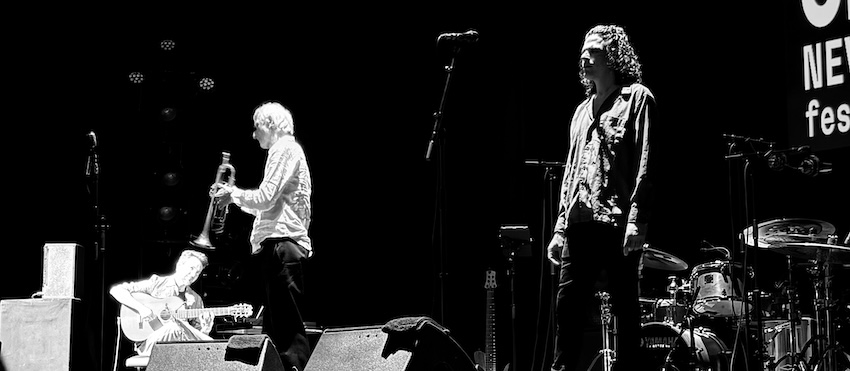
This project takes on a particular dimension through your presence: that of a musician deeply rooted in flamenco culture, both a singer and a saxophonist. Miles Davis’s album offered a highly personal, almost imaginary vision of Spain. What does the arrival of singing, flamenco rhythms and the flamenco spirit bring to this new version?
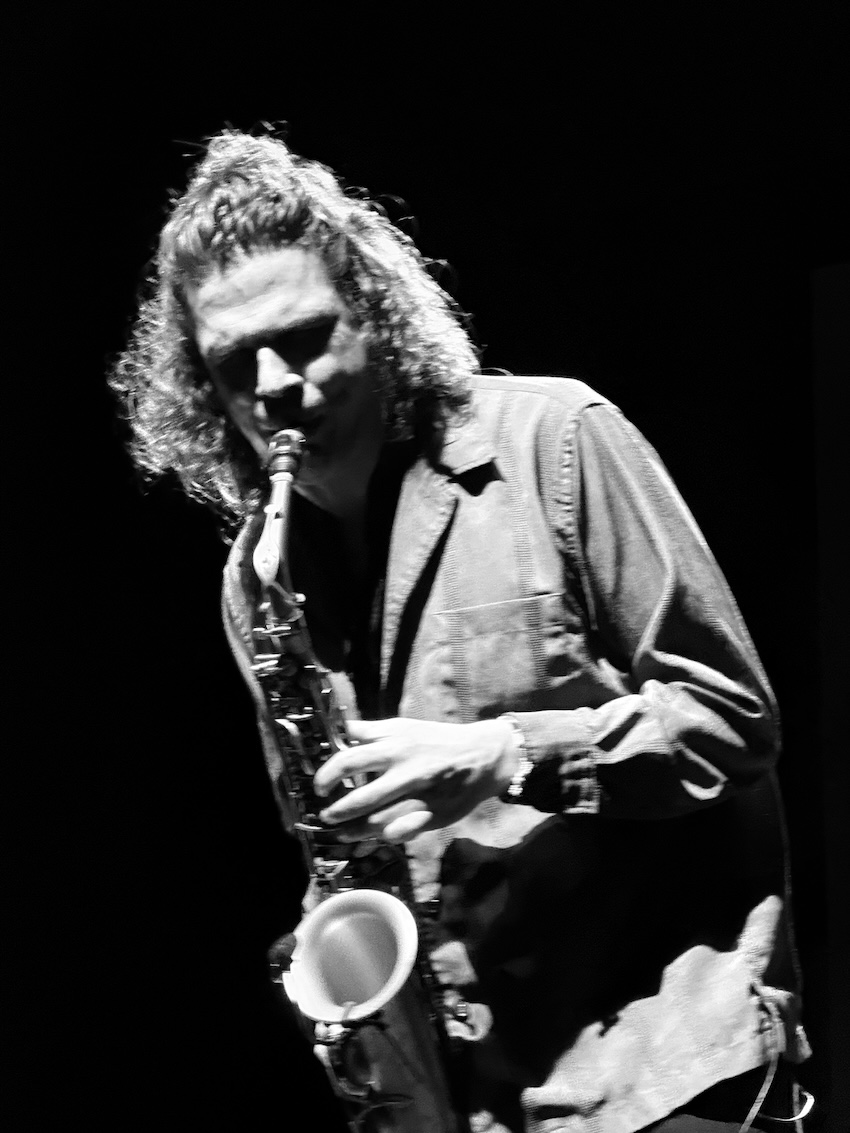
Antonio Lizana: For me, the challenge is to find my own place and personal style between two worlds. On the one hand, there’s the original Sketches of Spain, of course. I’ve always thought it was magnificent; it really moves me. But I’ve also always felt it could have been closer to the real Spain. In a way, it presents an imaginary Spain, the Spain they probably had in mind.
They refer, for example, to the soleá, without actually playing a genuine soleá. But soleá is a specific flamenco palo, with its own melodies and distinctive rhythmic structure. What we’ve essentially done is bring Sketches of Spain closer to Spain itself. So when we call a piece a soleá, it really is a soleá!
You see? And if we talk about a saeta, then it’s a genuine saeta, not simply an imaginary evocation of one. That’s basically what I’ve brought to the project.
Renaud Gabriel Pion, who plays baritone saxophone and is also the group’s composer, wrote some very contemporary arrangements, which I then reworked to adapt them to flamenco rhythms.
So now each of these arrangements is built around traditional flamenco rhythms and elements.
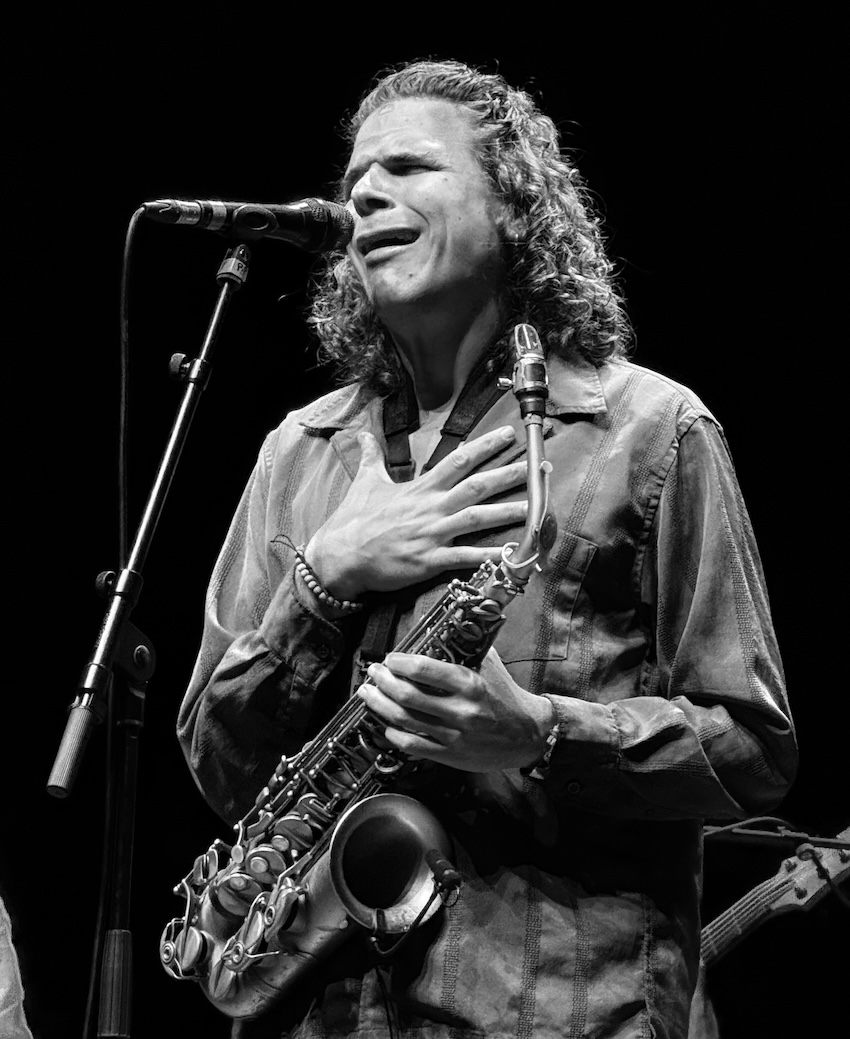
Couleurs Jazz: Exactly! You bring together flamenco, singing, saxophone and jazz improvisation. How do you move between these different worlds? Does duende, that distinctive intensity at the heart of flamenco, naturally find its place in jazz improvisation? You’re certainly well placed to tell us!
Antonio Lizana: I’m lucky in that respect. I know flamenco well because it’s my culture, but I’m also a jazz musician. I’ve studied jazz. And I’ve discovered that flamenco and jazz have something in common, particularly in terms of musical structure, especially when it comes to modal jazz. Flamenco also works with modal structures: you build your melodies around them.
With singing, modal jazz works in much the same way: you have a harmonic framework, and you place different melodies over it every night. For me, it was essentially the same approach. And improvisation is central to both traditions.
There’s another interesting aspect, too. First comes the singing, which then calls for dancing. That’s how things work in traditional flamenco. Since I’d brought singing into the group, it seemed only natural to bring dancing into it as well.
Vincent Thomas – The birth and production of the project
You initiated this production with Oued Music, while also taking part in the concerts as a percussionist. How did the encounter between Erik Truffaz and Antonio Lizana come about? From the outset, did you envisage a living, breathing Spain, brought to life by musicians steeped in flamenco culture, rather than simply a reinterpretation of the original album?
Vincent Thomas: Well, there were basically two things behind it. I’m originally a drummer, and when Erik Truffaz released his album The Dawn more than 25 years ago, it completely blew us musicians away. I remember a friend of mine saying: “I’ve practically peeled that record!” You know, like peeling a piece of fruit until all that’s left is the core. That’s what we did with Truffaz’s album. We took it apart, studied every detail and copied all the drummer’s licks. It was fantastic!
Then Erik released his second album on Blue Note, Beyond the Corners, followed by Mantis. After that, I more or less lost touch with him. I continued listening to other albums, of course, but we went our separate ways.
Then, 30 years later, I ran into Erik Truffaz again in Nepal. We were both invited to the same festival as Antonio. Antonio‘s regular drummer couldn’t make it, so I had to step in at short notice and take his place for the tour.
It turned out to be a wonderful encounter. Erik was completely taken with Antonio‘s playing, and he also got to know me as a musician rather than simply as a manager.
The connection was immediate and very natural. There’s another little anecdote worth telling. Erik loves taking ice-cold baths, and so do I. Unlike his hotel, mine had a swimming pool. So I invited him to join me in “my” pool, and we swam lengths in the cold water at an altitude of 1,500 metres in Kathmandu! That certainly helps bring people together…
It really was a great encounter! Erik was completely captivated by Antonio‘s sound. And you have to understand that Erik is a major figure in my own musical world. That’s how the project began to take shape.
Back in Europe, I called François Lacharme, Honorary President of the Académie du Jazz. I told him about our meeting with Truffaz and Lizana. François immediately came up with an idea: “Truffaz and Lizana have met? Wouldn’t it be great to do something with them? And why not build it around the music of Sketches of Spain?”
We immediately embraced the idea and started putting the project together. So it was François Lacharme who encouraged us and planted the seed. And it was a very good idea!
We then put the tour together, including a date at La Seine Musicale* in Paris.
As for my own role in the project, I’m really somewhere between the two of them. The three of us talk things through together. We’re the core of the project.
At first, I didn’t want to play. I didn’t want to take on the drums. I wanted to stay on the outside and focus exclusively on producing the project.
But then, during rehearsals at Antonio’s place, where we had a residency near Cádiz, I picked up the percussion instruments. We were behaving like rock musicians or reggae players: a local venue, the heat… We worked through the entire repertoire, eight hours a day, some of us bare-chested because of the heat, and we played for five days straight.
Erik Truffaz: I took my shirt off too! We were playing eight hours a day.
Vincent Thomas: And then we finished with a concert at the Cádiz Jazz Festival. The project was up and running!
I was sitting on a cajón, listening to them play, and I started getting the itch. So I jumped in!
Erik Truffaz: And then the bug bit you! Quite right, too. You’d have been frustrated if you’d only been looking after the production side of things.
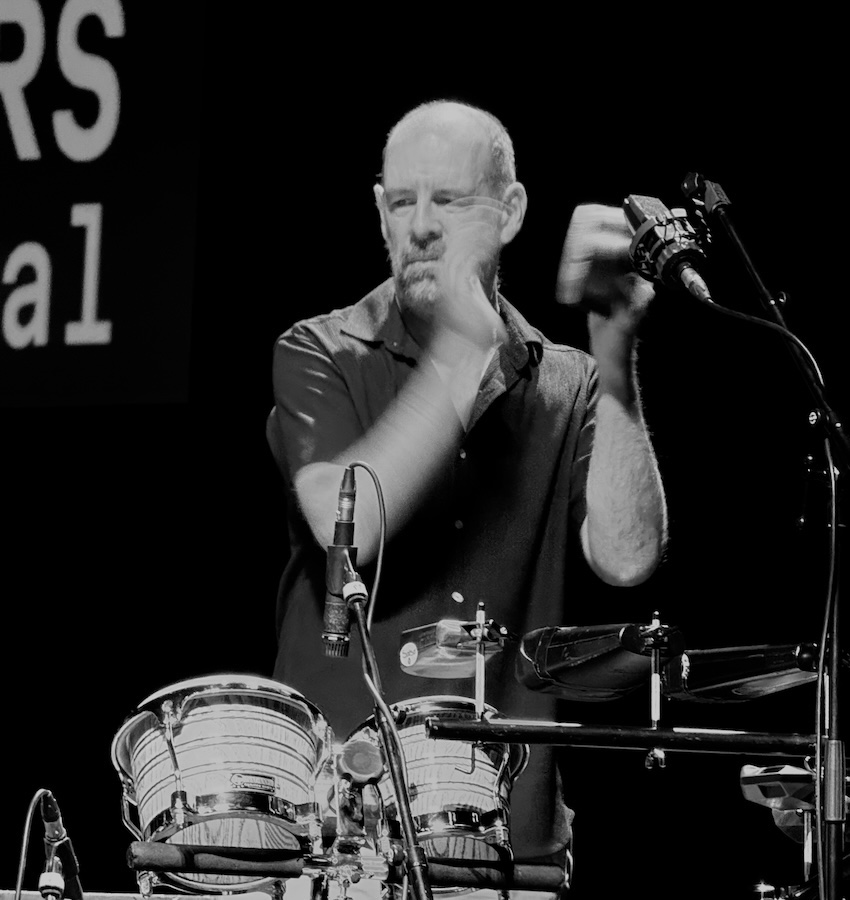
Vincent Thomas: That’s true… A little cajón, some snare drum, and now I’ve got bells, bongos and hand percussion. I’m really happy doing both jobs, manager and musician.
To sum up, I’m also glad I’m not the project’s drummer, because that would have been too much. I’m happy to produce it alongside them, and delighted to be something of a free-ranging musician within the group. It’s perfect for me!
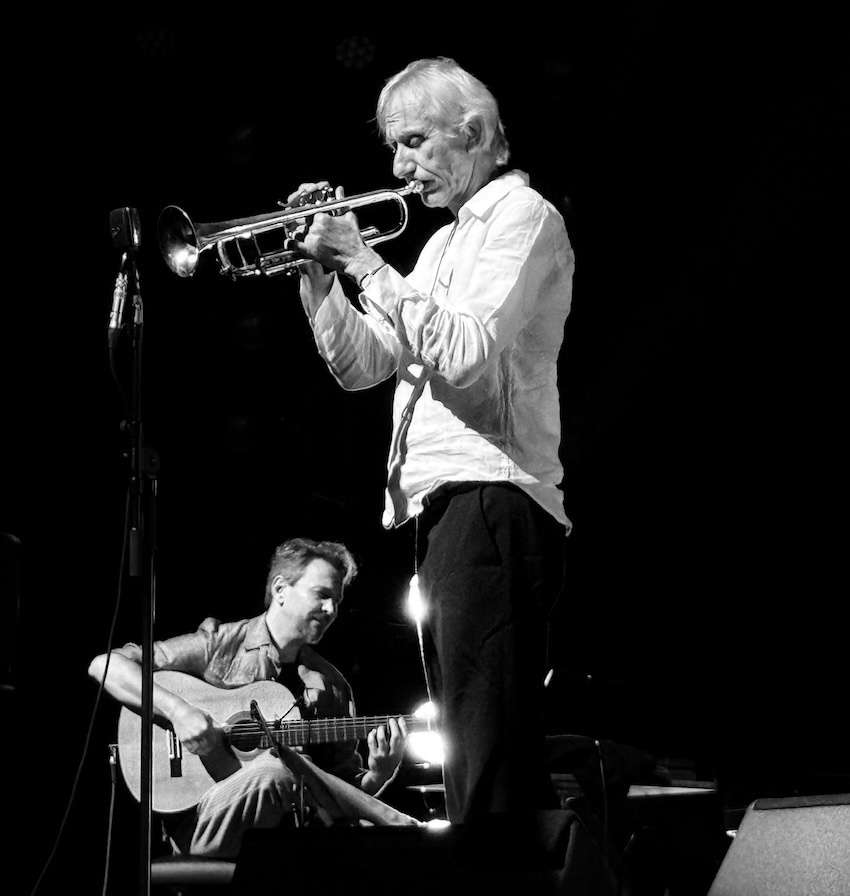
Couleurs Jazz : Was this idea of a living, breathing Spain, brought to life by musicians rooted in flamenco culture, there from the very beginning? Or were you initially thinking more in terms of a group simply reinterpreting the original album?
Erik Truffaz: Absolutely not! Nunca! Never! We never wanted to do a reinterpretation. We really wanted to create a Spanish identity. That was the condition for making the project happen.
Vincent Thomas: One of the really interesting aspects was the orchestral reduction written by Renaud Gabriel Pion. He reduced the original orchestration to just three voices: saxophone, trumpet and bass clarinet. That gave us a substantial musical framework to draw on.
Another important point was that we didn’t want the project to become too intellectual. Antonio, who comes from the oral tradition of flamenco, took that new arrangement, that orchestral reduction, and practically punched holes through it in every direction!
So during rehearsals, we were drawing on two different kinds of material: on the one hand, a very carefully written Western musical score, and on the other, flamenco palos, breaks and elements of the oral tradition that we introduced into it.
It’s genuinely a meeting between the Sketches of Spain album, written music, the music of flamenco and its roots, and dance. There’s a constant back-and-forth between oral and written music throughout the project. And that’s what makes it so exciting!
Couleurs Jazz: So several different sources have come together to create a distinctive and original project?
Vincent Thomas: Exactly. Taking an iconic work and turning it into something new, something both elegant and generous.
Couleurs Jazz: I often use the expression “colours of jazz”, and here we certainly have some very original jazz colours! I’d like to ask all three of you a question. This project brings together very different instruments and musical personalities: trumpet, saxophone, bass clarinet, flamenco guitar, electric bass, drums and percussion. How did you find the right balance between all these instruments? What role do Renaud Gabriel Pion’s arrangements play in this musical architecture? Did he also take part in shaping the project?
Vincent Thomas: Yes. As I was saying, he rearranged the whole thing, and then we drew on that material.
Antonio Lizana: As I mentioned earlier, I went through the pieces he’d written and selected the passages that I felt would work best from a flamenco perspective. I chose them and put them together. He did an incredible job. He’d written enough music to fill an entire concert simply by reading the scores. There was so much material that we could have played for 90 minutes without doing anything other than reading what he’d written!
Erik Truffaz: But that’s not what we wanted. We didn’t want to spend the whole time reading music, page after page. In the end, we kept only about a quarter of the written material. We selected the passages we felt worked best and then put them in order.
I also brought in some very open, spacious material, pieces where we could play with complete freedom. You’ll see what I mean during the concert!
Vincent Thomas: Our repertoire includes pieces from Sketches of Spain, but also compositions by Erik, Antonio, Renaud and the group as a whole.
New Sketches of Spain is really a kind of expanded Sketches of Spain!
On stage: rhythm, dance and collective energy
Antonio Lizana: One of the beautiful things about flamenco, as with all traditional music, is that it’s not just music: it’s a ritual. And that ritual isn’t limited to sound. It also involves looking, movement and physical expression. When we play, we’re already dancing to some extent. It’s all part of the same thing, a complete ceremony.
Couleurs Jazz: Is that something jazz and flamenco have in common? You watch your fellow musicians, you improvise…
Antonio Lizana: Yes, and that happens because the musicians support and encourage one another. That’s what takes place on stage. It’s a collective celebration, not just a matter of sound.
Couleurs Jazz: Right. Would you like to add anything?
Erik Truffaz: I think the dancer is a musical element in her own right. She’s like another percussion instrument. She has an extraordinary sense of rhythm. And she’s an absolutely breathtaking dancer. She’s pure lightning!
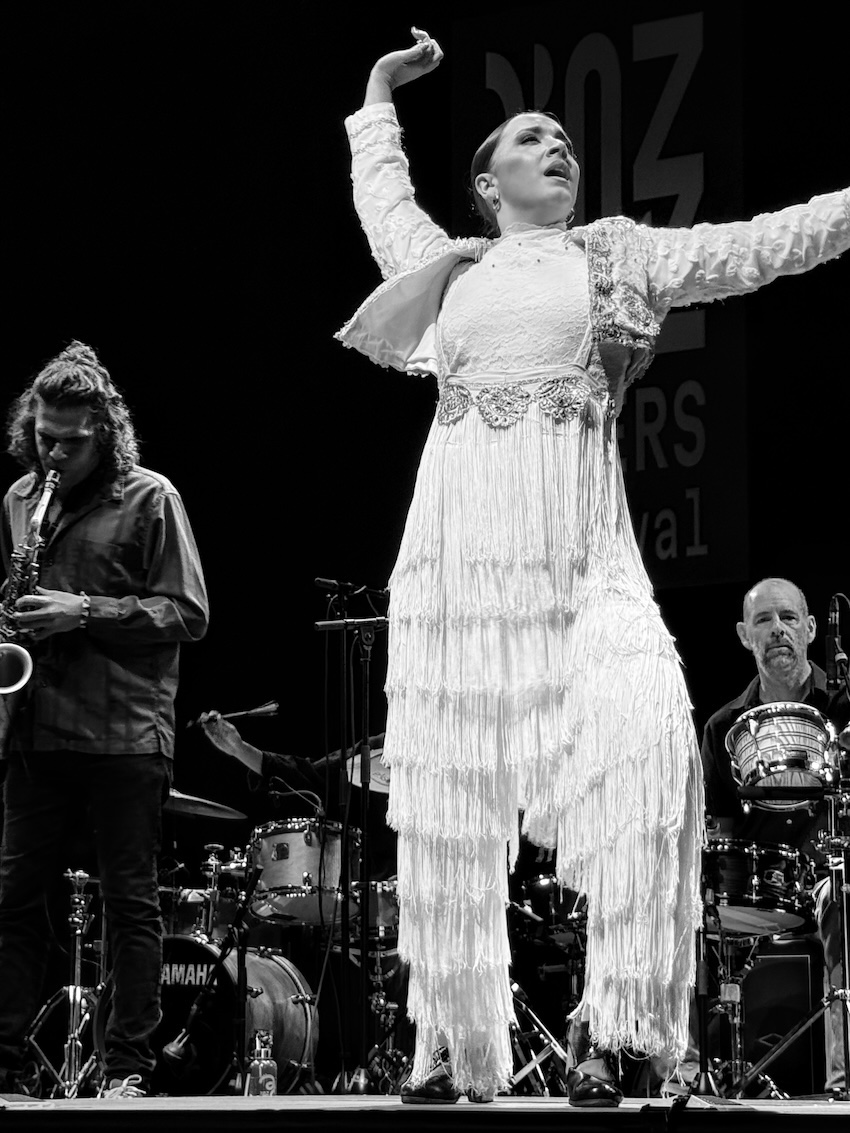
Vincent Thomas: You’ll see! Actually, when you asked that question, I was thinking that Erik should answer it himself. Just watch him on stage and you’ll have your answer!
From rehearsal to the stage: the art of improvisation
Couleurs Jazz: I’ll try to wrap things up so I don’t keep you too long. After the studio work and all the preparation for the show, what changes when you get on stage? You began working together in the south of Spain. What is the difference between that preparatory work and the final result in front of an audience? And after all that writing and rehearsing, how much room is left for improvisation?
Erik Truffaz: You see, when we rehearse, we draw a map. It’s cartography. When we play, that’s the journey. We agree on all sorts of things beforehand, and then we actually live them on stage. Everything takes on the shape it’s supposed to have. For example, Antonio plays a solo in one of the more funk-oriented pieces. At first, it was much shorter, but now it’s getting longer and longer…
Vincent Thomas: Yes, yesterday, for instance, in Saint-Quentin-en-Yvelines, it was longer. For the first time during that solo, he came right to the front of the stage, directly in front of the audience.
You know, we talk a lot about improvisation… And sometimes it’s rather glorified. There are jazz improvisers who always play the same licks, so you can sometimes find less genuine improvisation in jazz than in other kinds of music.
What really matters is the attitude of improvising. It’s not just about harmony. It’s about rhythm, the group, the audience… When you try to do something truly spontaneous, you take risks. And that’s a good thing.
Personally, I like it when musicians are prepared to take risks.
Couleurs Jazz: Since we’re here in Nevers, what would you like the people of Nevers to take home with them tonight, when they return to their homes?
Erik Truffaz: Stars in their eyes, dreams in their hearts, and a better life! Yes, especially as life isn’t always easy in rural France.
Couleurs Jazz: And finally, is an album planned? How many concerts have you played since the project first came together?
Erik Truffaz: We’ve played around forty concerts this year. We will make an album, but it will feature original compositions… In about four years!
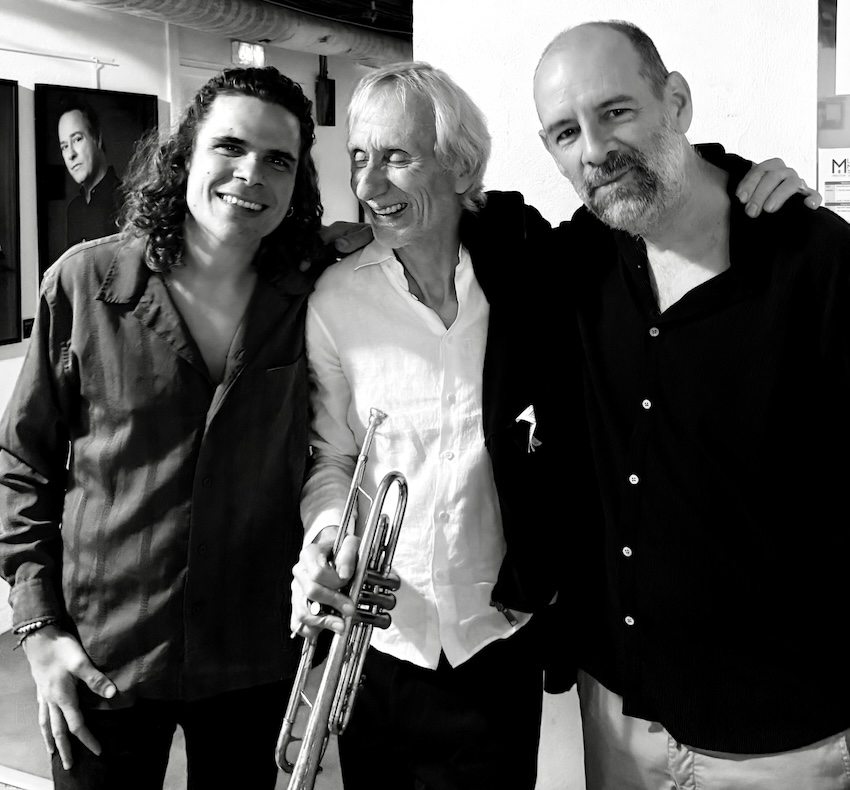
Line Up :
Erik Truffaz – trumpet
Antonio Lizana – alto saxophone, flute & vocals
Renaud Gabriel Pion – bass clarinet, arrangements
Oscar Lago – flamenco guitar
Santiago Fernandez – electric bas
Manuel de la Torre – drums
Vincent Thomas – percussions
Sara Sanchez – danse
(*) La Seine Musicale, a concert venue in the Paris region where François Lacharme has been presenting some of the finest names in jazz for several years.
©Photos Couleurs Jazz.









RECENT COMMENTS