
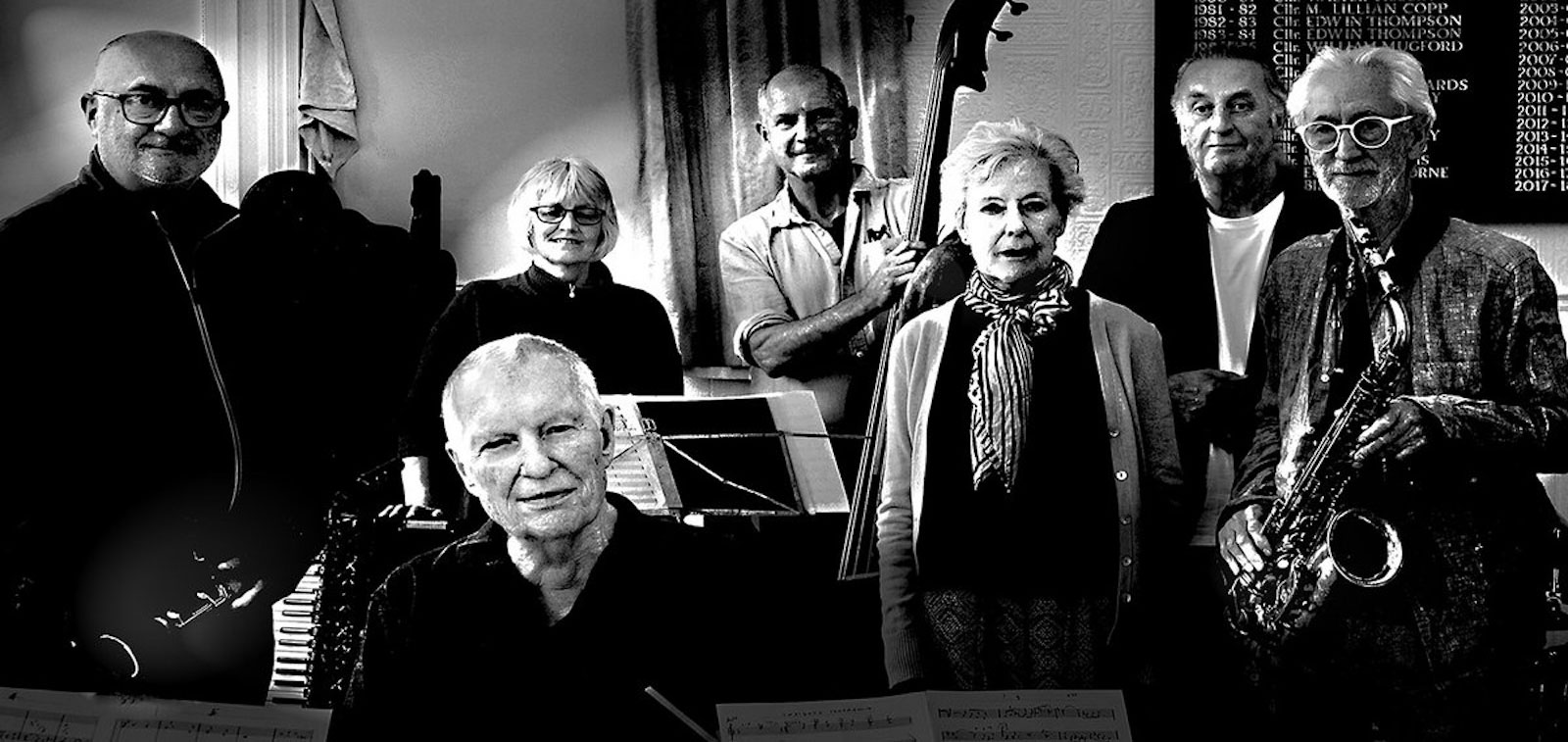
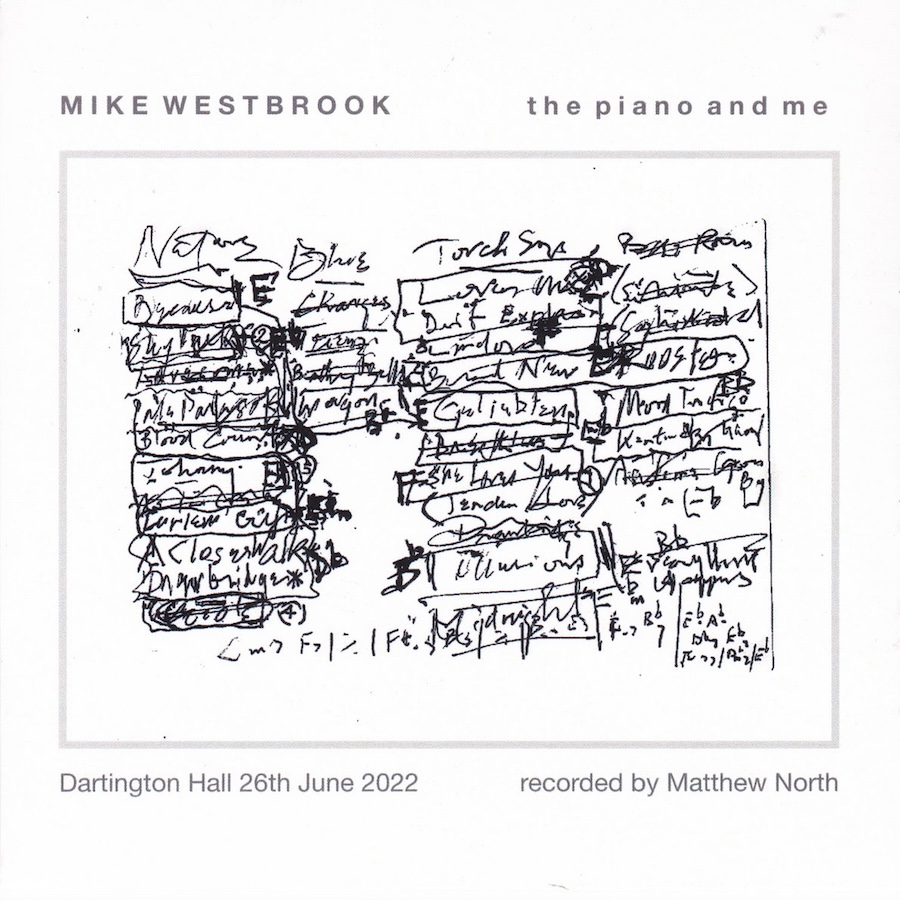
I had the opportunity to interview Mike Westbrook—who passed away on April 13, at the age of 90—and his wife Kate during one of their last visits to Paris, where they were performing in a trio with saxophonist Chris Biscoe at Hélène Aziza’s 19 Paul Fort venue.
That was back in 2013! This speaks volumes about the scant attention France has paid to one of the greatest British and European musicians—a musician whom festival directors had frequently invited and whom French audiences had applauded time and again over the preceding decades. This confirms—if confirmation were needed—just how much French decision-makers call the shots when it comes to programming, and often overlook major artists in favor of “newcomers” who are sometimes of little interest.
For Mike Westbrook is a pillar of European jazz. He began to make a name for himself in Britain in the late 1960s at the helm of large orchestras featuring soloists of the caliber of saxophonist John Surman or trumpeter Kenny Wheeler. It was, on the Old Continent, a golden age for this type of ensemble: the Willem Breuker Kollektief in Holland, Alexander von Schlippenbach’s Globe Unity Orchestra in Germany, Jef Gilson’s orchestras in France, and later the Vienna Art Orchestra in Austria or the Italian Instabile Orchestra.
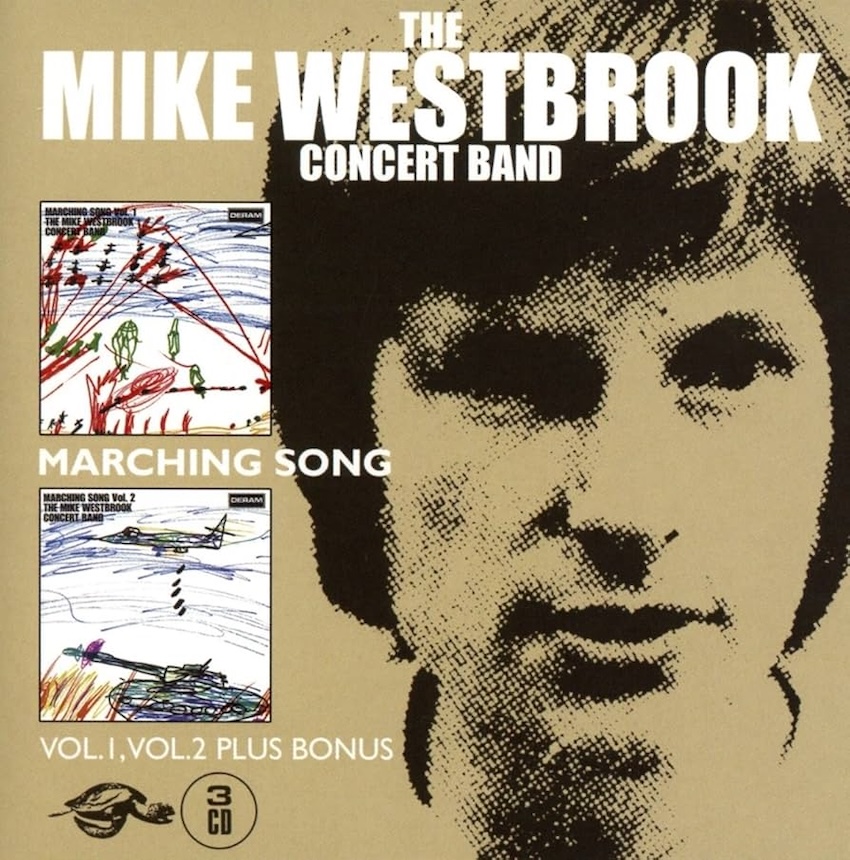
What set Mike Westbrook apart, in this highly creative context, was his choice to perform with either a large orchestra or a smaller brass band, drawing inspiration from a variety of musical and literary sources, such as the poets Arthur Rimbaud, William Blake, and Federico García Lorca, whose texts Kate Westbrook sang in their original languages. Thus, Westbrook paid tribute in turn to Duke Ellington, the Beatles, Kurt Weill, or Rossini with impressive and multifaceted compositional skill, often tinged with a very British sense of humor. Tours across Europe and commissions from festivals and concert halls multiplied over the years, and hearing and seeing a Mike Westbrook concert was each time an immersive experience in the melting pot of a fusion of music, brimming with ideas, poetry, and nods to both popular and classical music. Westbrook himself performed at times on the piano and at times on the small tuba, and it is clear that he drew equally from jazz and the world of British folk brass bands. Entirely self-taught in composition, this personal approach to writing granted him great freedom and undeniable originality, without the slightest trace of intellectual or elitist posturing. An approach that would later be seen in Django Bates, one of his younger contemporaries whom he clearly influenced.
Over the years, as international audiences began to turn away from him and given the difficulty of supporting a large orchestra, Westbrook most often performed abroad with a trio featuring his wife Kate on vocals and the small tuba, and saxophonist Chris Biscoe.
But he always continued to conduct a large orchestra of passionate amateurs for whom he wrote and which performed in the provinces of the United Kingdom. Westbrook was equally at home in classical music as he was in jazz and popular music, which he blended and transcended with an invigorating verve that is certainly missed by those who were able to hear him in his heyday.
May his passing, at the age of just 90, be an opportunity to (re)discover his work.
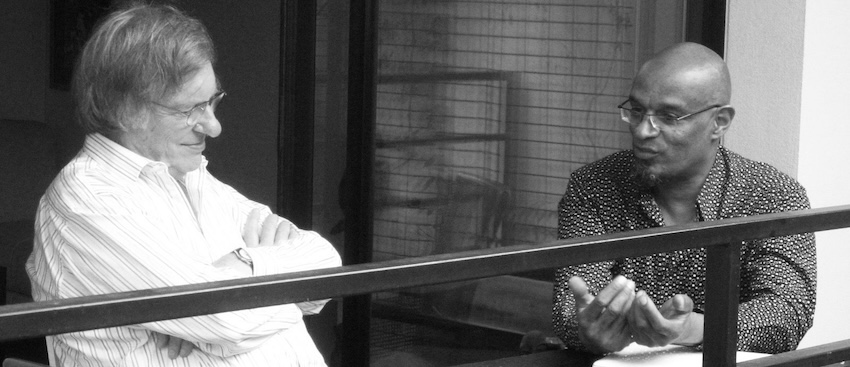
©Mike Westbrook interview by Thierry Quenum
©Photo Header is a part of the cover “Band of Bands”



RECENT COMMENTS