

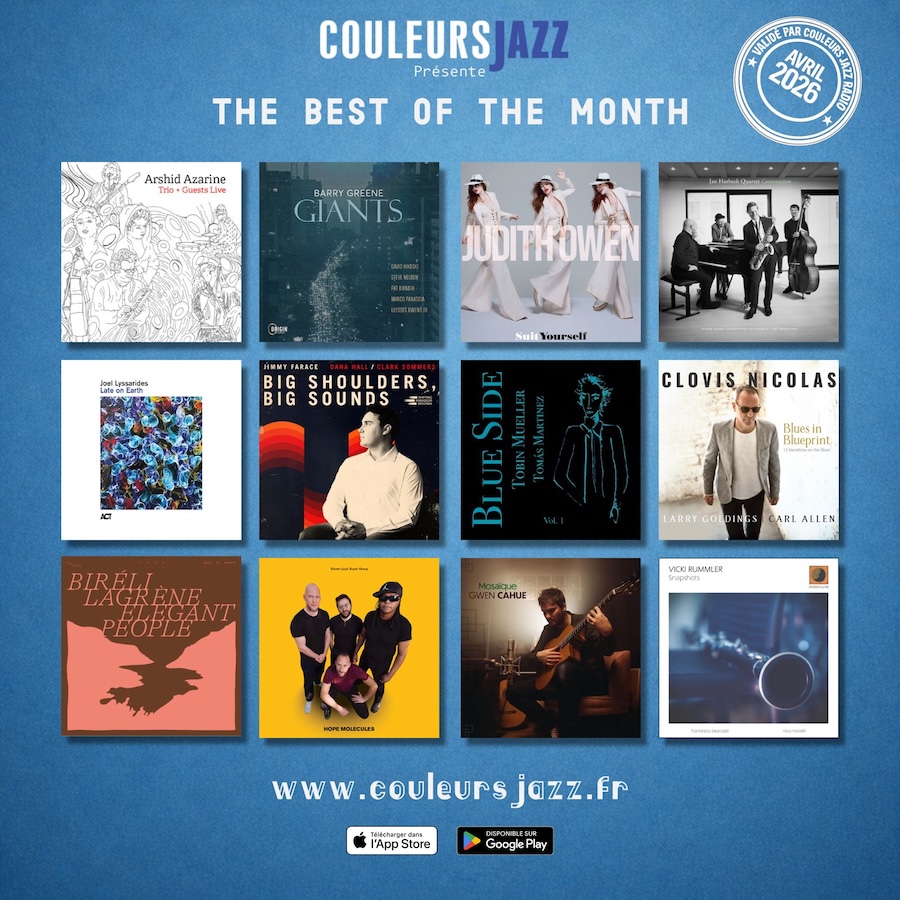

[COULEURS JAZZ MONTH – THE BEST OF!]
Only on COULEURS JAZZ RADIO – www.couleursjazzradio.fr:
Paris-time: Monday 04:00pm, Tuesday 05:00pm, Wednesday 06:00pm.
NYC time :at 08:00PM Tuesday and 10:00 PM Wednesday
12 Best albums releases of last month: April 2026, so:
Chantez sous l’appli !
Apps Couleurs Jazz Radio GooglePlay : https://bit.ly/CJRGooglePlay
Apps Couleurs Jazz Radio iOS Appstore : https://bit.ly/CJRAppstore
- Judith Owen for ” Suit Yourself“
- Biréli Lagrène for “Elegant People”
- Slaven Ljujic Super Group, Linley Marthe & Laurent Coulondre for “Hope Molecules”
- Vicki Rummler, Francesco Bearzatti, Nico Morelli for “Snaphots”
- Jan Harbeck Quartet for “Conversation”
- Clovis Nicolas for “Blues in Blueprint”
- Joel Lyssarides for “Bortom Bergen”
- Jimmy Farace for “Big Shoulders, Big sounds”
- Arshid Azarine for “ Trio + Guests Live”
- Barry Greene for “Brass”
- Tobin Mueller, Tomás Martinez for “Blue side Vol.I”
- Gwen Cahue for “Mosaïque”
Judith Owen – Suit Yourself
For several years now, Paris had been eagerly awaiting the return of Judith Owen and her Gentlemen Callers, along with the release of her new album. The wait is finally over.
There is something about this new record that breathes the heat and humidity of New Orleans. Recorded at Esplanade Studios, it extends Judith Owen’s ongoing exploration of jazz and blues, this time with a sense of freedom that makes itself felt from the very first notes.
Surrounded by her faithful Gentlemen Callers and the J.O. Big Band, she builds a program where standards converse with more unexpected choices. The presence of Davell Crawford and Joe Bonamassa goes far beyond a simple guest spot: they become part of an almost organic collective breath, where each intervention finds its place without ever upsetting the balance.
Judith Owen’s voice, as embodied as ever, moves between formats—from the intimacy of piano and voice to the full scale of a big band—with a flexibility that gives the album its unity. Standout moments include the deeply inhabited Today I Sing The Blues (in duet with Davell Crawford), the understated elegance of Mind Is On Vacation, and the slightly roguish charm of That’s Why I Love My Baby.
Please read here this article and ITV of Judith Owen by Jacques Pauper.

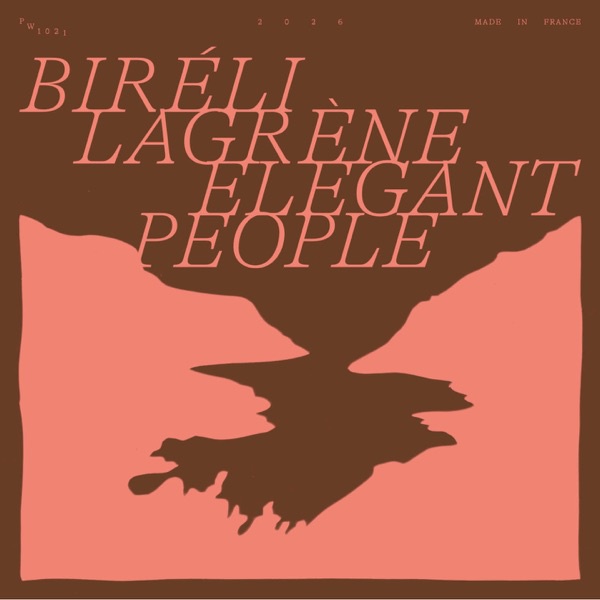
Biréli Lagrène – Elegant People
Biréli Lagrène has many strings to his bow. He was originally, and frequently since, heard playing in the gypsy style, which is his primary mode of playing, from his teenage on.
He then practiced jazz fusion, among others with Jaco Pastorius. Later, he was heard in a duo with Sylvain Luc on acoustic guitar. But at the same time, Lagrène has always shown a taste for standards and for a style influenced by guitarists such as Wes Montgomery or George Benson.
And it is to this repertoire that he devotes himself on this new quartet album. Apart from four themes of his own (one of which was inspired by John Coltrane’s “Giant Steps”), the repertoire of this opus consists of compositions by Wayne Shorter, Johnny Mandel or Ivan Lins. Supported by Jean-Yves Jung‘s acoustic and electric keyboards,
Read the following here of this paper by Thierry Quenum.
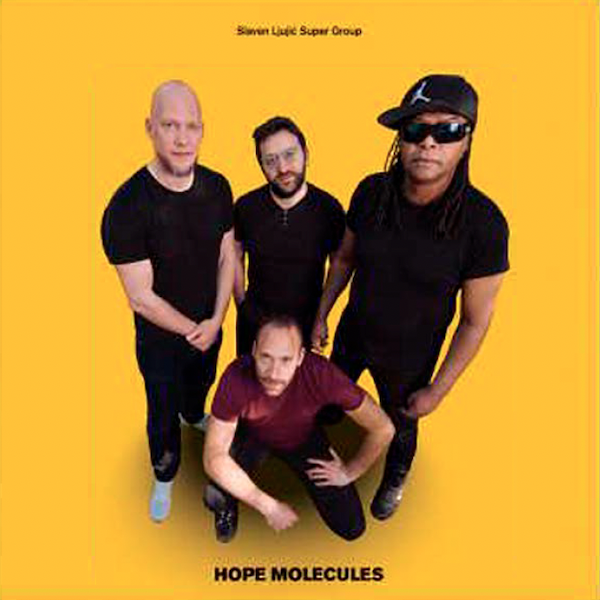
Slaven Ljujic Super Group, Linley Marthe & Laurent Coulondre – “Hope Molecules”
Slaven Ljujić unveils today his debut studio album, Hope Molecules, a foundational work that marks a decisive milestone in his artistic journey.
A Montenegrin composer, drummer, and bassist, and a graduate of Berklee College of Music, he is gradually establishing himself as a singular voice in European jazz, at the crossroads of Balkan and North American influences.
Hope Molecules’ concept took shape in various forms long before the final formation of the “Super Group” envisioned by Slaven. At just the right moment, fate brought the musicians together on the stage of the J.A.M. Festival in Montenegro, where Slaven assembled an exceptional quartet for the first time with Laurent Coulondre, Linley Marthe, and Ben Kraef.
The musical connection was immediate. The very next day, the quartet entered the studio in Podgorica to record Slaven’s compositions and capture the creative energy born from their very first performance together.
Recorded over two intense days, the album asserts a clear identity: a free and soulful jazz drawing inspiration from the legacy of artists such as Joe Zawinul, Weather Report, The Yellowjackets, and Tony Williams Lifetime, yet firmly rooted in the present.
Between the Balkans and North America, Hope Molecules explores a wide range of atmospheres, from energetic grooves to more contemplative moments.
With this debut album, Slaven Ljujić delivers a powerful artistic statement and opens a new chapter in his international career, affirming a vision of jazz founded on improvisation, collective spirit, and risk-taking.
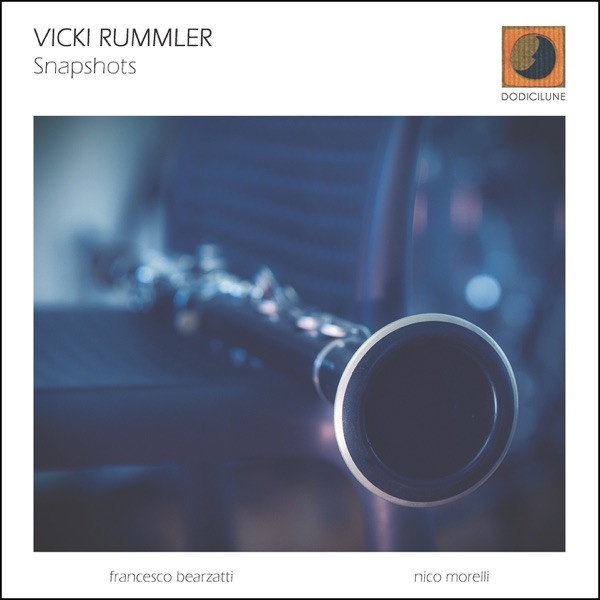
Vicki Rummler, Francesco Bearzartti, Nico Morelli – Snaphots
A voice with a magnificently original timbre, full of feeling and impressively precise in its ability to navigate harmonies and rhythms, accompanied by a woodwind (clarinet or soprano saxophone) and a pianist—that’s not all that common.
And when the two instrumentalists are Francesco Bearzatti and Nico Morelli, you can be sure the musicality will be top-notch.
And that’s exactly the case, because Viki Rummler, the vocalist, is herself an accomplished musician who has mastered the art of inventive and fluid phrasing, whether singing lyrics or scatting, with an absolutely stunning freedom of tone and delivery.
Suffice it to say that, from the very first notes, you’re swept away by the sounds produced by this unconventional trio, whose charm will work its magic again with every new track. While Morelli’s piano possesses a cantabile tone that can only be achieved on this instrument through a refined touch, Bearzatticaptivates your ears with his ability to modulate sounds—sometimes fluid, sometimes rougher—with a sense of timing that is utterly breathtaking…
Read the following of this paper by Thierry Quénum.
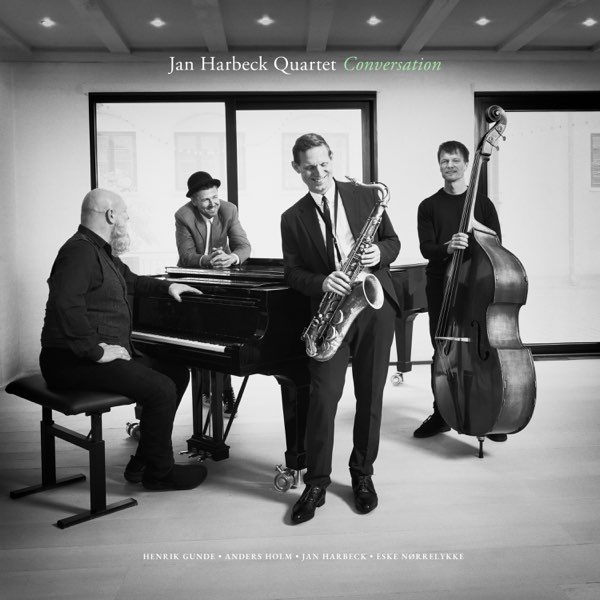
Jan Harbeck Quartet pour “Conversation”
A return visit from tenor saxophonist Jan Harbeck and his quartet, though “accompanists” hardly does them justice. These are long-standing accomplices, co-conspirators in sound.
What unfolds here is less a soliloquy than a four-way conversation, the rhythm section lending weight, contour, and quiet authority to the saxophonist’s voice.
Right from the opening bars, there’s that telltale hush, the soft susurration of a held breath, and somewhere in the grain of the tone, a trace of Ben Webster flickers into life. It’s breath beside breath, a doubled exhalation that wraps the listening experience in velvet. Everything hinges on breath control rather than fingerwork, a signature of a melodist who courts romance over display.
Add to this the pianist’s improbable voicings and quicksilver right hand, the drummer’s assured, near-saturated drives, and the double bassist’s steady yet omnipresent grounding, and you have a quartet of rare velocity, one that might be said to conjugate Erik Satie with Johann Sebastian Bach.
Read here the following of this conversation by Jean-Michel Schlosser.
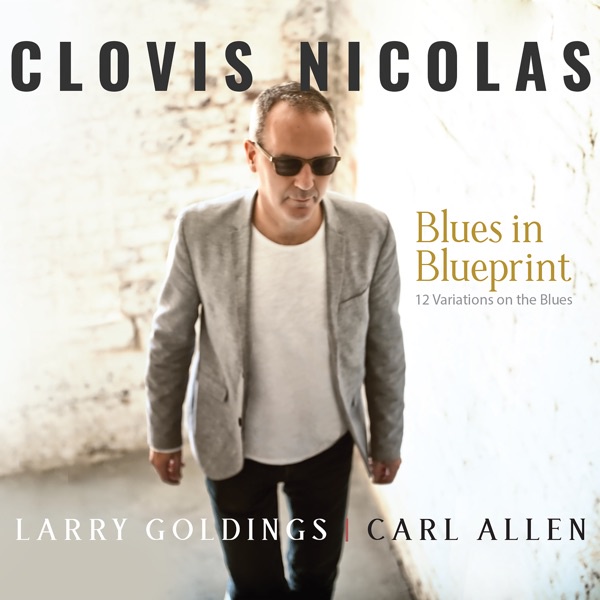
Clovis Nicolas – Blues in Blueprint
The beauty of tradition is that you can always return to it, no matter what style you usually play.
And what tradition is best suited to provide a solid foundation for a jazz musician? The blues, of course! And for this return to his roots, Clovis Nicolas has chosen a renowned partner who may surprise some, as he is better known as an organist than as a pianist.
It is therefore also a return to his roots for Larry Goldings, and it is a treat to hear him tackle classic and more recent blues tunes, including one of his own compositions and four themes penned by Nicolas.
Here, Goldings is both fully in the tradition of blues piano and perfectly contemporary, making use of his highly subtle touch, fluid phrasing, and a thoroughly personal harmonic and rhythmic inventiveness that works wonders in his solos…
Read the Following of the paper by Thierry Quenum.
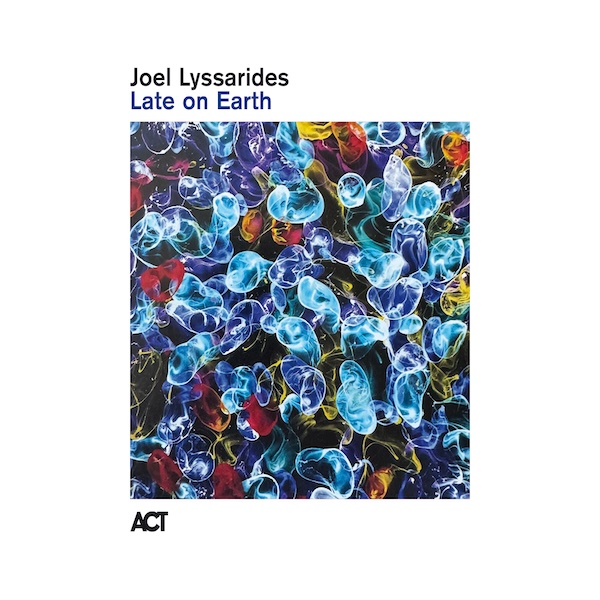
Joel Lyssarides – Bortom Bergen
The music presented here by Swedish pianist Joel Lyssarides is deeply atmospheric.
It evokes a contemplative, meditative atmosphere that is at the same time sunny—though a Scandinavian sun that does not burn and does not drive one to seek shade.
The piano displays a way of unfolding harmonic textures that avoids excessive sophistication and favors full chords, rich in melody, which the musician sometimes draws from the lower registers of his instrument. In this context, the right hand unfolds beautiful melodies with shimmering contours and an often pearly touch, which sound natural, even impressively candid, and gently nestle in the listener’s ear.
Read the following of this paper by Thierry Quenum.
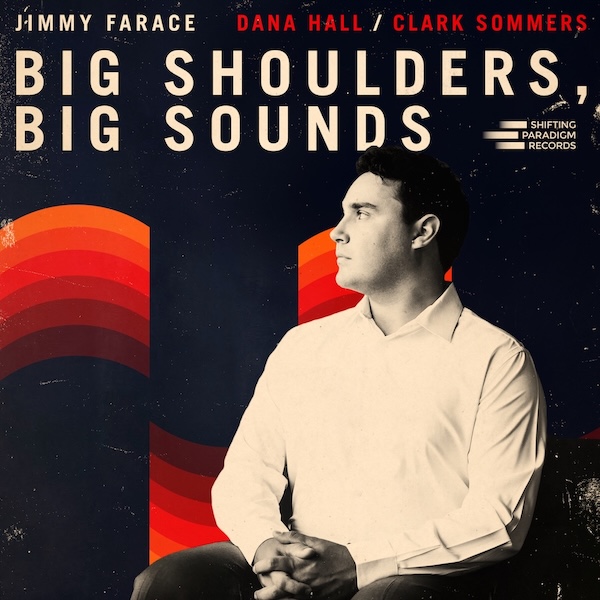
Jimmy Farace – Big Shoulders, Big Sounds.
Curiously, while its tenor, alto, and even soprano cousins have frequently adopted the trio format with bass and drums, the baritone saxophone has very rarely (to my knowledge) been played in this context without the support of harmonic instruments such as the piano or guitar.
And—significantly—the one taking on this challenge here is not one of the instrument’s established practitioners in New York City but a true-blue Chicagoan, which helps reinforce the Windy City’s reputation as a place where jazz flourishes without worrying about its rivals on the East or West Coasts.
So, who is this Jimmy Farace, whom I knew nothing about until now and who is releasing his second album in two years?
… To discover it, Please read here our article by Thierry Quenum.
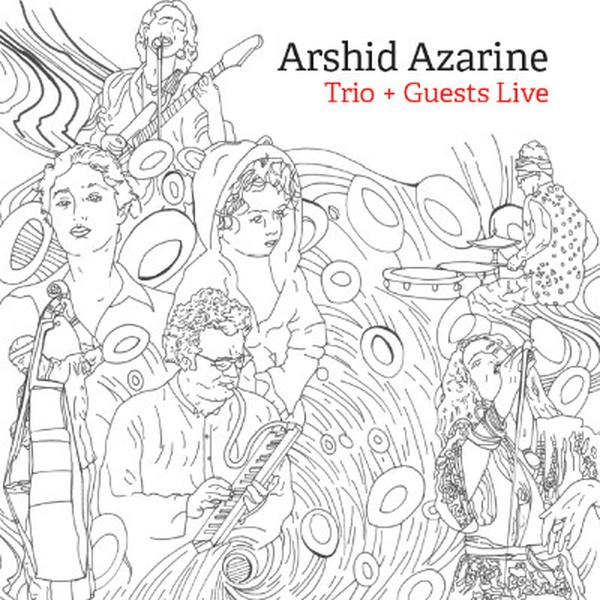
Arshid Azarine – Trio + Guests Live
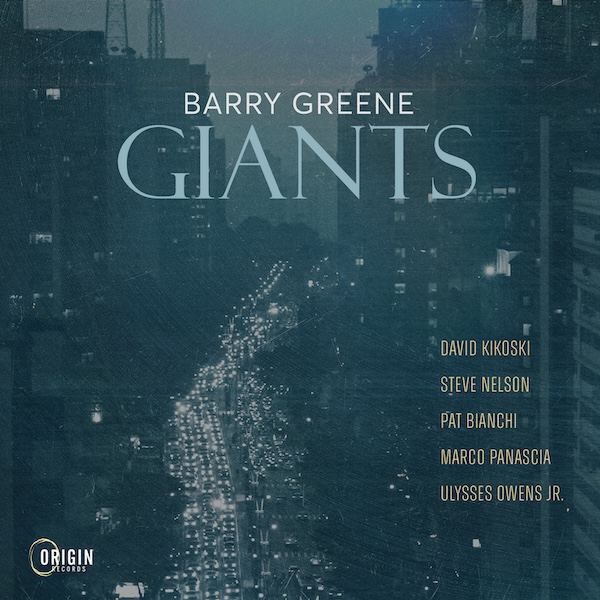
Barry Greene – Brass
Here is a guitarist who deliberately places himself within the great tradition of American jazz guitar.
If only because most of the tracks on this album were written by legendary guitarists, ranging from Grant Green to Pat Metheny, including Wes Montgomery, Russell Malone or Pat Martino. And one can’t help but wonder why Greene left out George Benson, as it’s clear he’s also among his influences.
An album that fits into the tradition, then, but does so without being slavish or overly reverent. And while Greeneincludes only one personal composition in his repertoire here, one can imagine this is a form of humility from a musician who has matured in the shadow of giants (hence the album’s title) without seeing himself as a dwarf perched on the shoulders of these six-string stars.
Furthermore, Greene has taken care to diversify the lineups performing alongside him here: on the one hand, a guitar/organ/drums trio that will remind any connoisseur of the glory days of this type of combo in the ’60s and ’70s while offering a perfectly contemporary take on it; on the other hand, a quintet featuring piano, vibraphone, double bass, and drums, which is more original since it has fewer historical models to draw upon.
Read the Following of the paper by Thierry Quénum.
Tobin Mueller, Tomás Martinez – Blue side Vol.I
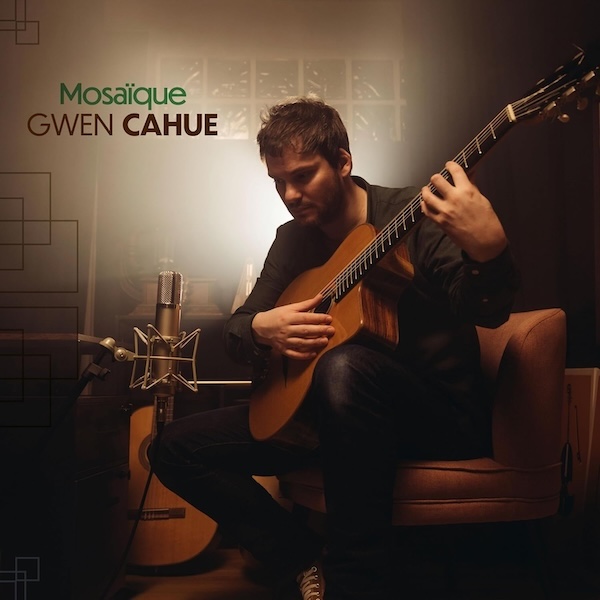
Gwen Cahue – Mosaïque
If the sheer number of strings to his bow and technical virtuosity were enough, the Manouche angels would already have descended upon guitarist Gwen Cahue.
But that extra spark of soul also runs through his cross-border jazz compositions, which weave together Django’s legacy, inventive reinterpretations of standards, and performances that brush up against the classical realm.
This is his fifth album. Following several already acclaimed releases, Gwen Cahue, entirely on acoustic guitar and exploring a range of rhythmic approaches, spins his web of strings through diverse inspirations, a sign of a fully matured guitar language. A rising star of French gypsy jazz, to which his Breton roots did not necessarily predestine him, his many encounters within the genre have shaped a musical writing that draws from tradition without ever being confined by it…
Read here the following of this conversation by Jean-Michel Schlosser.










RECENT COMMENTS