
Gaume Jazz Festival, 42nd edition Belgium, August 7–9, 2026
As it does every year, Gaume Jazz offers the chance to discover Belgian artists whom we rarely get to hear in France. But that’s not all, as the festival always features European ensembles that Jean-Pierre Bissot, the director of Gaume Jazz, selects with remarkable discernment.
Friday, August 7
The first group to take the stage is a jazz-rock quartet that delivers energetic music in which the fiery guitar solos of the band’s leader, Guillaume Vierset, take center stage.
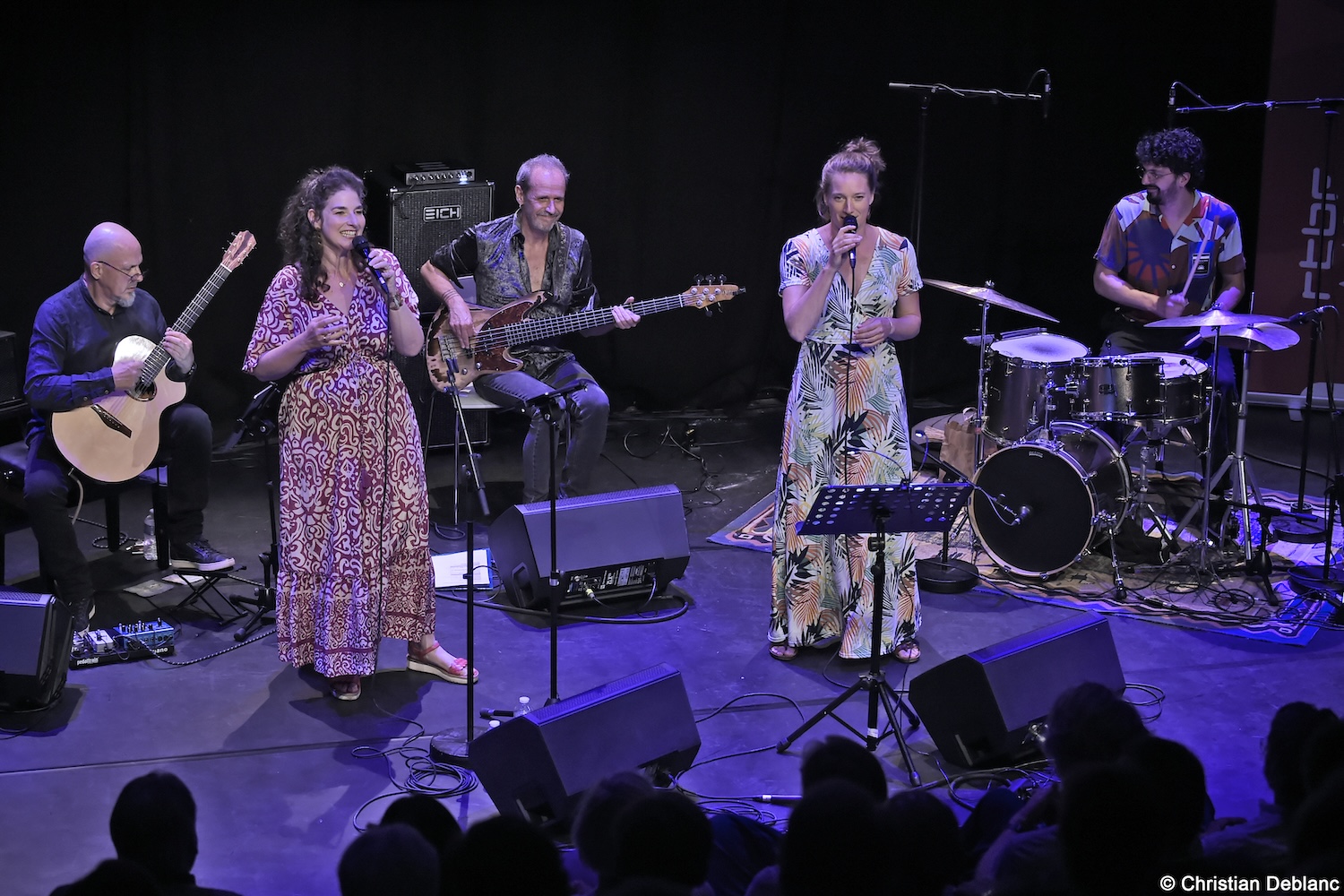
This stands in stark contrast to Barbara Wiernik’s quintet, where the focus is on the vocals. Two female voices with warm timbres are accompanied by a trio in which the electric bass and guitar take turns delivering beautiful melodic solos, while the drums provide a backing that is at times subtle, at times more assertive. The two voices alternate between singing lyrics and refined scat. Drawing on themes she has written herself or those by other composers, Barbara Wiernik offers music of profound lyricism—at times gentle, at times vigorous—whose charm is hard to resist.
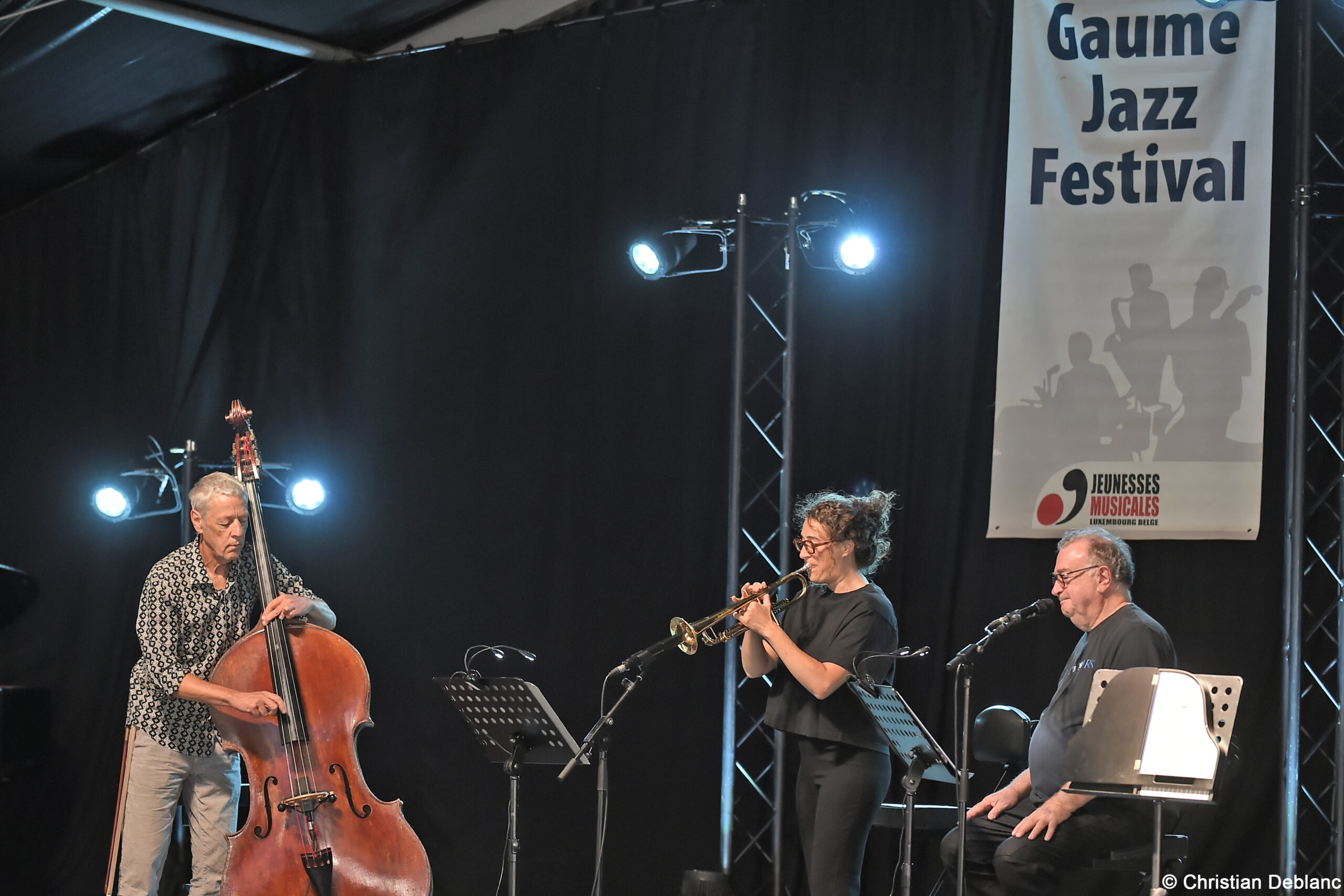
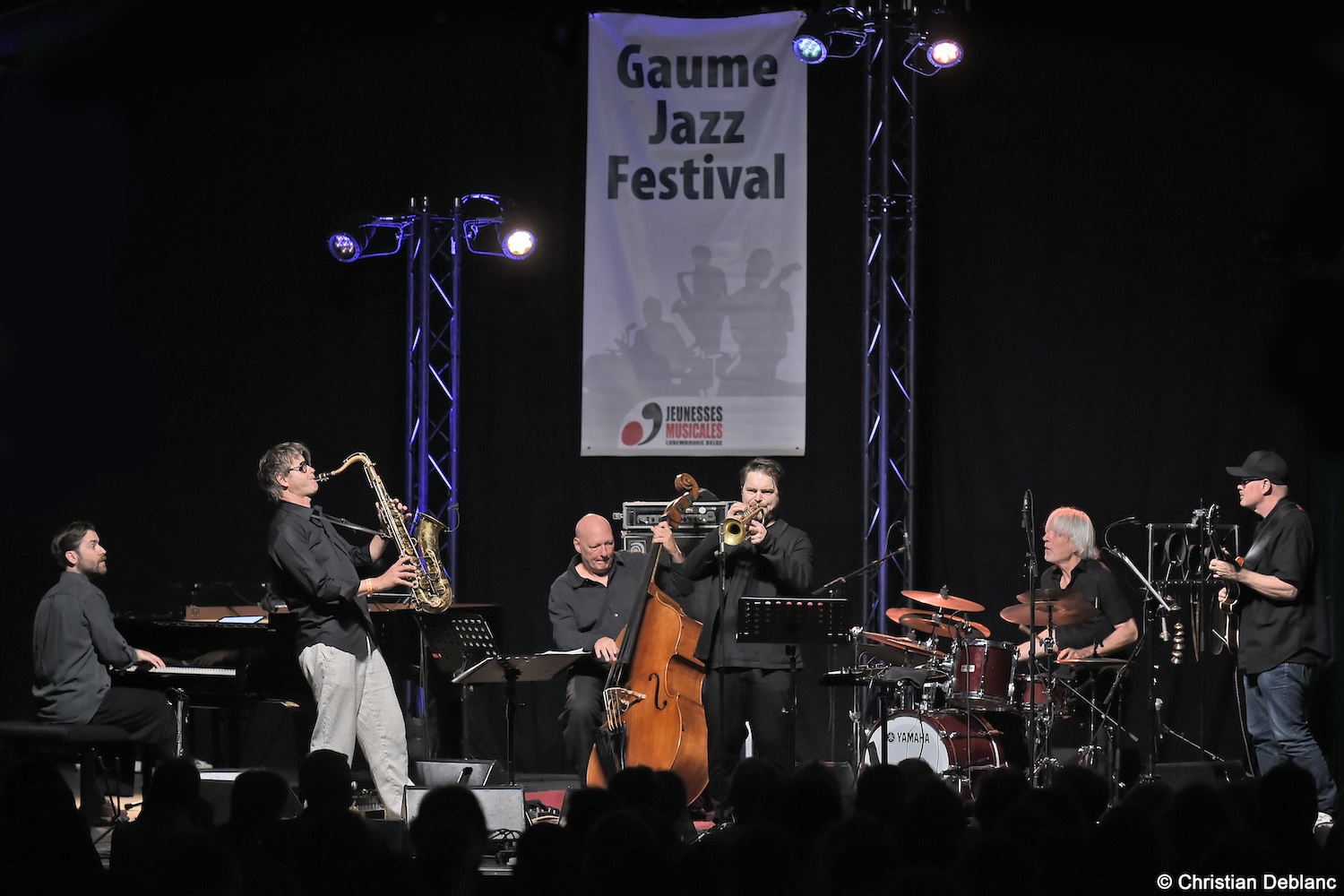
Asking Alex Dutilh to recount his encounters with Keith Jarrett alongside Jean-Philippe Viret and Airelle Besson might seem like a far-fetched idea. Yet it works! Dutilh does indeed have a lot to say about Jarrett, whom he has interviewed on several occasions. And the trumpet-and-double-bass duo is remarkable in the way they listen to one another as they reinterpret standards with masterful inventiveness. With a deeply felt lyricism, they punctuate the narrator’s remarks and excerpts from Jarrett’s interviews, unfolding a personal poetry that resonates well with that of the pianist. And in the absence of Jarrett—whom we will likely never see on stage again—a large audience turned out to witness this tribute to a musician who holds a unique place in the music of the past half-century.
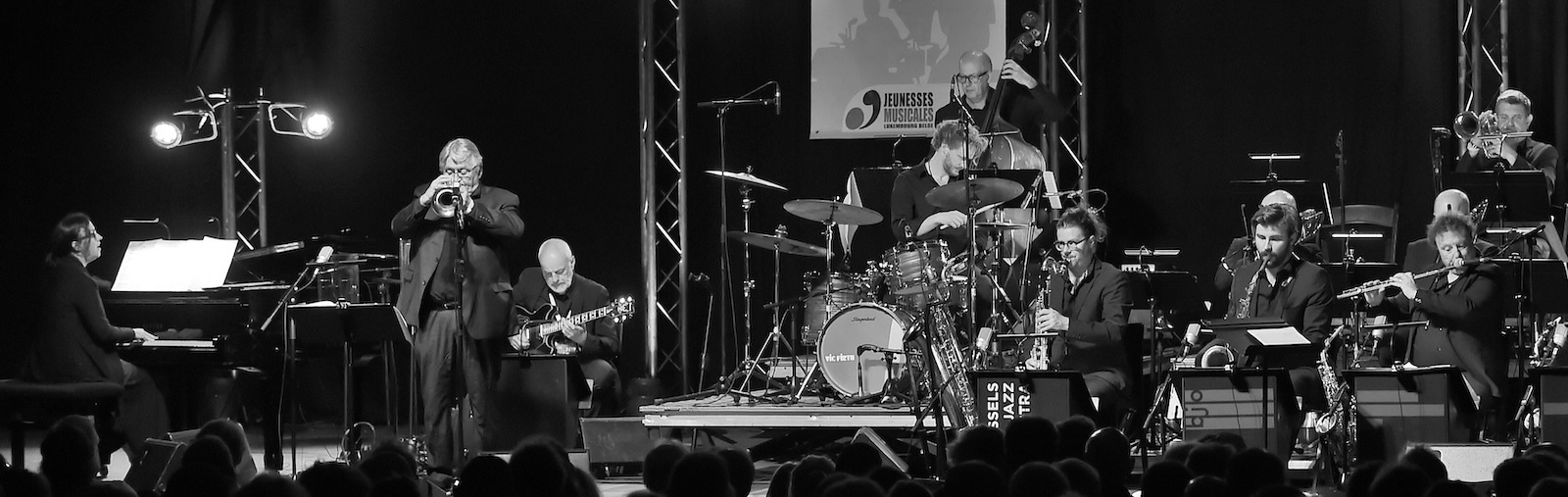
To celebrate her 60th birthday, Nathalie Loriers has put together a brand-new repertoire for the Brussels Jazz Orchestra, for which she has been the resident pianist for over 20 years. The Belgian ensemble is widely recognized as one of Europe’s finest orchestras, and Nathalie Loriers as one of the Old Continent’s most inventive pianists. Hearing her put the orchestra at the service of her compositions—for which she is the principal arranger—is a true delight, as each one tells a story that the orchestra’s magnificent sound enhances. The soloists are all remarkable improvisers, and Nathalie gives them ample space, while her piano often takes on a supporting role—which makes the few solos she allows herself stand out all the more and highlight the sumptuousness of her touch and the fluidity of her phrasing. Nathalie Loriers is a gifted melodist, and this first foray into big band arrangements was a complete success—one that the large audience at the Gaume Jazz main tent truly appreciated.
Saturday, August 8
It’s always a pleasure to discover new talent, and Stéphane Mercier is just that—at least for me. The Belgian saxophonist has a richly textured tone on his C melody saxophone, and his improvisations are backed by an excellent trio featuring his son on piano, whose solos are particularly impressive. The repertoire consists mainly of original compositions by the bandleader or other band members, including a magnificent suite. A top-notch quartet.
The quartet led by pianist and singer An Pierlé, which followed immediately afterward, offered an interesting contrast: her powerful voice modulated the notes with a keen sense of nuance, and the trio—in which the bass was replaced by a synthesizer—that accompanied her alternated between electric and more acoustic sounds, while a saxophonist added incandescent solos to the ensemble.
It was impossible to get into the small venue where the next group was performing because it had reached capacity. So, I listened from outside to the concert by cavaquinho player Maxime Blesin’s quartet, featuring, among others, trumpeter Greg Houben: Brazilian-inspired jazz performed with sensitivity and a swaying rhythm, featuring a magnificent acoustic sound that shone through, particularly in the solos.
Hailed as a revelation, the Luxembourg trio Dock of Absolut—which had never performed at a Belgian festival before—impressed with their virtuosity. A pianist with a frequently rhythmic style and a powerful touch, who composes the entire repertoire—featuring frequently repetitive motifs—an electric bassist with a highly flexible playing style, and a drummer whose playing is full of polyrhythmic energy: this is a winning trio that drew a full house in the main tent. And it’s easy to see why they’re so popular: among the plethora of piano trios found just about everywhere, this one asserts a strong identity and delivers a very physical performance that works wonders in a live setting.
In contrast, the Petite Lucette quartet offers music with a welcome freshness. A soprano saxophonist with a tangy tone and a delightfully twirling phrasing, a keyboardist with mellow sounds—sometimes playful or almost acoustic—a vigorous, spirited double bass, and drums that are as invigorating as they are melodic… these young musicians are truly inspiring, and their colorful music makes you want to dance and tap your feet.
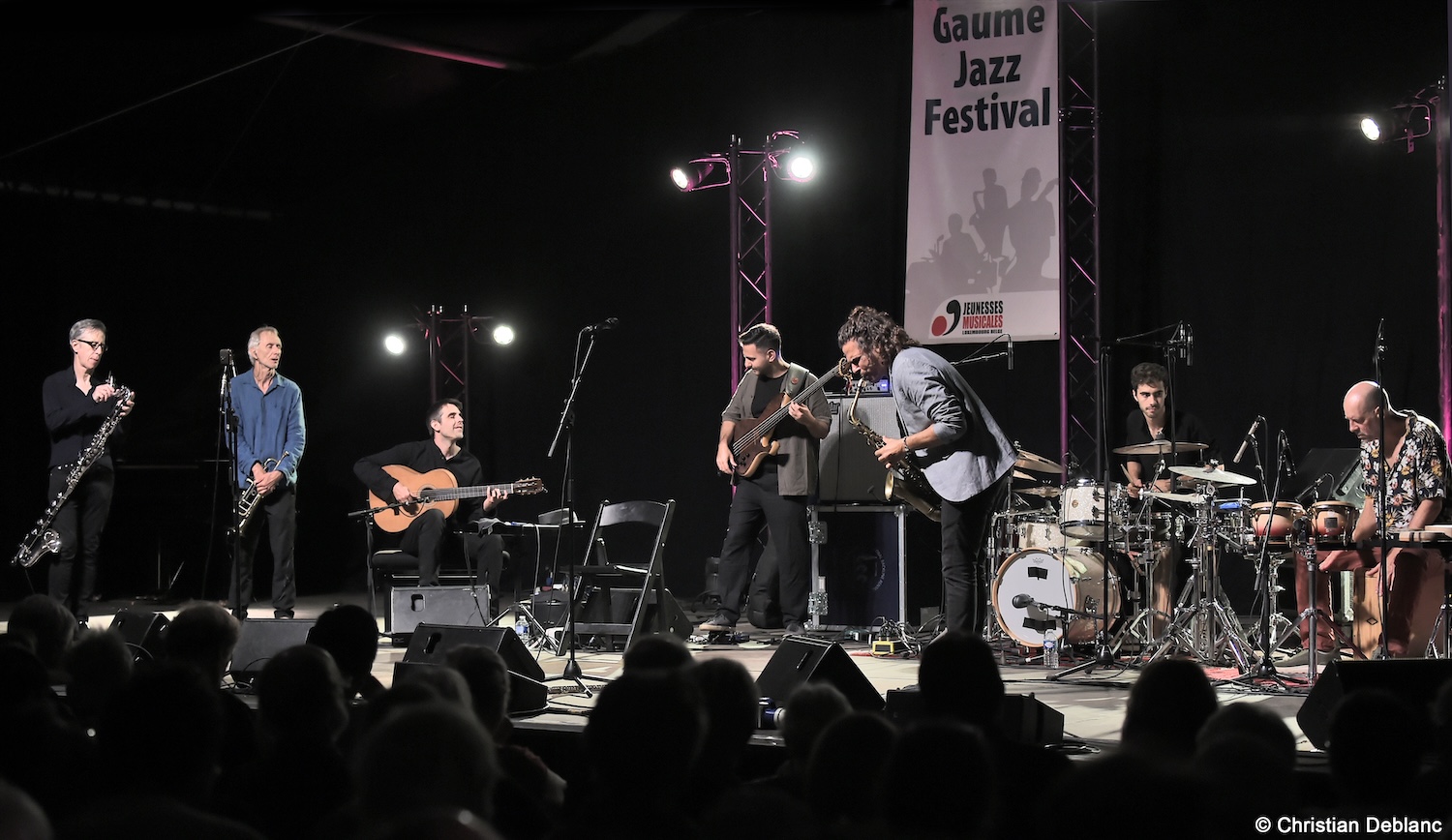
I had already seen Erik Truffaz and Antonio Lizana’s *New Sketches of Spain* at Soulliac en Jazz two weeks ago (review right here), and in Gaume—just as in Occitanie—the magic takes hold from the very first minutes. Truffaz’s solos are even more electrifying here, and Lizana provides a magnificent counterpoint. This is a project that has matured over time, and the musicians are increasingly in sync as they create a dense, rich group sound in which the magnificent tone of Pau Figueres’s flamenco guitar serves as a common thread for the horn section’s contributions—boosted by the drum and percussion rhythm section—not to mention the dancer whose feet set the rhythm for the musical flow. And when Lizana launches into a fiery duet with her, the atmosphere borders on trance. Some of the compositions and arrangements are by Renaud Gabriel Pion, the clarinetist-bassist, whose woody tone—much like that of the electric bass—contributes significantly to the color of the pieces, which take us on a journey through contrasting landscapes. And when, for the encore, the guitarist, Truffaz, and Lizana—on vocals—return alone to the stage, they immerse us in a deeply poetic atmosphere. All in all, it’s a truly beautiful project that continues to grow richer with each concert, and one that certainly deserved a standing ovation from an enthusiastic audience.
Sunday, August 9
Singer François Vaiana’s band kicked off the final day with a performance of Fabian Fiorini’s music. Highly atmospheric music played by an unconventional ensemble: three low-register instruments (euphonium, French horn, and cello) plus a synthesizer and a guitar, producing an intense, dark soundscape over which the voice flows with English lyrics, addresses the audience, swells and subsides, while the music at times takes on baroque overtones. An immersion into a hallucinatory, poetic, and timeless world.
The Ozain Quintet, for its part, offers music with a strong brass presence: a tenor saxophone, a trumpet, and a trombone that weave beautiful unisons or contrasts in timbre, accompanied by a double bass that often takes powerful solos while the drums punctuate the whole with a lively and sensitive rhythm. The contributions of the three wind players are luminous and punctuated by inventive counter-melodies from the other two brass instruments. In short, the ensemble sounds splendid.
Nils Kassap begins his set alone on the bass clarinet while melodic-rhythmic loops play in the background. He is then joined by the members of his band: electric guitar and bass, keyboard, and drums. It’s a very rock-oriented sound that unfolds over a Balkan melody. The band is driven by youthful enthusiasm and brims with energy, which comes to the fore in, among other pieces, a beautiful ballad where the woody timbre of the bass clarinet is particularly splendid. Alternating between sumptuously slow pieces and others with a lively tempo, this excellent ensemble delights the audience in the small tent on a beautiful afternoon.
Saxophonist Simon Comté’s quartet delivers intense music driven by a tenor sax with a torrential flow, accompanied by an excellent rhythm section in which Tunisian pianist Wajdi Riahi—a regular at the Gaume Jazz Festival—shines. The solos by the bandleader and the pianist are of the highest caliber and full of vitality, and when Comté switches to the soprano saxophone for a beautiful ballad, he expresses a lyricism of great serenity. This is a quartet that has no trouble delighting the large audience in the main tent.
What sets the Under the Reefs Orchestra apart is that it consists of a guitar, drums, and… a bass saxophone. This is a rather unusual instrumentation for original music in which the saxophone primarily handles the bass parts—though it also takes a few solos—and where the guitar, sometimes played with a bottleneck, serves as the main melodic element with a rock-inspired approach, while the drums provide a steady, binary beat.
To honor the memory of the late Swedish pianist Esbjörn Svensson—whose EST trio would have turned 30 this year—his two bandmates, double bassist Dan Berglund and drummer Magnus Oström, invited several Scandinavian musicians to join them on stage. First up was pianist Joel Lyssarides, whose elegant and refined playing kicked off the concert as a trio. They were then joined by guitarist Ulf Wakenius, whose sound was of great purity and whose phrasing was crystal clear. Next up was Frederik Ljungkvist on flute. Finnish trumpeter Verneri Pohjola then brought a new atmosphere with his intense sound, accompanied by electronic loops and Ljungkvist, who had switched to tenor saxophone. In all these configurations, and later with the full band, Svensson’s compositions were brought to life in a unique context where the musicians celebrated life despite the sadness of the pianist’s passing 18 years earlier. This was a truly beautiful tribute to a group that had its moment of glory and went on to inspire many other trios.
It was a wonderful way to wrap up a festival that, every summer, brings together a large audience in a rural setting, drawn by an innovative lineup.
© Text: Thierry Quenum — Photo credit: Christian Deblanc — Couleurs Jazz. All rights reserved.







RECENT COMMENTS