
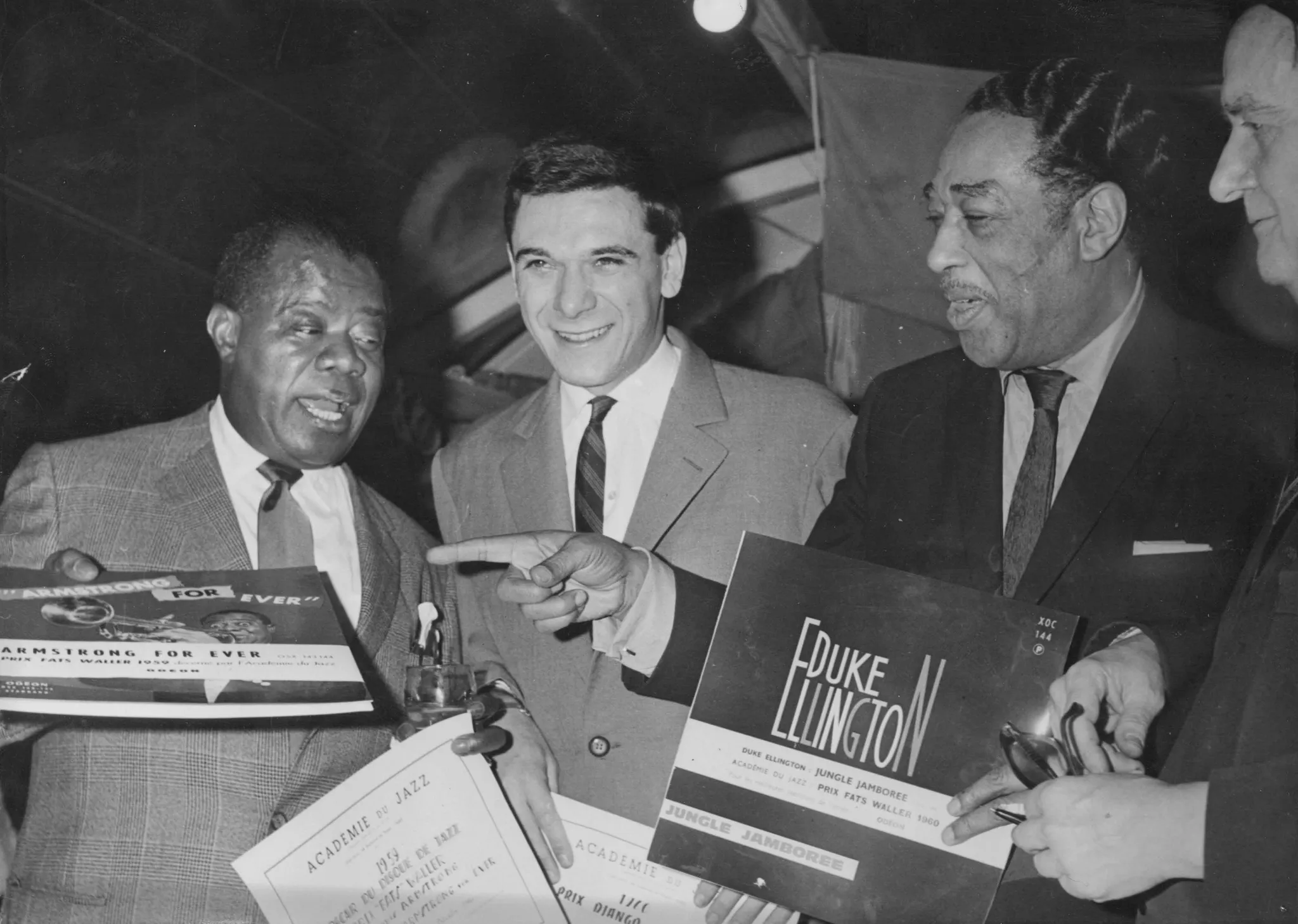
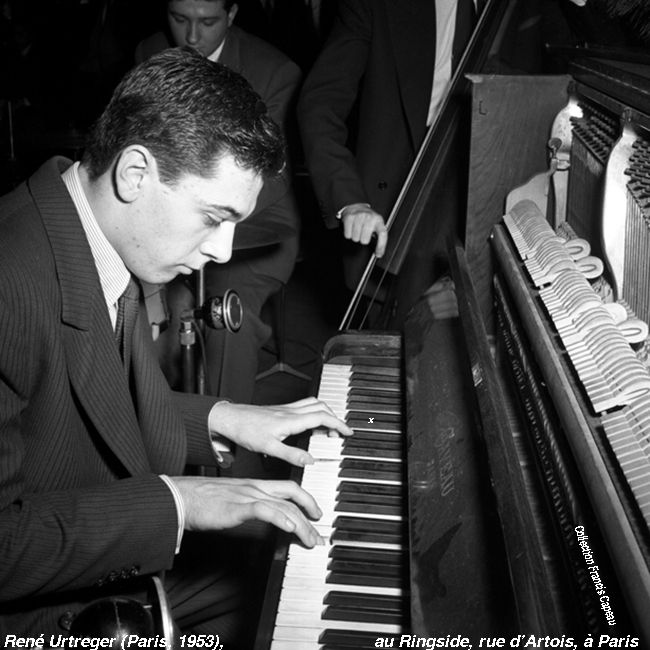
René Urtreger, French jazz loses one of its masters.
Rather than writing yet another eulogy for René Urtreger, who has just passed away at the age of 92, couleursjazz.fr has chosen to republish an interview with the pianist by Thierry Quénum that originally appeared in 2001 in the now-defunct Piano Magazine
Your previous solo album came out about fifteen years ago…
Yes, it consisted mainly of my own compositions and improvisations on standards to which I had given new titles. This was a common practice among bebop musicians of the ’40s and ’50s, who were tired of playing the Broadway repertoire and would compose a theme based on the harmonies of a song. But you had to have a keen ear to recognize, for example, that Cole Porter’s “What Is This Thing Called Love” had become “Hot House.”
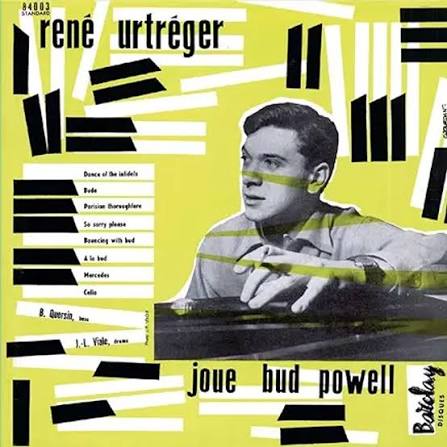
You did the same thing on your first album, where “Mercedes” is based on “Darn That Dream.”
I chose that theme because I love pieces with fairly complex harmonies. Bop was criticized for this complexity, but when you hear Charlie Parker taking solos over these kinds of harmonies, you can see how effortlessly he plays them! Of course, that was Parker, but I’ve always aimed high, and he’s remained my favorite musician. Not everyone has the ability to come up with beautiful melodies over these kinds of harmonies, the way Miles, Rollins, or Sonny Stitt did. One of my other major influences was, of course, Bud Powell, but actually, I think I would have liked to be a horn player, and what I liked about Bud’s phrases was that they sang like saxophone phrases.
How does it make you feel, exactly, that your first album—a tribute to Bud Powell—is being reissued just as your latest one is coming out?
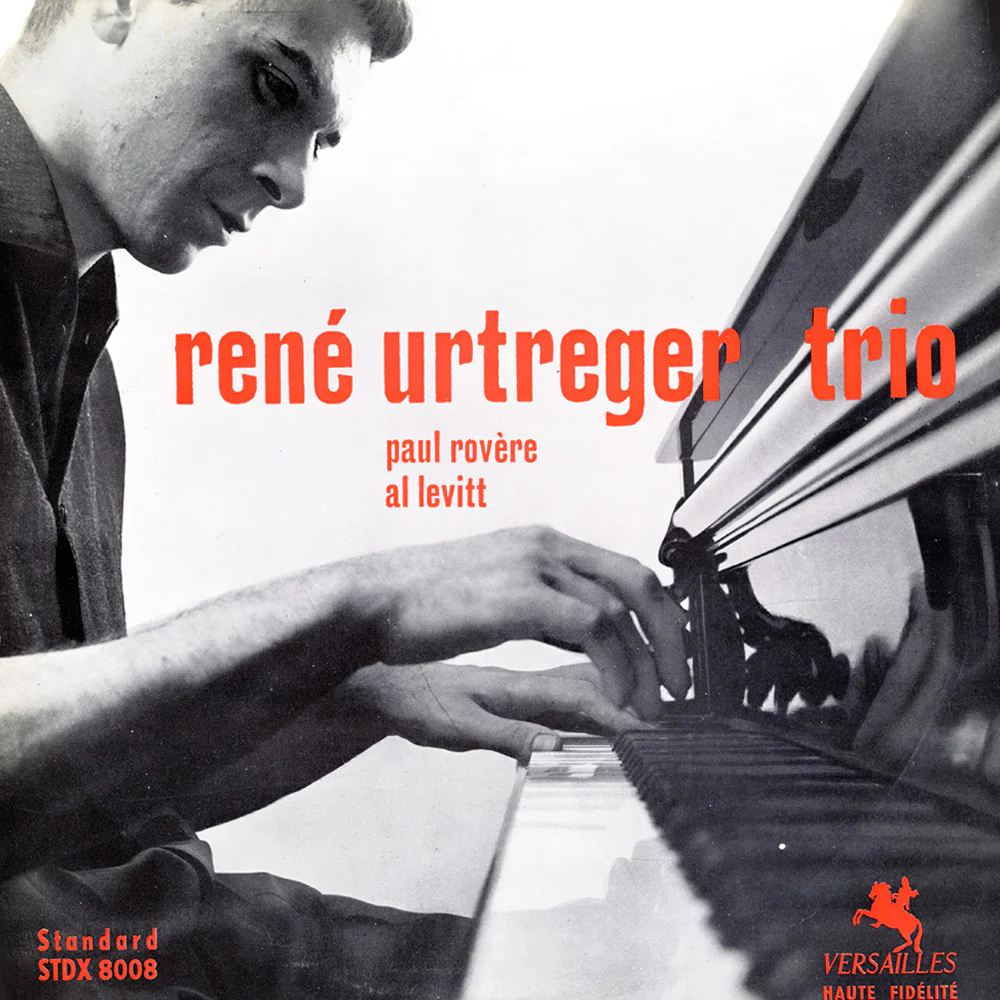
That’s funny! When I listen back to it, I feel a bit like I’m hearing a mad dog running around everywhere. The tempos are all too fast compared to how I’d play now. There’s energy, there’s freshness, but we were rushing a bit too much. Today I place much more importance on the concept of tempo. Just look at Count Basie—see how crucial the perfect tempo of each piece is. So, I look at that record like an old photo of myself. I find it touching. But without wanting to sound self-satisfied, I think I’m better now than I was forty-five years ago, because I’ve come to understand a lot more about jazz. Back then, I was talented, and I was thrust onto the scene as a 20-year-old kid who’d stumbled into the world of jazz. I’d been immersed in this music since childhood because my older sisters and their fiancés were crazy about it. So, I was lucky enough to become familiar with swing and its rhythms at a very early age… all while studying classical music.
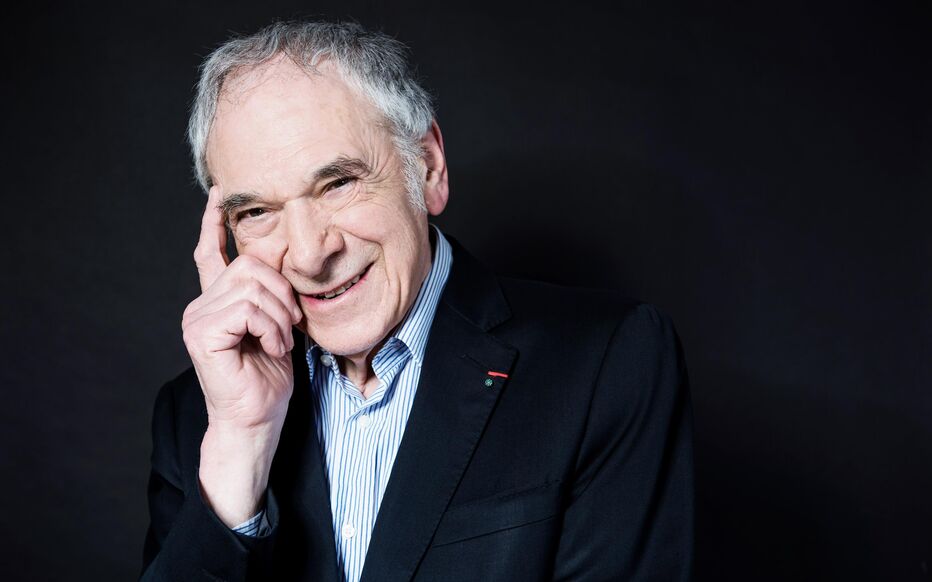
Did your natural talent help you feel at ease when you started accompanying American soloists?
I first started playing with French and Belgian musicians, as well as Americans living in Paris, but of course I had to learn the ropes. Because of my reputation—and since there weren’t many of us—they’d also pair me up with Americans who were just passing through, and since I wasn’t always up to the task, I’d often get yelled at. Luckily, there was Kenny Clarke! He taught me essential things about playing in a rhythm section. He lived here and had a different mindset than the soloists who were just passing through. They weren’t always very cooperative. Some were even awful. It has to be said that back then there were quite a few alcoholics and junkies in that scene. In fact, I fell into that trap myself, and my playing completely fell apart, as did my inspiration. I remember one day Stan Getz told me, “When you’re in top form, you’re one of the best pianists I know, but when you’re high, you sound like a second-rate amateur!”
How did you get out of it?
It took me about twenty years, after turning to alcohol as a substitute. There was a time when I didn’t even want to play music anymore: jazz bored me because life bored me. I was completely going in circles, so I stopped playing—especially since that was when free jazz was coming onto the scene, which I didn’t understand at all and found ugly. Looking back, I think free jazz opened up new possibilities and kept jazz from suffocating, because bebop was running out of steam. With its excesses, free jazz shook things up. But getting back to my own journey, I actually consider that I’ve had two lives, and the one that began when I quit drinking—after quitting drugs—is only 25 years old. That’s why, even though I’m 67 today, I don’t feel worn out. I’m in great shape, open to new things. I’m reevaluating my stance on musical styles I once looked down on, and I realize there are as many ways to make music as there are ways to live. I have to say that Daniel Humair had a huge influence on me in that regard.
In the ’60s, you turned to pop music…
I was tired of always playing the same old tunes in jazz clubs without getting paid well. The new free jazz trend didn’t suit me, but I did like certain pop tunes, as well as rhythm ’n’ blues and the emerging use of the electric piano. One night while I was playing at the Blue Note, Claude François came in with his manager, Paul Lederman, and offered me a chance to accompany him. Since I had a family to support, I accepted and gave up jazz. The first year, I was very bored because, musically speaking, it wasn’t very fulfilling, and in that kind of setup, you’re just an interchangeable musician. But after a break, I returned to work with Claude François around 1967, and things got more interesting: there were dancers, and black music—which I’ve always loved—was at the height of its popularity: the music of James Brown and Otis Redding. Back then, jazz and pop didn’t mix the way they do today, so it was a chance to play this music that was lively and swinging. Still, at one point, because of my personal problems, I felt the need to quit music altogether because I didn’t enjoy it anymore.
What brought you back to it?
I’m very proud, and at one point I realized I’d become a “has-been,” that no young musicians knew who I was. I still gave concerts from time to time, but I didn’t really believe in it: I was always playing the same bop tunes; I couldn’t shake off Bud Powell’s influence. I had a very purist view of this music, and for me it was unthinkable to mix it with the enjoyment I got from pop music. In short, I was really stuck. Then one day I decided to take action, to stop drinking and get my life back on track, and from that moment on I realized just how much I loved music, how much I loved jazz, how much I loved life. I was 42 years old, and this new life has lasted for 25 years now.
Looking back on your career, what do you think of the current jazz scene, particularly the younger generation?
I don’t follow it very closely since I live in the countryside, but I’m a little worried that jazz is becoming music for very knowledgeable people, all of whom have formal training. One of the things I loved about this music was that it was made by people who all had different personalities. On the tenor sax alone, you could name a dozen musicians—from Coleman Hawkins to John Coltrane, including Lester Young, Sonny Rollins, and Stan Getz—whose playing styles were completely different from one another, yet instantly recognizable. The real school was the big bands and the jam sessions. Those jam sessions on standards were really the glue that held jazz together: the joy of arriving somewhere and having a common language, of just diving into the music after agreeing on the key and tempo. There’s a sense of sharing, of friendship, in that. But when I see young musicians today who, when they meet, greet each other with a kiss on the cheek like brothers, I find it touching: they lead the same kind of life, with so much in common even though they come from different backgrounds. Jazz is also a bond that brings people together! It’s true that music conservatories are doing a wonderful job, one that’s in tune with our times, but we mustn’t let these young people fall into conformity. They need to spread their wings. When I was young and we had to figure out jazz chords by ear, we were really happy if there was a slightly more experienced friend who could give us some tips. There was a real passing down of knowledge back then, and I hope it still exists.
Do young pianists come to see you for advice?
Some do, but mostly with a revival in mind: to learn about Bud Powell because they know I knew him. That’s true, but I absorbed that and moved on because it belonged to a specific era. So, I tell them not to limit themselves to repeating what’s already been done—they need to go further. For example, the other day, I heard saxophonist Sylvain Beuf’s band cover a Sonny Rollins tune, and I thought the way they made it their own was fantastic.
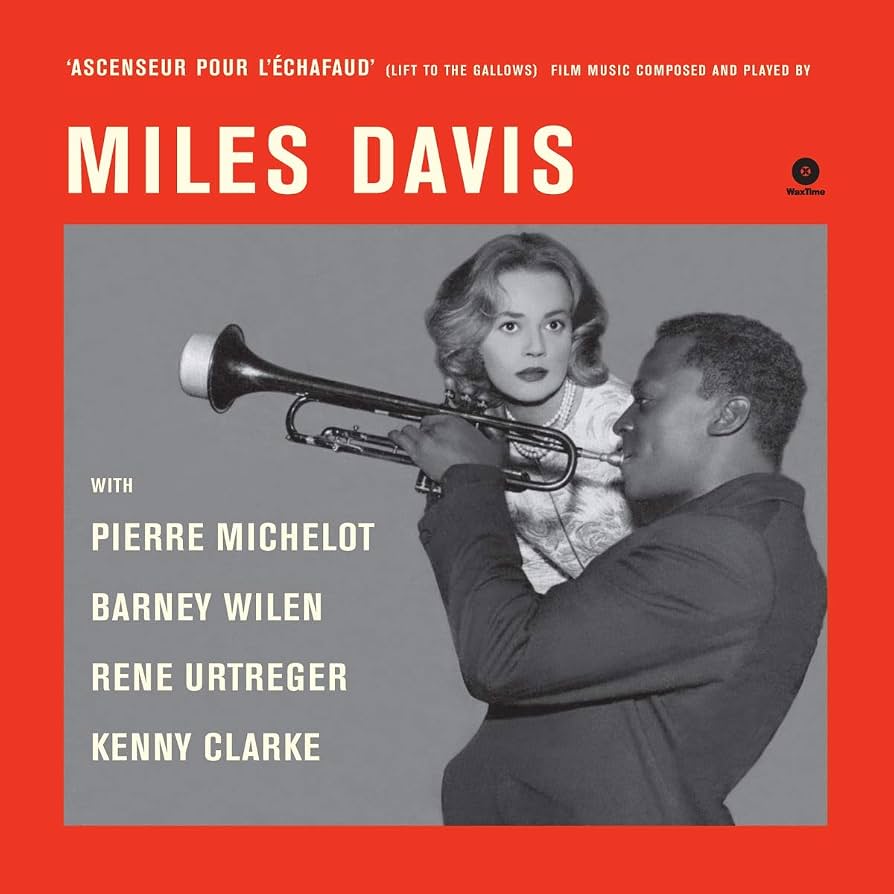
One musician you’ve played with who has never stopped evolving is Miles Davis. Did you stay in touch with him after recording the score for the film *Elevator to the Gallows* in ’57?
Not really. Actually, Pierre Michelot, Christian Garros, and I went on a European tour with him in ’56 that went very well, and during which he helped me make tremendous progress. So, it was a compliment to Michelot and me when he reached out to us again the following year—along with Barney Wilen—for that film score and a concert in Amsterdam where Kenny Clarke was on drums. But at that time, Miles was struggling with drugs himself, while I was right in the thick of it, and after that he didn’t try to stay in touch. As for his artistic evolution, there were some amazing developments, particularly with Gil Evans and John Coltrane. But for my part, at a certain point, the way he dressed and his desire to appeal to young people began to worry me, because I feared that jazz would drift toward a style where attitude and showboating on stage would take up too much space.
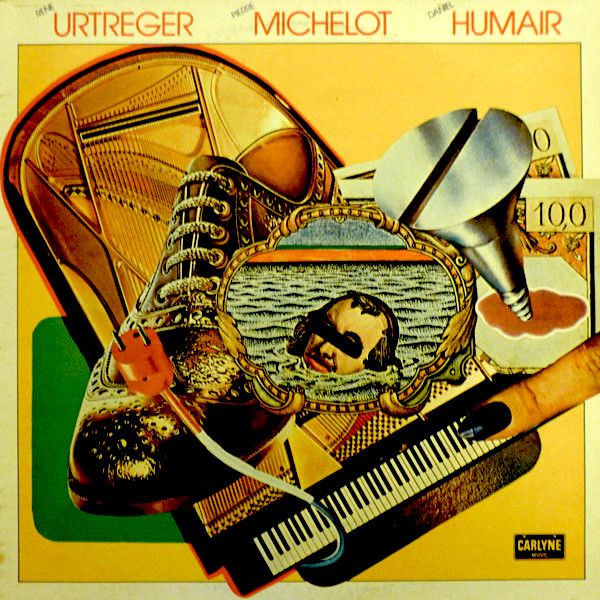
You’re going to be featured in a film again, with the HUM trio, in which you play alongside Pierre Michelot and Daniel Humair…
It’s a film by Claude Berry, starring Jean-Pierre Bacri and Emilie Dequenne, titled *Une femme de ménage*. In the screenplay, Bacri—whom I adore—plays a sound engineer who comes to see us perform at a club. I’ve been friends with Claude Berry since childhood, and I’ve composed film scores for him before. At first, he wanted me to record something on my own in a studio, but when I told him about HUM, he got interested and decided to film us in action.
I know you’re a passionate chess player. Can we draw a parallel between chess and jazz?
In a way, you can draw a connection between the speed of thought required in fast-paced improvisation and certain types of chess games called “blitz,” where you have to think very quickly. Just as there are standards in jazz, in chess there are well-established patterns of attack or defense: both players know roughly where they’re going, and at a certain point, the improvisation begins. On the other hand, there’s a sense of struggle and competition in chess that, fortunately, isn’t too prevalent in jazz. And when the game goes on for a long time, an element of structure and precision comes into play that brings it closer to classical music: it lacks the swing of a fast-paced jazz piece!
© Couleurs Jazz Radio / Thierry Quénum–All rights reserved. Editorial selection curated by the Couleurs Jazz editorial team.










RECENT COMMENTS