
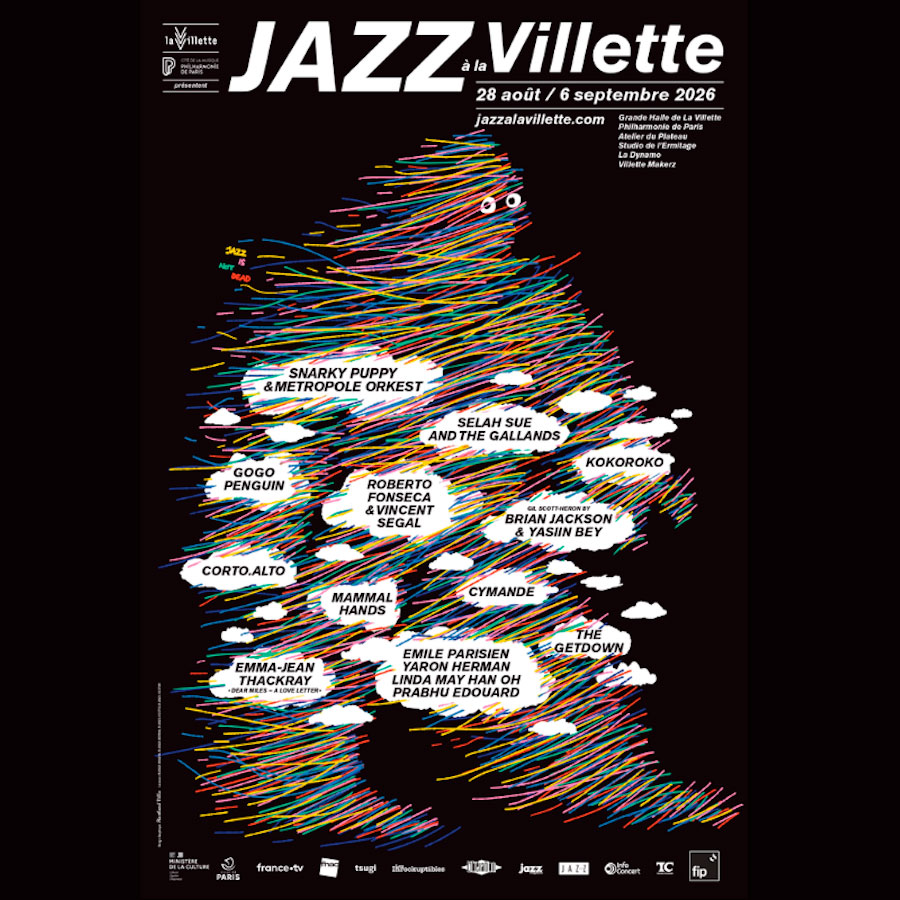
For Jazz à la Villette, the media are only allowed to attend two concerts as press guests. So, you have to choose wisely between artists you want to discover and those you know you’ll enjoy.
For me, that meant Chilean saxophonist Melissa Aldana—whom I know only by reputation and who is part of the ADAMI jazz talent pool—Emile Parisien’s band Floating—which I’d seen a few weeks earlier at Souillac en Jazz (review right here)—, a young group from the CNSMDP (Paris Conservatory), and the duo of Roberto Fonseca and Vincent Segal, of whom much is expected.
Melissa Aldana is, above all, a magnificent tenor saxophonist with a full, richly timbred sound, serving a boldly torrential phrasing that frequently soars into the highest registers. On her own compositions, the saxophonist launches into adventurous solos, supported by the lyrical piano playing of Levi Harvey.
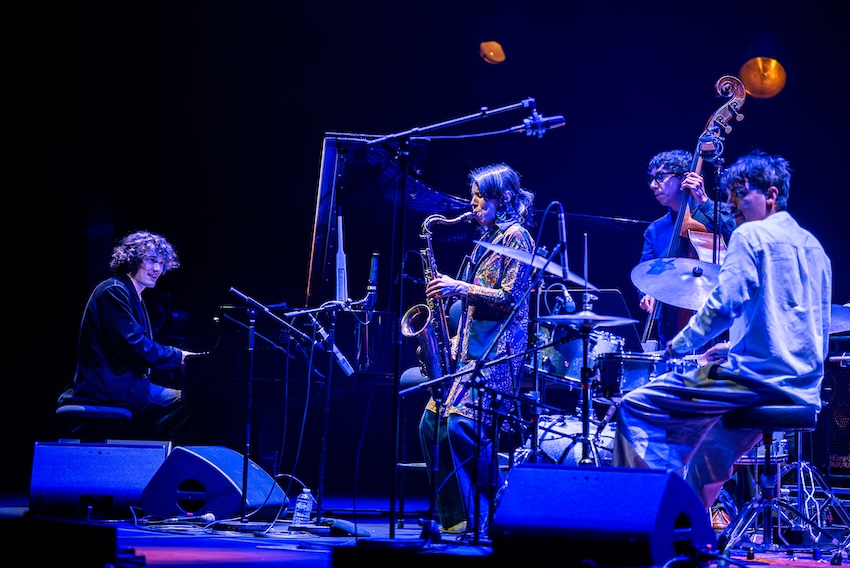
©Photo Aurélien Kalasz
On a beautiful Cuban ballad, the tenor’s tone becomes more velvety, with almost Ben Webster-esque accents that reappear on the closing tune, “Lush Life,” where the piano is magnificent, supported by impeccable rhythm section work. These are musicians in their thirties (the saxophonist) or barely in their twenties who have a promising future ahead of them.
Jazz à La Villette was another chance for me to see just how exciting Emile Parisien’s new project is, thanks in part to the presence of the double bassist Linda May Han Oh —whom we don’t often get to see on French stages—who, by introducing a piece with a solo, reminded us just how much of a major voice she is on her instrument. We’ve already spoken highly of both Parisien and Yaron Herman, but the chemistry between the former’s soprano saxophone and the latter’s piano really shines through here in a special way.
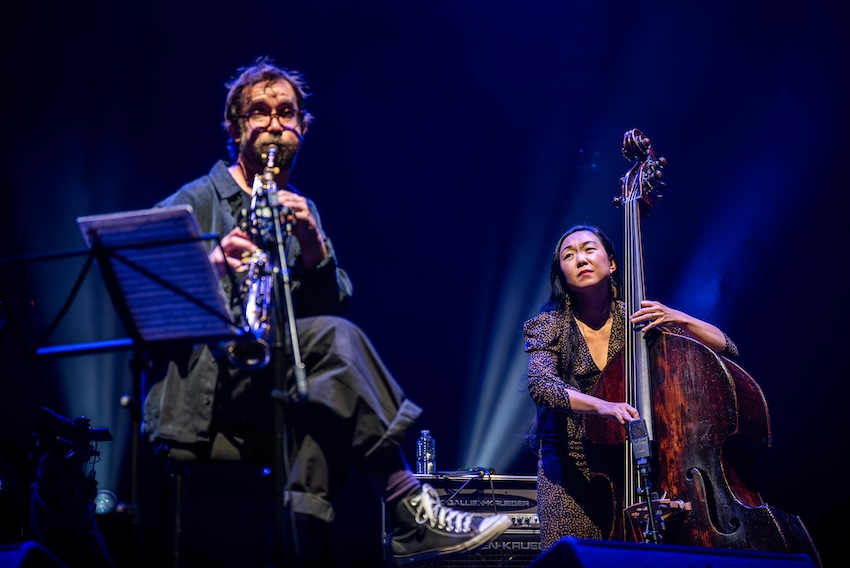
©Photo Aurélien Kalasz
As for Prabhu Edouard, he’s the other standout in this quartet, and his percussion playing—both rhythmic and melodic—is one of the group’s strongest points.
The Hypnagogic Drift septet is, above all, a highly original ensemble sound: three wind players (flute, trombone, and bass clarinet), a vibraphone, and a rhythm section of piano, bass, and drums. The compositions by bandleader and vibraphonist Lucas Cord’homme are lengthy, and the timbres create an overall sound that is both dense and fluid, to which the solos add a touch of exquisite melody.
©Photo Maxime Guthfreund
The bandleader’s vibraphone is ever-present and helps lend an ethereal quality to the ensemble. One would have loved to hear them play for longer than just half an hour, but we hope they’ll soon have other opportunities to perform in front of an audience.
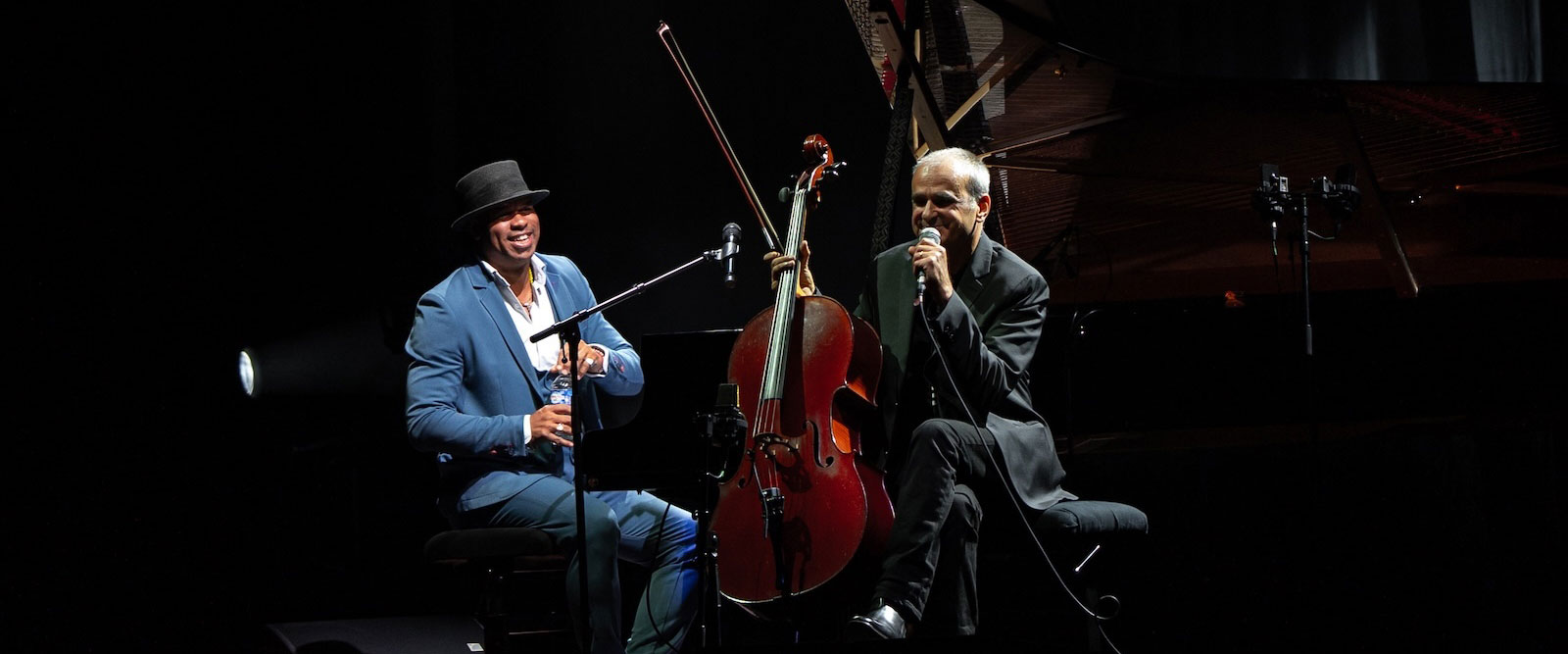
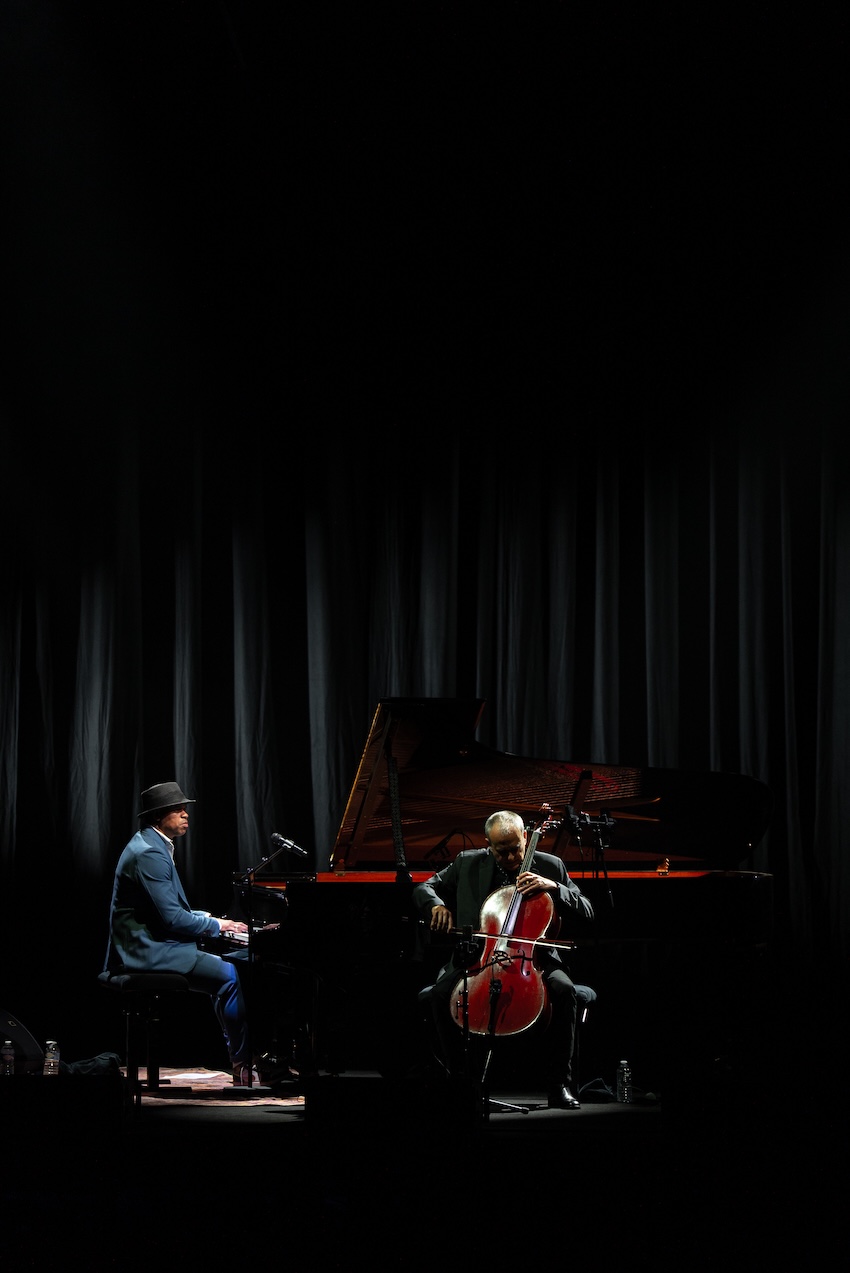
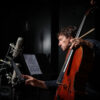
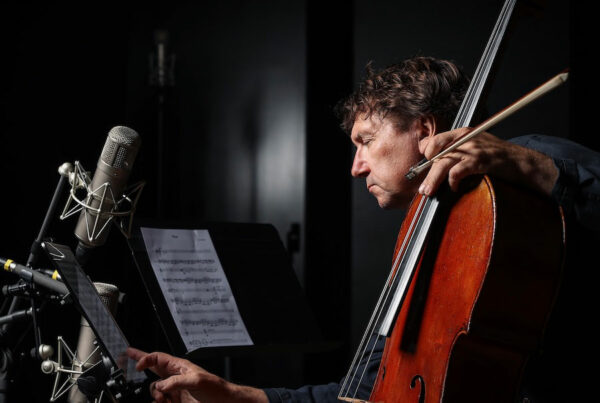
Roberto Fonseca and Vincent Segal are, first and foremost, two magnificent tones that have found one another, and whose chemistry is evident. Performing mostly Cuban themes in which the cello alternates between bowed and pizzicato playing, they delivered a concert brimming with lyricism and freedom. Here, the cello is a true singing voice. At times, Fonseca responds by singing in turn, and on a few tunes they are joined by Gildaa, a singer with a deep timbre whom they accompany beautifully. While he often contents himself with accompanying his partner, Fonseca also takes solos full of verve, in which his sense of rhythm works wonders while the cello plays a repetitive bass line of great beauty. Fonseca’s touch is at times powerful and at other times exquisitely delicate, and his staccato notes are splendid, while Segal draws sounds from his instrument that are by turns dark and luminous. At times, one is reminded of Beethoven’s sonatas for piano and cello or Schumann’s pieces for these two instruments, such is the profoundly romantic sensibility evident in Fonseca’s and Segal’s playing. On the other hand, when Fonseca and the singer leave Segal alone on stage, we are treated to a showcase of the cello in all its forms. And when it’s Fonseca’s turn to play solo, he tends to go all out—sometimes even a bit too much—but it’s hard to resist such generosity.
©Photo Header Maxime Guthfreund







RECENT COMMENTS