
There is variety and there is jazz, there are railway novels and literary masterpieces, just as there is Prosecco and Asolo Prosecco.
The Prosecco designation alone embodies the contemporary success story of Italian wine. Long seen as a light, carefree sparkling wine, it has established itself on international markets as a credible alternative to more institutional bubbles—namely French Champagne from the Champagne region—without ever betraying its DNA: freshness, accessibility, and immediate pleasure.
Produced between Veneto and Friuli from the Glera grape, Prosecco favors the Charmat method, which gives it its supple effervescence and clear aromas of white fruit and flowers. A bright, readable, almost sunlit aromatic signature that largely explains its global success.
Yet behind this easygoing image lies a more nuanced hierarchy. The classified areas of Conegliano Valdobbiadene Prosecco Superiore DOCG and Asolo Prosecco Superiore DOCG offer a more demanding interpretation of Prosecco. Here, steep slopes, meticulous vineyard work, and micro-terroirs yield wines that are tighter, more precise, and at times surprisingly complex.
This dual identity, balancing large-scale production with the expression of distinctive terroirs, now fuels debate about what Prosecco truly is. No longer just a celebratory sparkler, it has become a field of experimentation and qualitative recognition.
Between joyful bubbles and rising ambitions, the appellation walks a fine line: that of a popular wine steadily, quietly earning its nobility.
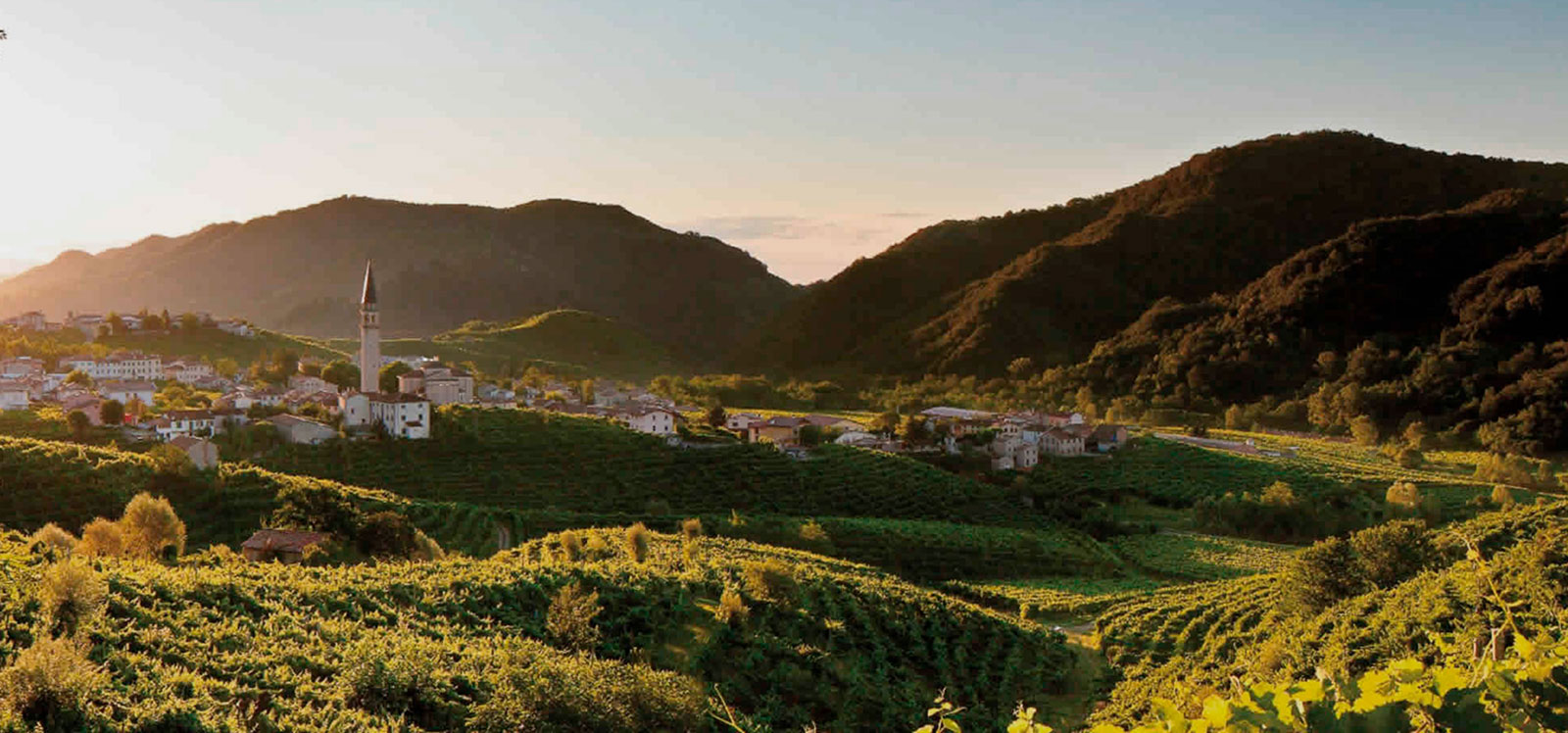
Within the vast Prosecco universe, Asolo Prosecco Superiore DOCG plays a distinct, almost confidential score. Nestled between the hills of Asolo and the Montello, this appellation—the smallest in the entire Prosecco ecosystem—cultivates an elegant discretion, far from the high volumes that built the global reputation of its counterparts.
Here, the landscape sets the tone. The Montello, once an oak forest turned vineyard land, brings rich soils and a singular structure to the wines, while the hills of Asolo provide varied exposures ideal for the slow, nuanced ripening of Glera. This dialogue between terrain and microclimate produces Proseccos of almost chiselled precision, where natural freshness is matched by real textural depth.
More taut, often drier—with a marked preference for Brut and even Extra Brut styles—Asolo wines stand out for their clarity and restraint. Less overtly expressive aromatically, they favor balance, finesse of bubbles, and a certain verticality on the palate. A signature that appeals to drinkers seeking a less conventional, more gastronomic Prosecco.
Long in the shadows, the Montello now plays an increasingly important role in this move upmarket. Its gentle slopes and clay-limestone soils lend the wines additional grounding, a sense of gravity that contrasts with Prosecco’s sometimes airy image.
In this micro-territory, the notion of cru takes on real meaning. The human scale of the estates, the care devoted to the vines, and the desire to stand out through quality rather than volume all point to an appellation in pursuit of excellence.
Asolo does not seek media spotlight. It prefers to refine its style, draw its own line, and quietly remind us that Prosecco can also be about relief, precision—and character.
Between Asolo and the Montello, the territory reveals a plural wine identity, where the refined bubbles of Asolo Prosecco Superiore DOCG coexist with structured reds from Montello DOCG and Montello Asolo DOC.
On these man-shaped hills, viticulture remains largely manual and rooted in a long tradition, where diversity of soils and exposures feeds the wines’ complexity. To the south, stony calcareous soils favor finesse, while the Montello’s clay-rich terrain gives reds their structure and aging potential.
Dominated by the Glera grape, Asolo Prosecco DOCG stands out for its minerality, structure, and often drier style, notably illustrated by the rise of the Extra Brut category. Alongside it, rare indigenous varieties contribute to the richness of a preserved viticultural heritage.
On the red side, the Montello combines local tradition with Bordeaux influence, blending Cabernet, Merlot, and Malbec, while also reviving Recantina, an ancient grape producing powerful, spicy wines built for aging.
Shaped by a temperate climate between the Adriatic and the Prealps, and by a biodiversity recognized by UNESCO, this territory now asserts a singular identity: that of a vineyard at the crossroads of history, innovation, and a relentless pursuit of quality.
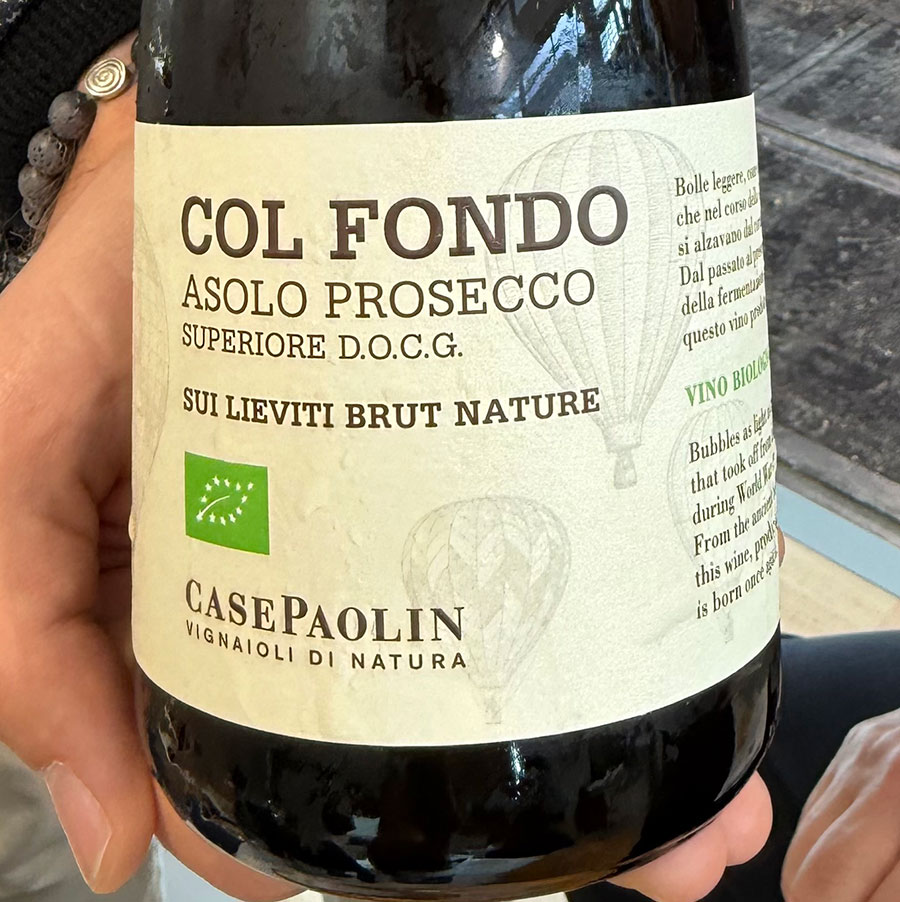
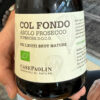
The Col Fondo Asolo Prosecco DOGG Sui Lieviti Brut Nature
Born on the slopes of the Montello, this Asolo Prosecco Superiore DOCG Sui Lieviti expression lays claim to an artisanal, authentic approach. Hand-harvested and vinified with indigenous yeasts, it undergoes in-bottle refermentation without disgorgement, in the spirit of the original Proseccos.
This organic Brut Nature charms with its minerality, taut freshness, and floral profile led by acacia, supported by an elegant, structured palate. A living, unfiltered wine, both gastronomic and faithful to a reinterpreted tradition.
(see the cover image of this article)
Enjoy it as an aperitif or alongside a refined meal inspired by its region of origin…
…or simply while listening to Enrico Rava, “La Gatta,” from the beautiful 2007 album Milestones – Un Incontro in Jazz, featuring Gino Paoli, Danilo Rea, Enrico Rava, Roberto Gatto, Rosario Bonaccorso.
Asolo Prosecco Superiore DOCG Millesimato Extra Brut
Majo Rosso Recantina – Montello Asolo DOC, vin biologique certifié
On the lands of the Montello, this red wine made from the indigenous Recantina grape, classified as Montello Asolo DOC, asserts a strong identity. Harvested late and aged extensively in large casks and then in bottle, it develops a solid structure and a controlled rustic character.
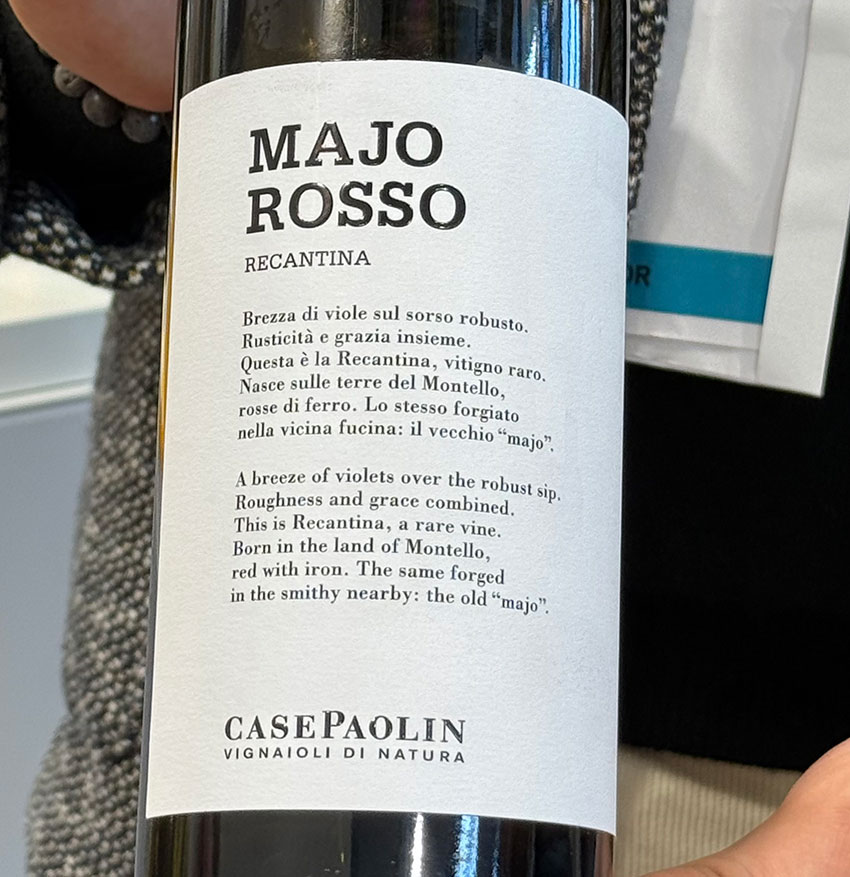
Between vibrant red fruits, floral notes, and spicy accents, it delivers an authentic and persistent expression, crafted for the table, especially alongside white meats and game. A wine of tradition, where power is balanced by genuine finesse.
…and finally, since one pleasure need not exclude another, take a sip of this nectar, close your eyes, and listen to Flavio Boltro alongside Stefano di Battista in “Prima di Partire,” from the album Volare (1997). A quiet finale where the wine, like the music, lingers long after the last note.
©PhotosARR.













RECENT COMMENTS