
Bozcaada – Travel Journal
It’s hard to set out for Bozcaada without consulting a map to find this little-known island with its mysterious name. It’s also hard to set out on this journey to this part of the world without recalling Gérard de Nerval’s *Carnets d’Orient*, especially when following in his footsteps. I, too, feel that “It took a day to reach the Dardanelles, leaving behind on the left the shores where Troy and Tenedos once stood, and so many other famous places that now form nothing more than a hazy line on the horizon.”
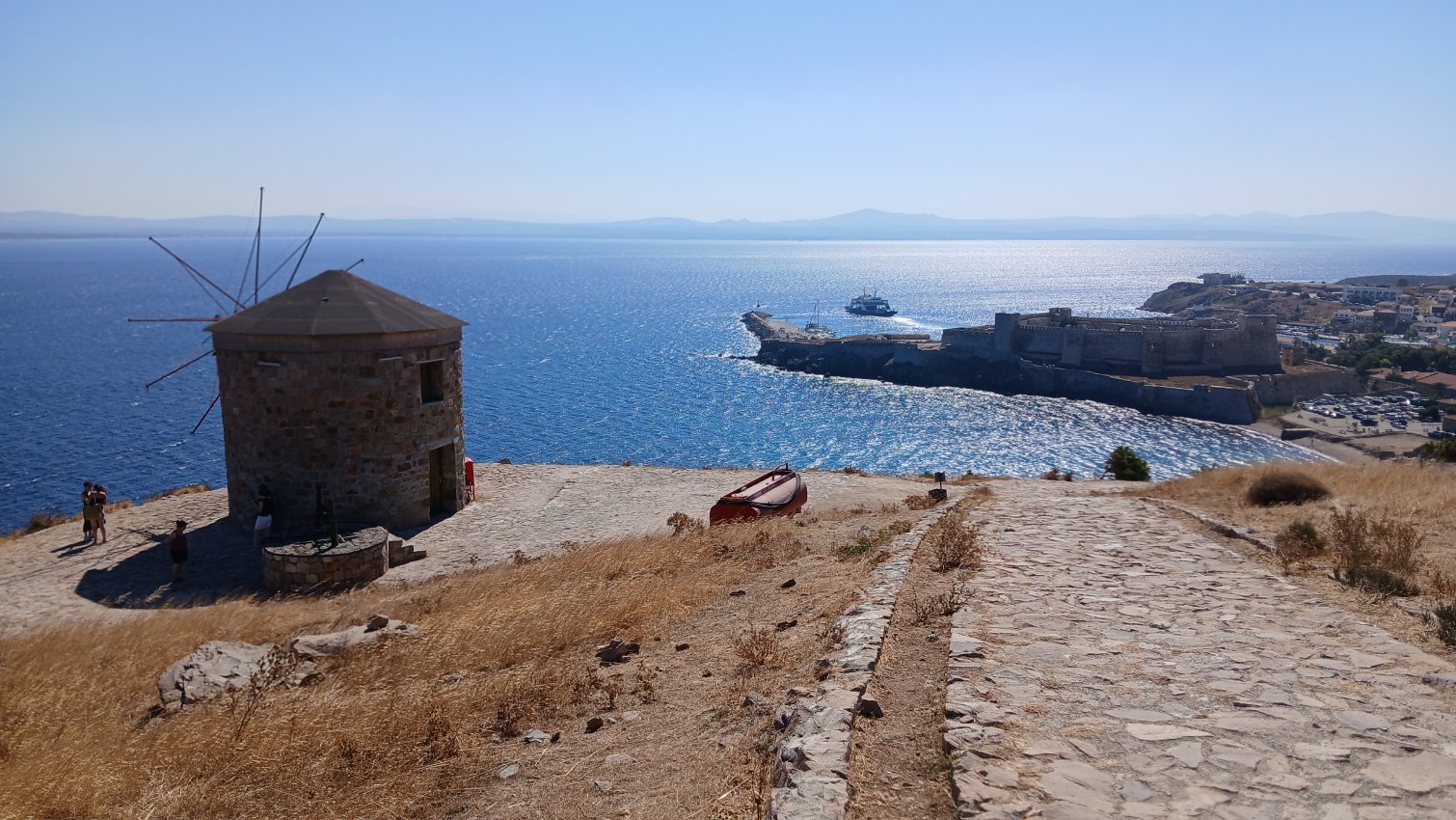
The Windmills of Bozcaada
Bozcaada, the Island Between Two Shores
A few kilometers off the coast of the Biga Peninsula, Bozcaada is a small island that seems to have long remained off the beaten path of major tourist routes. The Greeks, Romans, Byzantines, and Ottomans have all left their mark on this land, which was long known as Tenedos.
Today, visitors discover a modestly sized island covered in vineyards, olive groves, arid landscapes, narrow roads, and a harbor dominated by the imposing silhouette of its fort facing the mainland. The village is steeped in a dual history—Greek and Turkish, Christian and Muslim—which is reflected in its architecture and streets.
The houses are still there, as are the old mills and the ancient stones, as if nothing had really changed. Yet, upon closer inspection, everything seems to bear the traces of what has been replaced, displaced, or forgotten. Impermanence is already revealing itself.
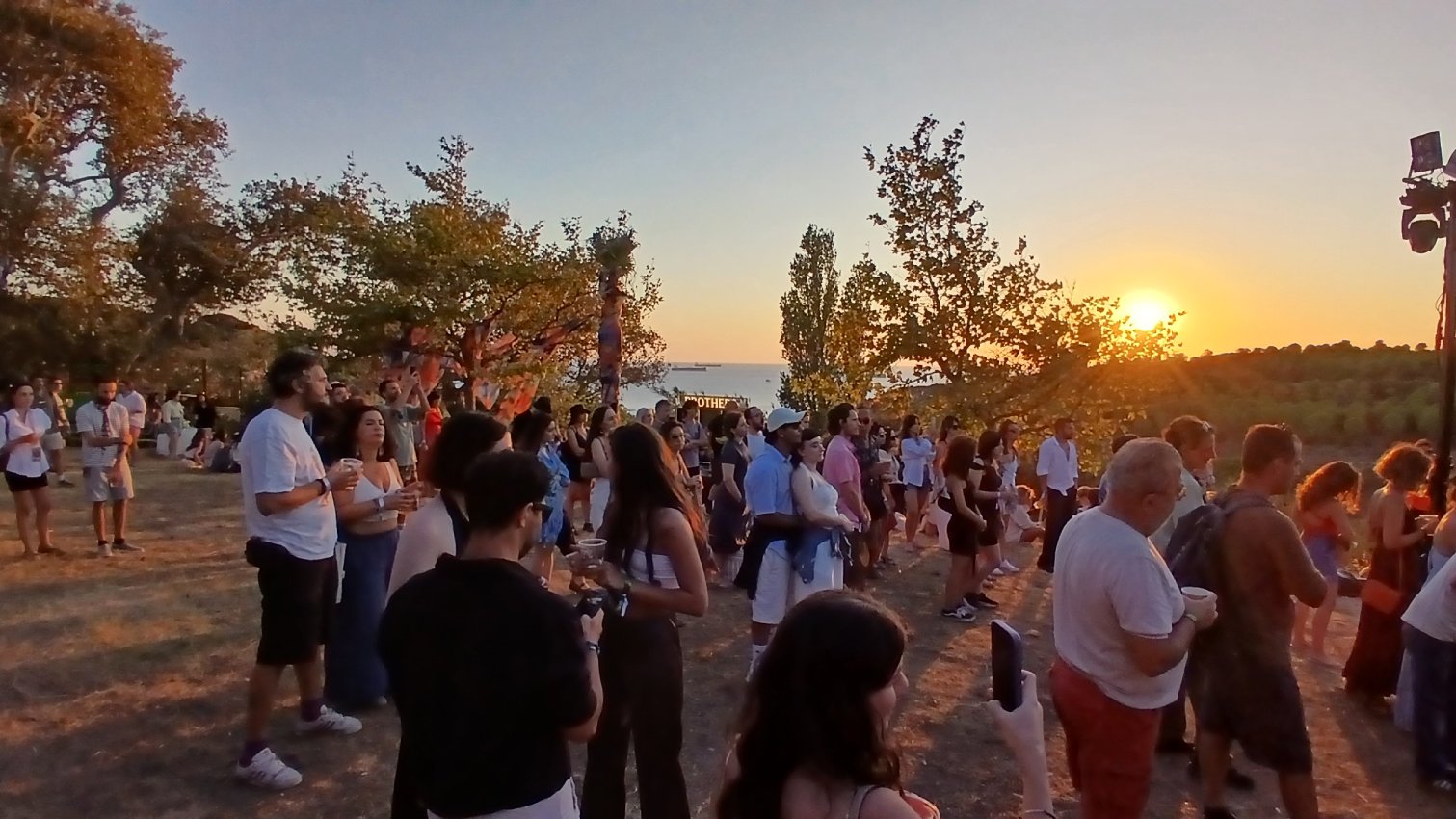
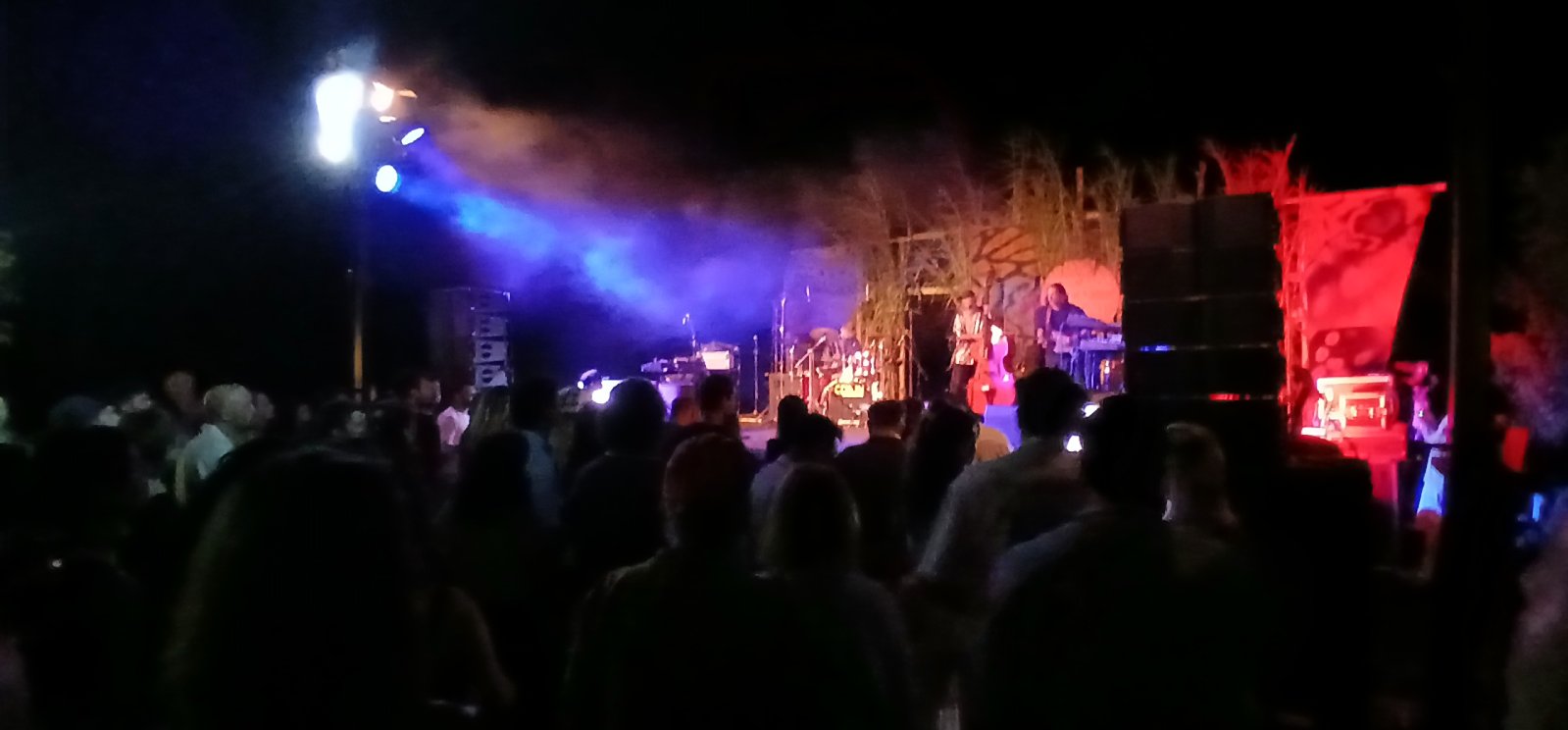
But Bozcaada is not just a heritage or beach destination. Over the past ten years, the Bozcaada Jazz Festival has become a popular event to celebrate the end of summer. Here, jazz interacts with the island—its landscapes, wines, cuisine, and a particularly vibrant Turkish music scene. The lineup for this year’s festival, running from September 4 to 6, 2026, blends established artists with emerging talents, contemporary jazz, improvised music, and influences from other musical genres. And this year, the festival’s theme was “Impermanence” – Geçicilik. “Impermanence is a concept that our minds struggle to fully grasp. Deep down, in an abstract way, we know it: nothing lasts forever. Cells regenerate. Friendships evolve. Grapes ripen. The very nature of jazz whispers this same truth. Improvisation is like Heraclitus’s river, but made of sounds,” the festival organizers tell us.
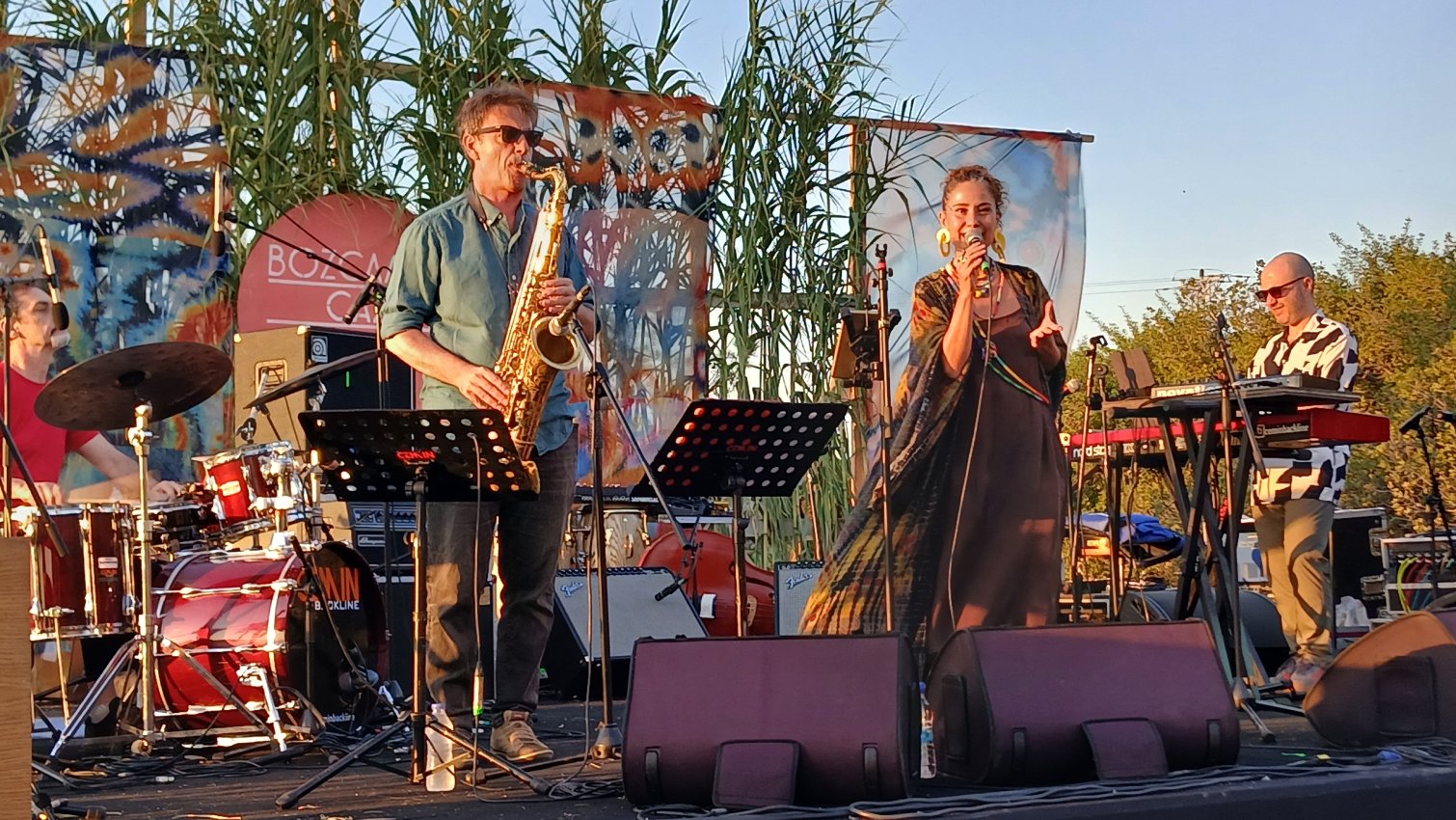
Çağıl Kaya et Tamer Temel
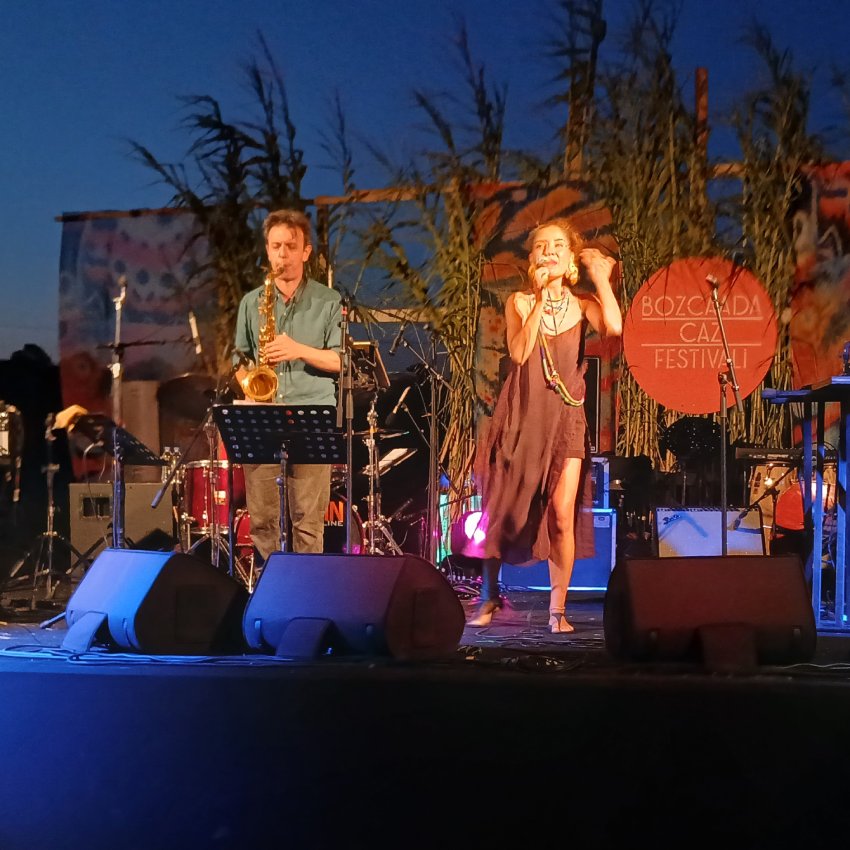
Çağıl Kaya — When Voice Meets Saxophone
The sun sets over Bozcaada, casting its last golden rays upon Çağıl Kaya’s voice. Blending poetry, abstract sounds, and the Turkish language, Çağıl Kaya’s voice at times resembles a spellbinding rap, at other times a wild, frenzied rhythm, carried by the supportive accompaniment of Tamer Temel’s tenor saxophone. At first, their music seems like a dialogue: a voice and a saxophone searching for each other, responding to one another, and eventually becoming a single instrument.
The sound of Tamer Temel, a renowned Turkish saxophonist, sometimes reminds me of Michael Brecker’s, but here the saxophone seems above all to extend Çağıl’s voice. An ethereal jazz, almost a “tenor sax and voice” duet, that can suddenly veer into a strange freedom where harmonic madness gives way to a minimalist nursery rhyme, before a 4/4 motif delights a captivated audience eager to prolong this musical impermanence.
The boundary between jazz, improvisation, hip-hop, and Turkish rap is particularly porous here. Çağıl Kaya explains to me that the transition to writing in Turkish was by no means straightforward. She had sung in English for a long time. Writing in her native language required her to find a new relationship with words, rhythm, and music. But the very prosody of Turkish gradually suggested other forms to her, until passages reminiscent of hip-hop or rap emerged naturally.
The choice of the tenor saxophone also came about almost naturally. Çağıl and Tamer know each other well and have a close rapport, and this musical form allows them to draw on that connection. The saxophone thus becomes the natural counterpoint to the voice, capable of accompanying it, responding to it, or stepping back to create space for improvisation. Impermanence, you’ve got us in your grip.
Accompanied by Ercüment Orkut on keyboards and Cem Aksel on drums, their jazz has an Eastern, poetic, and joyful sound.
When the concert ends, all that remains is the wind and the fading light. In a few hours, this concert will exist only in the memories of those who were there. Perhaps that, at its core, is one of the simplest forms of impermanence: music that has never existed outside the moment it was played.
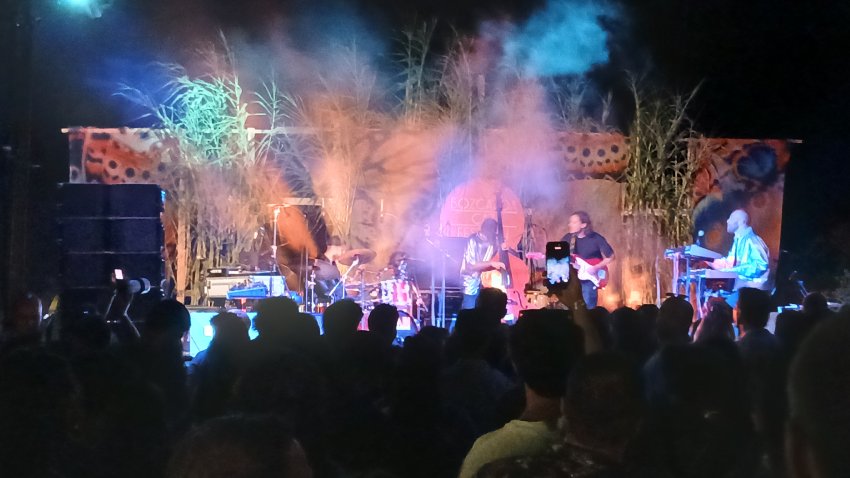
Photons
Photons: Is This Still Jazz?
Next up is Photons, featuring Gauthier Toux on keyboards, Joaquim Machado on guitar, Samuel F’hima on bass, and Julien Loutelier on drums—the only French musicians at this year’s festival.
The shift in atmosphere is radical. Their electronic and psychedelic music seems to blend perfectly with that of Bozcaada. Bodies begin to move; young and old alike let themselves be carried away by earth-shaking sounds and a beat that invites dancing more than contemplative listening.
So a question naturally arises: is this still jazz?
Gauthier Toux doesn’t really try to dodge the question. He readily acknowledges that Photons’ music is “not really jazz anymore.” But this shift is also a conscious choice. After exploring the various realms of “classical” jazz and improvisation, the four musicians want to rediscover something more immediate: the pleasure of music that’s danceable, physical, and collective.
And Bozcaada is probably the ideal place for that. At this crossover festival open to encounters and sharing, Photons can afford to blur the boundaries. The band is having a blast, and so is the audience.
For behind this apparent break with jazz, the four musicians are, in fact, its staunch heirs. They come from a background of improvisation, know its conventions and freedoms, but here choose to put them at the service of something else: movement, trance, and collective energy.
In Bozcaada, then, jazz may not be a genre that can be defined. It is a genre that is constantly being reexamined.
Jazz changes form without ever ceasing to be itself. It has always been impermanent.
A Scene in Motion
Unfortunately, I wasn’t able to hear all the artists at this tenth edition. Yet the program painted a particularly open landscape: from contemporary jazz to experimental sounds, from improvisation to crossovers with other musical traditions, the festival once again seemed to build countless bridges.
A lineup that threw its doors wide open to new generations and hybrid projects, confirming this commitment to ensuring jazz remains an open, inclusive space.
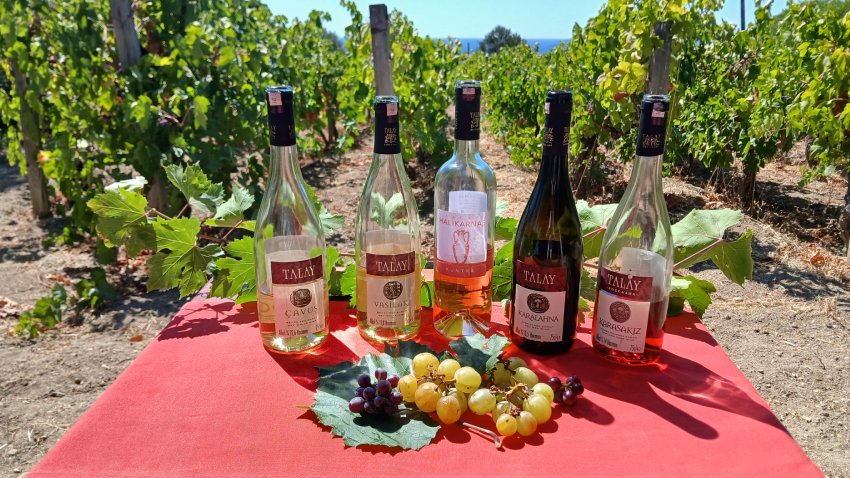
On the Turkish Wine Route
If you’re planning to visit Bozcaada next year for its jazz festival, be sure to take the Troy Wine Route from Yükseltan to Talay, passing through several vineyards that carry on a winemaking tradition as ancient as the stories that have been told here.
For wine was already here when the bards sang of the exploits of the heroes of Troy. In the Odyssey, Odysseus gives wine to the giant Polyphemus, and later the Cyclops falls asleep drunk, allowing Odysseus to blind him and escape.
The vines, meanwhile, have continued to grow for 8,000 years while people have changed their names, languages, and gods. Let’s follow the path that leads both to the past and to the present—from Troy to Tenedos, from Homer to jazz, from the vineyards to the festival stages.
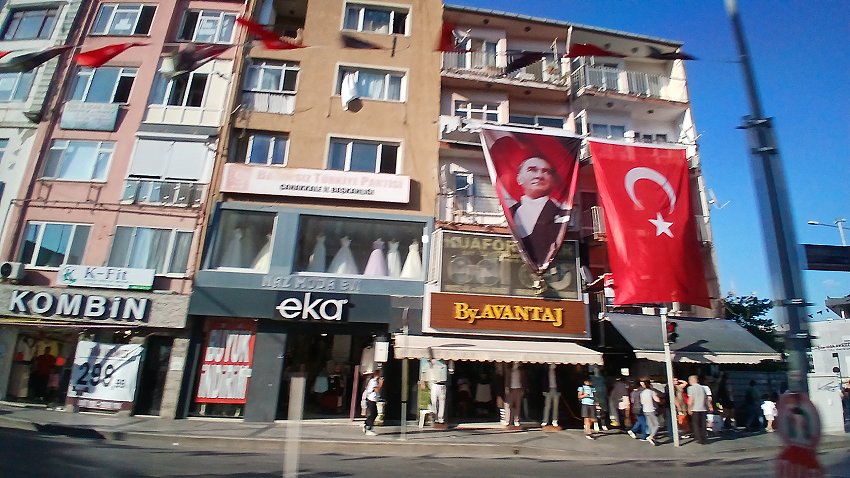
Çanakkale, First Stop
In Çanakkale, the sea seems to set the city’s pace. The streets slope down toward the strait, terraces spill out onto the sidewalks, and as the day goes on, the cafés fill up. People talk, laugh, smoke, and watch passersby go by. Nothing seems rushed.
The light, too, seems different. It catches the colorful facades, the storefronts of small shops, and the tables set out on the sidewalks. In the streets, young people gather in groups, families stroll, and young women—often dressed in light dresses—cross the city with the same nonchalance one might encounter in Lisbon, Marseille, or Athens.
I then realized that I had arrived with a few preconceived notions. The Muslim Turkey I had imagined—no doubt through images from afar—didn’t quite resemble the one I was discovering here, where everyone seems to have found their own way of living together.
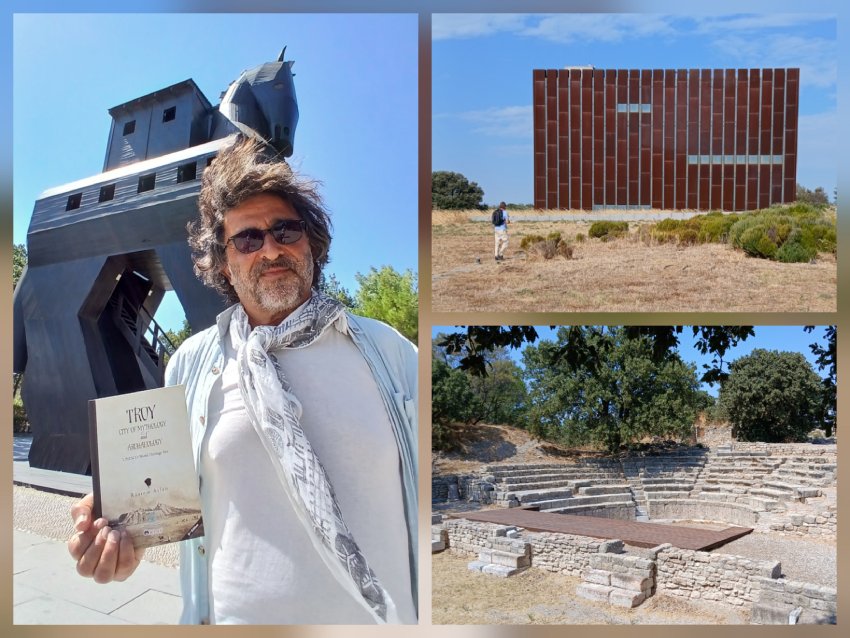
Prof. Dr. Rüstem Asalan – Museum and Archaeological Site of Troy
Troy: Where Time Becomes Visible
Just a few kilometers are enough to go from this vibrant, modern city to a landscape where time seems to have piled up its traces.
In Troy, the stones no longer tell just one story: they bear many, layered one upon another. Both in the museum and at the archaeological site, the city’s various strata tell a story that is constantly unraveling and being rebuilt.
One city covers another; stones change their function; civilizations come and go, leaving behind traces that subsequent ones reuse, transform, or cover up.
Impermanence is no longer an abstraction. It becomes almost visible thanks to the narrative of Prof. Dr. Rüstem Asalan.
A stone that was once a wall becomes a foundation. A foundation becomes a ruin. A ruin becomes a museum piece. And one day, someone comes to look at this stone, trying to imagine those who laid it.
Curiously, it was not in Bozcaada that I felt this idea most strongly, even though it was chosen as the theme for this tenth edition of the festival. Nor was it on the island, which, on the contrary, seems to cultivate a sense of quiet permanence, nor at the festival, which gives more the impression of a living, dynamic scene than of a world destined to disappear.
It was in Troy that this idea struck me most powerfully.
There is something dizzying about the thought that, for millennia, people have told the story of Troy, transforming it through their tales, poems, and legends, until the myth itself eventually became a layer of that history.
The city has vanished, but its story remains. The story, too, has changed. And here we are today, walking among the stones, guided as much by what we know as by what we imagine.
Perhaps this is ultimately where Troy and Bozcaada converge: not in the idea of a world that is disappearing, but in that of a form that is constantly transforming.
In Troy, civilizations follow one another. In Bozcaada, different kinds of music come together.
A voice meets a saxophone. A jazz band becomes crossover music. A concert comes to an end. The wind picks up. The lights go out.
And in both cases, something remains while changing form.
Perhaps that is what Geçicilik meant. Not that everything disappears. But that nothing remains exactly as we first encountered it.
Acknowledgments:
Loane Pauty-Assié of the Pascale Venot Press Office
L’Agence turque de promotion et de développement du tourisme (TGA)
L’Agence Go Turkie
Vildan Elif Bozkurt – troiawineroute.com
Les frères Necati et Hayati Talay du domaine viticole Talay
Prof. Dr. RÜSTEM ASLAN du Site archéologique de Troie
Ozan Can Bahce – tourist guide
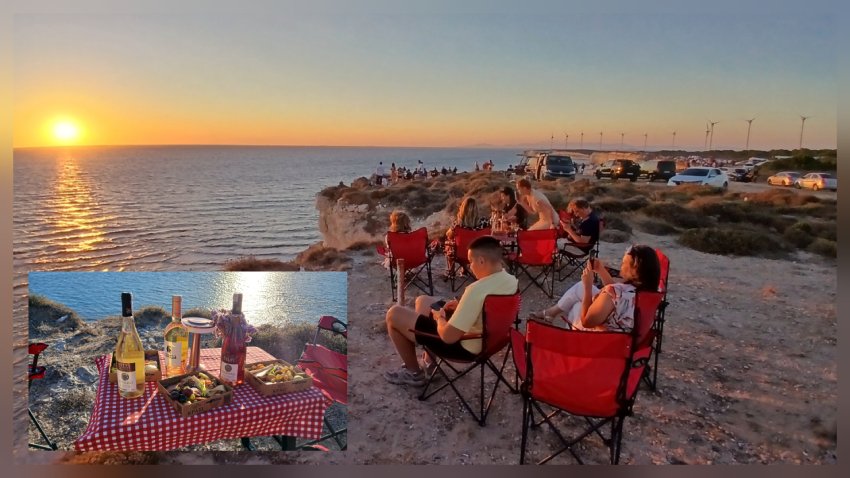
Photo © Christian Cascio












RECENT COMMENTS