
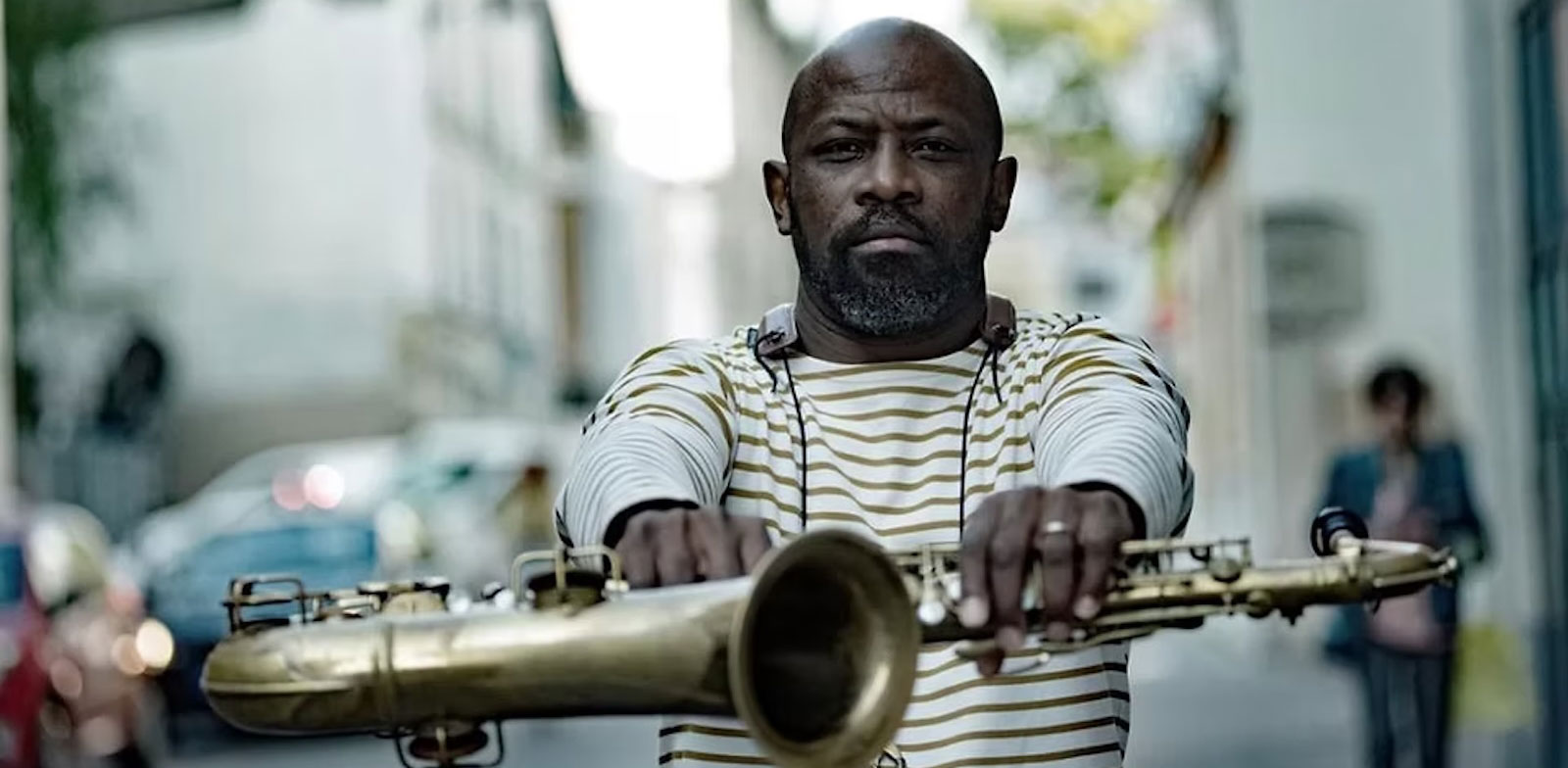

Jean-Jacques Elangué, or Jazz as a Common Thread: “Jazz is a patchwork of the emotions I feel when I’m on stage: FREEDOM!”
Jean-Jacques Elangué is a 59-year-old saxophonist, born in France to parents from Cameroon. His family returned to Cameroon when he was six. He is particularly renowned for a style of jazz that blends his African roots with American and classical influences. Returning to France at the age of 24, after spending his childhood in Cameroon, he enrolled at the Pierre Barbizet Regional Conservatory in Marseille, graduating at the top of his class.
Today, Jean-Jacques Elangué divides his time between Paris and the Nouvelle-Aquitaine region of France. An accomplished musician and a leading figure on the Parisian and international jazz scenes, he is a composer, songwriter, performer and multi-instrumentalist. He also teaches music, specialising in jazz, at the Auguste Tolbecque Conservatory of the Communauté d’Agglomération du Niortais.
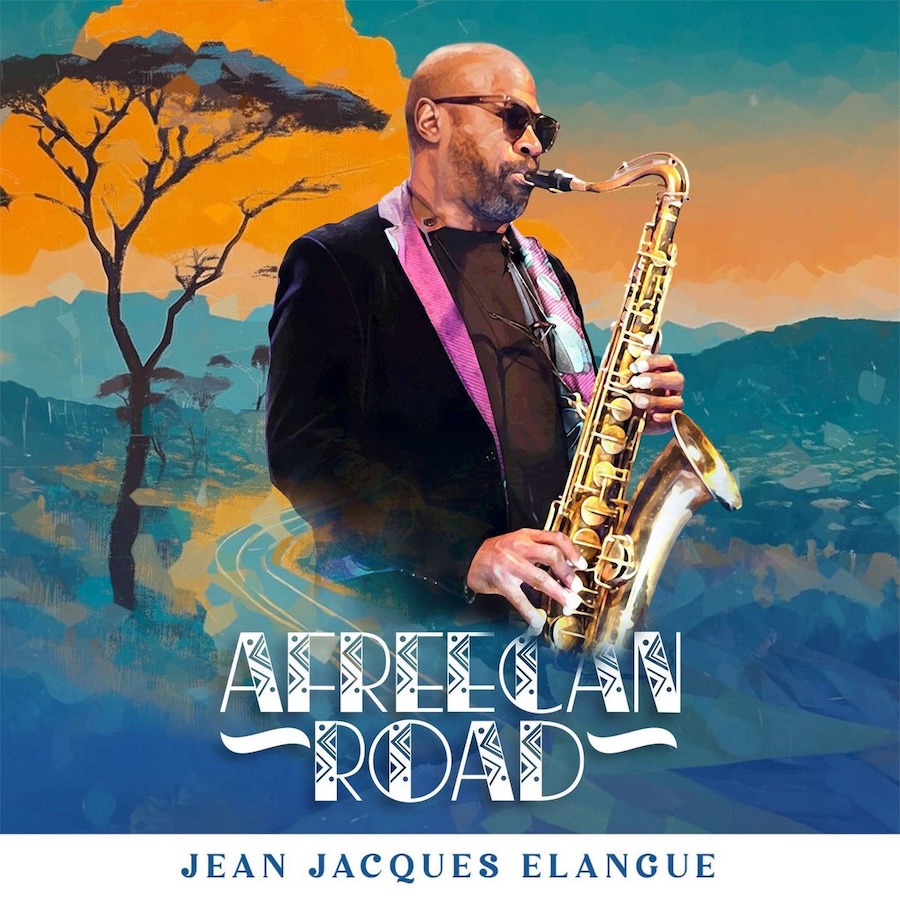
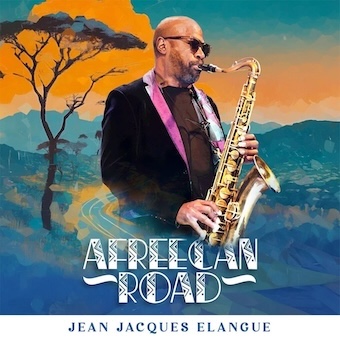
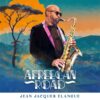
Afreecan Road is Jean-Jacques Elangué’s latest album, following Héritages (1998), Missounga (2005), This Is You, recorded with Tom McClung (2010/2011), Shades of Ouidah, reviewed here (2018), and In Time (2023).
1. An album of artistic fulfilment?
Matin d’Afrique: Jean-Jacques Elangué, welcome! You have just released a new album, Afreecan Road, which seems to represent the culmination of your career. Would you describe it as an album of fulfilment, a point at which your artistic expression has reached its fullest maturity?
Jean-Jacques Elangué: The title of my new album, Afreecan Road, certainly raises questions about my career. In fact, I have simply activated the creative potential that has always been an integral part of my approach.
What I mean is that I place the time I devote to instrumental practice on the same level as my skills as a composer and, indeed, an arranger. This new album brings the sound of my ARTISTIC VOICE to the fore.
As for the word “fulfilment”, I think it is an exaggeration in itself. Reaching my creative goals is difficult, if not impossible, especially since the journey is nothing less than a labyrinth. You write a new piece and think you have finally found the meeting point between popular appeal and intellectual subtlety. Two days later, you feel you have completely missed the mark. All you can do is start over with renewed determination. That’s music for you!
The aim of this new opus has always been to give all my fellow musicians genuine room for expression, in the service of music and nothing but music.
Authenticity, meanwhile, can only emerge when you give yourself the time you need to improve. The more you play, the greater the depth and richness of your sound. I hope to keep moving in that direction until my final breath.
“The more you play, the better you sound!”
2. A journey through albums and influences
Matin d’Afrique: Does each of your albums mark a new stage in your artistic development and expression? What makes this album distinctive, and what lies behind its title, which seems to convey an entire concept?
Jean-Jacques Elangué: When I first embarked on this project, my starting point was to think big, if possible, and surround myself with people I could trust. Over the years, I have had the opportunity to work with exceptional musicians and share some wonderful musical experiences with them. They are my brothers in arms, and they make outstanding contributions to Afreecan Road.
For my part, paying tribute to the continent often described as the “Cradle of Humanity” feels more relevant than ever. Africa is certainly presented as the continent of the future. Yet, given the geopolitical circumstances in which we live, this magnificent continent’s first task must be to break free from its chains rather than remain at the mercy of decisions made by other peoples.
“Africa must liberate itself and forge its own road.”
To return to my albums and take them in chronological order:
1. HÉRITAGES was released in May 2000, at the beginning of the new millennium. I had my back against the wall, having just completed my studies at the Regional Conservatory in Marseille and obtained my state diploma in music teaching in 1997. I therefore decided to record and produce my first album.
It was a fully fledged independent production. I brought together three friends: Willie Walsh on drums, Gerard Murphy on alto saxophone and clarinet, and M. Christian Brasier, aka “Le Roi de France”! The record turned out brilliantly and became my calling card as I made my way around Paris’s jazz clubs.
2. MISSOUNGA, released on Cristal Records and distributed by Abeille Musique, marked a decisive turning point in my Parisian adventures.
I met Philippe Combelle, an outstanding drummer, at the Caveau des Oubliettes in Paris’s 5th arrondissement. He put together a group called Boogaloo Baby and promptly recorded an album of the same name, which proved a tremendous success, receiving radio airplay, coverage in specialist publications and attention from all kinds of cultural programmes.
I managed to persuade the album’s producer to work with me on my next project. As soon as he saw the line-up, he was immediately convinced: Linley Marthe on bass, Felix Sabal-Lecco on drums, Nicolas Genest on trumpet and Mario Canonge on piano.
In the Beti-Ekang language, Missounga refers to the offal of butchered animals. The title track is a bikutsi, one of the major Ekang rhythms I grew up immersed in during my adolescence.
In reality, album after album, I have sought to bring together the codes of jazz theory and all the music that surrounded me when I returned to Cameroon, doing so subtly and without falling into the clichés of so-called “fusion”.
Pairing traditional rhythms with jazz harmonies, and much more besides, has naturally become the foundation of my inspiration throughout my recording career.
There is also a major album I recorded as a duo in 2009 with the great pianist Tom McClung, whom I call “Maestro”. Recorded at Meudon Studio in the Hauts-de-Seine department, THIS IS YOU was released by Blang Music and received extensive coverage in various publications.
In December 2025, SHADES OF OUIDAH was released, featuring Alain Jean-Marie on piano, Manu Marchès on bass and Simon Goubert on drums. The album appeared on Blang Music and was distributed by Absilone.
It pays tribute to Ouidah, the coastal town in Benin burdened by the weight of history, a place that stands as a tragic crossroads on the slave trade routes through which millions of Africans were deported to the Americas.

©Photo Sonia Bela
The common thread running through these albums is my determination to forge what I call my ARTISTIC VOICE. It is through this voice that I can communicate, wherever I am and whatever the circumstances, with musicians, audiences and jazz aficionados, nationally and internationally, without inhibition. After all, in my eyes, jazz has no fixed geographical home. It is simply universal.
3. Afreecan Road: a collective adventure and a tribute
Matin d’Afrique: Afreecan Road features 16 tracks performed by a nonet, a nine-piece ensemble, and is dedicated to one of your mentors, the late double bassist and producer Serge Ngando. Could you tell us more about your band and the spirit behind this album?
Jean-Jacques Elangué: I am joined by eight musicians on this album simply because the band is called Jean-Jacques Elangué N9. This expanded ensemble offers an opportunity to explore the close relationship between composition and improvisation.
With that in mind, I wanted to incorporate a substantial range of colours, images, sensations and musical textures.
The Jean-Jacques Elangué N9 includes a core group of four or five musicians with whom I have shared the stage for many years: Ronald Baker on trumpet and vocals, Abbe Ngayihi on piano, Sébastien Richelieu on bass and Rodolphe Lauretta on alto saxophone.
For the recording, I also called upon a number of exceptionally talented musicians with highly distinctive voices: Adrien Cao, Sega Seck on drums, Hubert Dupont on bass, John Knight on trombone, and Hugo Afettouche on flute and baritone saxophone. Their arrival broadened the ensemble’s palette.
The album was released by the independent label Binaural Production and distributed by Absilone. In the introductory and closing tracks, which serve as interludes, as well as in Beauté and Blue Like Strayhorn, you can clearly hear the voice of the late Serge Ngando.
I first met Serge in the outskirts of Ongola, or Yaoundé, in the early 1990s. He was playing electric bass with remarkable ease. We lost touch for a while, then I found him again in Paris. From that point on, a genuine friendship developed between us.
He later moved to London with his family, but we stayed in contact. Eventually, illness got the better of him, and he passed away just as I was beginning to write the album’s first arrangements.
I remember that the title Afreecan Road came to me when I went to see him in London for the last time. I ultimately decided to dedicate the album to him.
From the very first listen, the Jean-Jacques Elangué N9 draws you into the musical language of an expanded ensemble that builds its discourse around polyphonic and even polyrhythmic structures, never losing sight of the dance.
My attachment to trance is a recurring leitmotif throughout AFREECAN ROAD.
4. Training, influences and the discovery of jazz
Matin d’Afrique: Your biography describes you as a self-taught musician, yet you studied at the conservatory, attended the renowned Vogt College in Yaoundé and learned your trade in the cabarets and clubs of the Cameroonian capital. Could you tell us about your musical training, your influences and your mentors? How did you discover jazz?
Jean-Jacques Elangué: I should make it clear that I did not stumble into music by chance.
My father was the first to introduce me to concerts, auditions and classical music recitals after we arrived in Cameroon, well before I reached adolescence.
My mother’s Protestant faith naturally immersed me in music too, through choirs performing all kinds of liturgical repertoire.
The real turning point came at François-Xavier Vogt College, where I picked up my first clarinet! (Laughs.)
Throughout my teenage years, I was also hooked on a weekly radio programme hosted by Dieudonné Ambassa, better known as “Ambazo” and nicknamed “the Pope of Jazz”. The programme broadcast jazz, of course!
The day I heard Ella Fitzgerald’s version of Mister Paganini, recorded live at the Olympia in March 1962, I knew immediately that I would become a professional musician.
Later, as I made my way through the cabarets and clubs of Yaoundé, I met one of the pioneers, Bale Boma, with whom I learned the ropes through hands-on experience.
I was subsequently hired by the very first house band at the Hilton Hotel. At the same time, I discovered that instruments such as the saxophone could take the place of the human voice.
And the list of my musical discoveries is a long one: Louis Armstrong, Fats Navarro, Lester Young, Blue Mitchell, Erroll Garner, Coleman Hawkins (“Hawk”), Charlie Parker (“Bird”), John Coltrane, Miles Davis, Sidney Bechet and many others!
When I arrived at the Regional Conservatory in Marseille, my listening horizons expanded even further, and I discovered that jazz meant FREEDOM.
From that point on, I embarked on a relentless journey, one that had necessarily begun with the self-taught stage of my musical education.
5. What is jazz today? Is it still Black music?
Matin d’Afrique: What does jazz mean to you, and how do you view its evolution today? Is it still a Black music?
Jean-Jacques Elangué: I do not believe there is any definitive definition of jazz today.
Although it remains an art form born from the encounter between African American music in the southern United States and Western culture, developing in the shadows at the beginning of the twentieth century, jazz means something very personal to me.
Jazz is a patchwork of the emotions I feel when I’m on stage: FREEDOM!
6. Building a legacy
Matin d’Afrique: Would it be fair to say that you are now following in the footsteps of those who are beginning to build a legacy of their own?
Jean-Jacques Elangué: Life is a labyrinth strewn with obstacles, and it remains a mystery to every one of us. We enter this world alone, and we leave it alone.
In my case, I cannot say what will remain after I have left this earth, or what tomorrow will bring.
My mission is to make music, good music, preferably, and to convey a message of love and sharing. I try to do so with humility, never forgetting to respect my fellow human beings. That is a timeless value.
7. Are you a committed musician?
Matin d’Afrique: Would you describe yourself as a committed musician?
Jean-Jacques Elangué: I would never presume to make such a claim.
Interview conducted by Gabriel Mbarga for « Matin d’Afrique » and kindly made available to Couleurs Jazz.
Contact : https://jeanjacqueselangue.com/
©Photo Header : Sam Ewane Nja Kwa



RECENT COMMENTS