
The New Springs of Ramon Lopez
Drummer Ramon Lopez releases a solo album, 40 Springs in Paris, celebrating 40 years of jazz in France. His vibrant and delicate drumming shimmers brightly.
Interview by Franck Médioni.
Music entered my life as a sudden revelation. I had no musical tradition surrounding me, nor a sonic legacy to follow. I discovered music in the 1970s through the drums, and from there, jazz came to me naturally. At a college party, I spotted a drum kit on a small stage. The mere sight of the instrument left a profound mark on me. The very next day, I discreetly slipped into that small room and played every drum and cymbal, carefully listening to the echoes beyond the last vibration. I quickly found other young musicians to play rock and cover songs we enjoyed back then, until the day I discovered the first albums of Weather Report, the Blue Note records featuring Wayne Shorter, and the Impulse albums of Coltrane and Miles Davis. The impact was so powerful that it completely transformed my life.
Drums
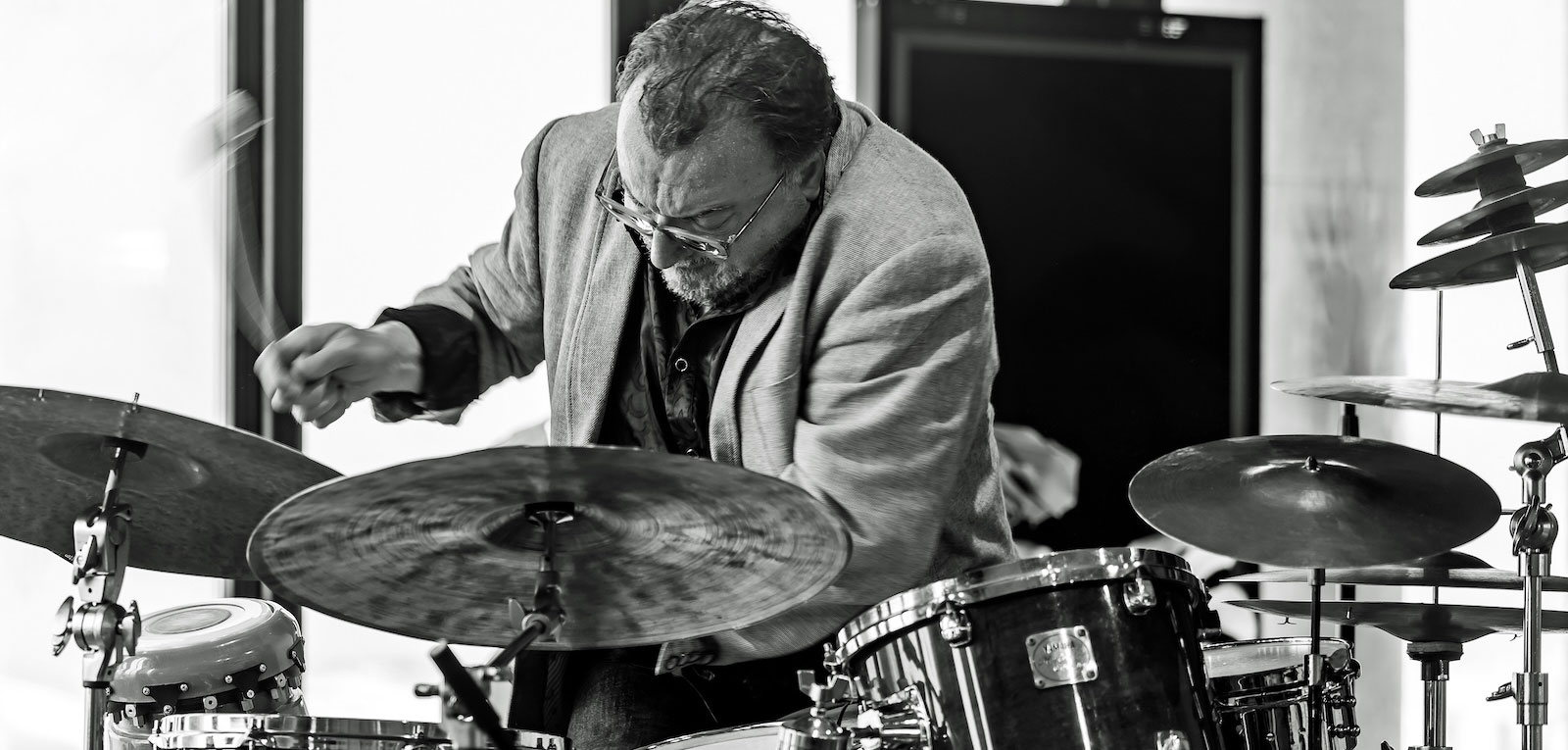
The drum set is a fascinating and complex instrument. It’s a universe in itself! It connects the pulse of the human heart to the breath of the world. When you sit behind a drum set, you’re not just a musician; you become an architect of rhythm, a sculptor of time. Each element forms an infinite sound vocabulary, a language that one learns to listen to before speaking. Mastering it is an exciting challenge. However, one must never forget the essence: the music. Focusing too much on technique can sometimes make one lose sight of the musical aspect and the emotions it can convey. Behind every strike, there should be intention, emotion. That’s what moves me, and what I humbly try to transmit.
The role of the drummer in an orchestra, especially in a jazz ensemble, goes beyond merely keeping the tempo. It’s much more than that! The drummer breathes with the band, shaping the air around the music. It’s like a pilot in the cockpit, surrounded by a multitude of controls, lights, and levers. Each gesture can alter the climate of the performance, the energy altitude, the piece’s direction. Sometimes, he stabilizes; other times, he makes the whole ensemble dive or take off. The drummer is the one who makes the music soar!
I have often been labeled. Colorist drummer, percussionist, or something else. Honestly, it makes me smile. I understand that people seek to put words to it, but at heart, I’m simply a drummer. That’s the instrument I’ve always played, and through it, I’ve built my relationship with music. If I explore other sounds and cultures, it’s because the drum has always opened me to that: to curiosity, color, and diversity. But it does not change my essence. Contemporary drummers also listen, dialogue, and paint with sounds. They keep the rhythmic heart, of course, but they also expand the expressive palette of the instrument.
Papa Jo Jones, Max Roach, Elvin Jones…
The first echoes of my drumming come from legends: Papa Jo Jones, Max Roach, Tony Williams, Elvin Jones. These masters shaped the lines of my language from the very beginning. Over time, newer generations of drummers broadened my vision: Jack DeJohnette, Paul Motian, as well as European figures like Daniel Humair and Paul Lovens. Beyond jazz, my curiosity has deeply immersed me in other sound worlds. I have practiced and taught Indian music at the C.N.S.M., explored flamenco rhythms, and integrated traditional percussion into my drum set.
Yet, beyond all these voices etched in time, it’s the musicians I play with today who resonate the loudest within me. Each shared stage is a living encounter, an exchange where one learns as much from silence as from sound. Max Roach was one of my first discoveries, and I have an unconditional love for him. In moments of doubt, I turn to him. His music, like a breath, revives me, inspires me again, and reminds me why I continue.
In 1980, at the Madrid Jazz Festival, Max Roach performed with M’Boom followed by the Art Ensemble of Chicago. However, neither his musicians nor his equipment arrived due to the snowstorm. Alone on stage, he improvised a magnificent solo. It was there that I first heard that unique sound live! I then regularly saw him perform solo in Paris in the 80s and early 90s. He planted in me the idea that one day I could play solo drums. My third solo album, 40 Springs in Paris, is a testament to that.
One day at the Havana Festival in 1998, where I played with Chano Dominguez, I had a decisive encounter with him. The lineup included Jack DeJohnette and Max Roach performing solo. I saw him backstage observing DeJohnette intently. Unable to resist, I approached him and expressed how much his work meant to me and to music as a whole. It felt like talking to a grandfather. He was very touched. Then he went out to perform his solo, welcomed by an extraordinary ovation. During his concert, I caught a glimpse of him looking at me backstage out of the corner of his eye. It was a moment of pure emotion.
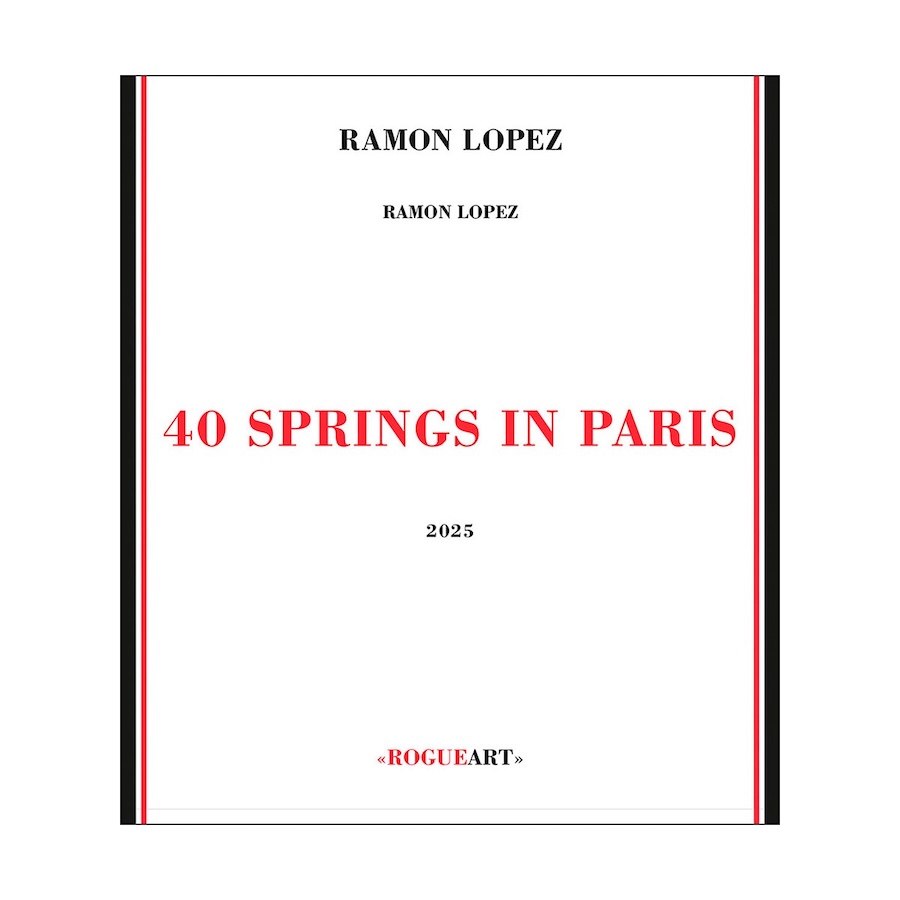
Disque 40 Springs in Paris de Ramon Lopez was released by label Rogueart.
©Photo Header Ivan Mahieu










RECENT COMMENTS