
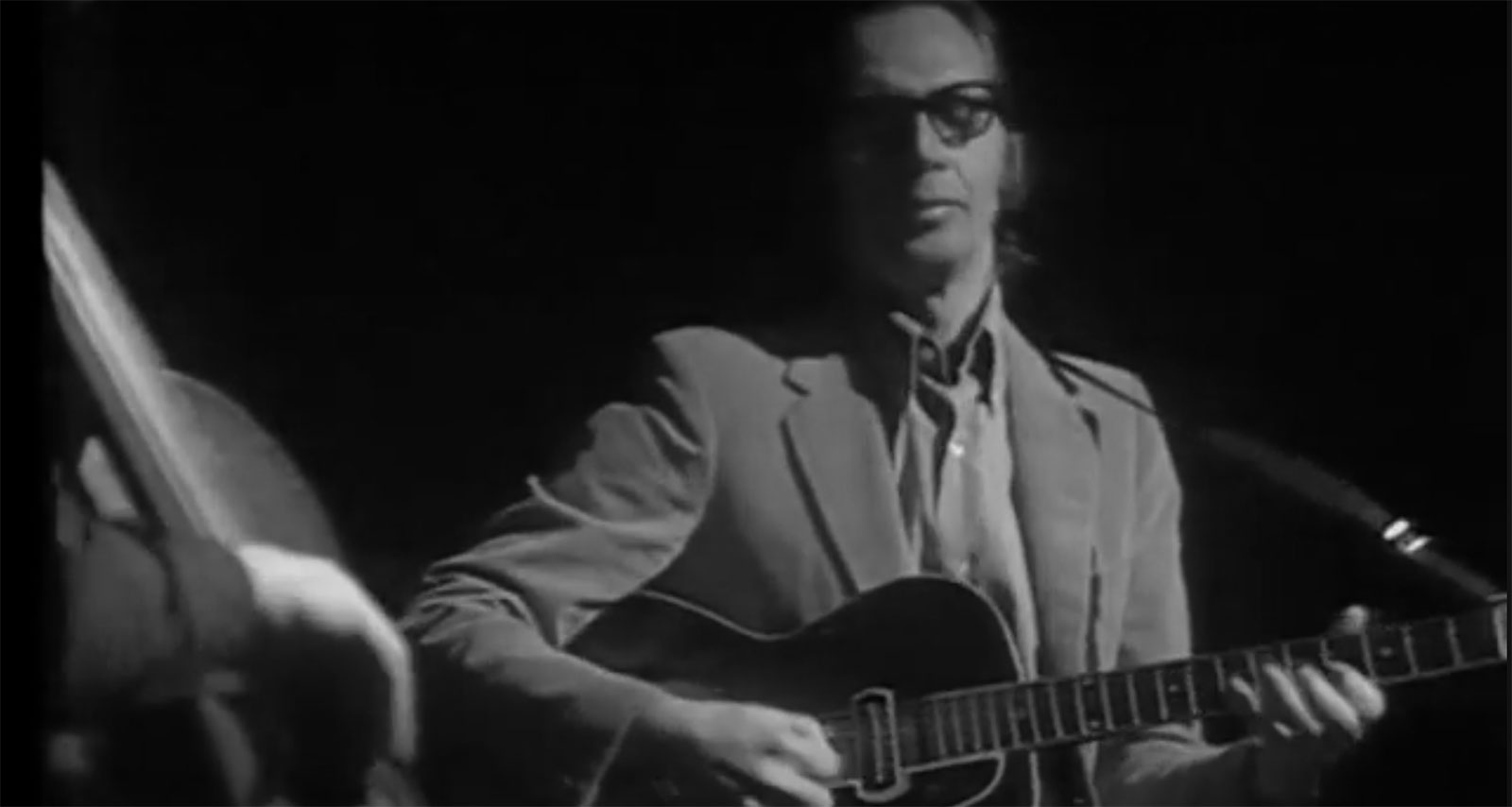
The arrival in Paris in 1951 of American guitarist Jimmy Gourley (1926–2008) brought a breath of fresh air to France’s jazz scene, then torn by an internecine struggle between the “sour grapes” faction of bebop adherents and the “mouldy figs” camp defending uncompromising classicism.
His achievement was to transcend that sterile debate by revealing to French musicians a third approach, summed up by pianist Henri Renaud: “He made us discover what four years of war had not allowed us to imagine: the major place and role of Lester Young and Charlie Christian in the creation of modern jazz.”
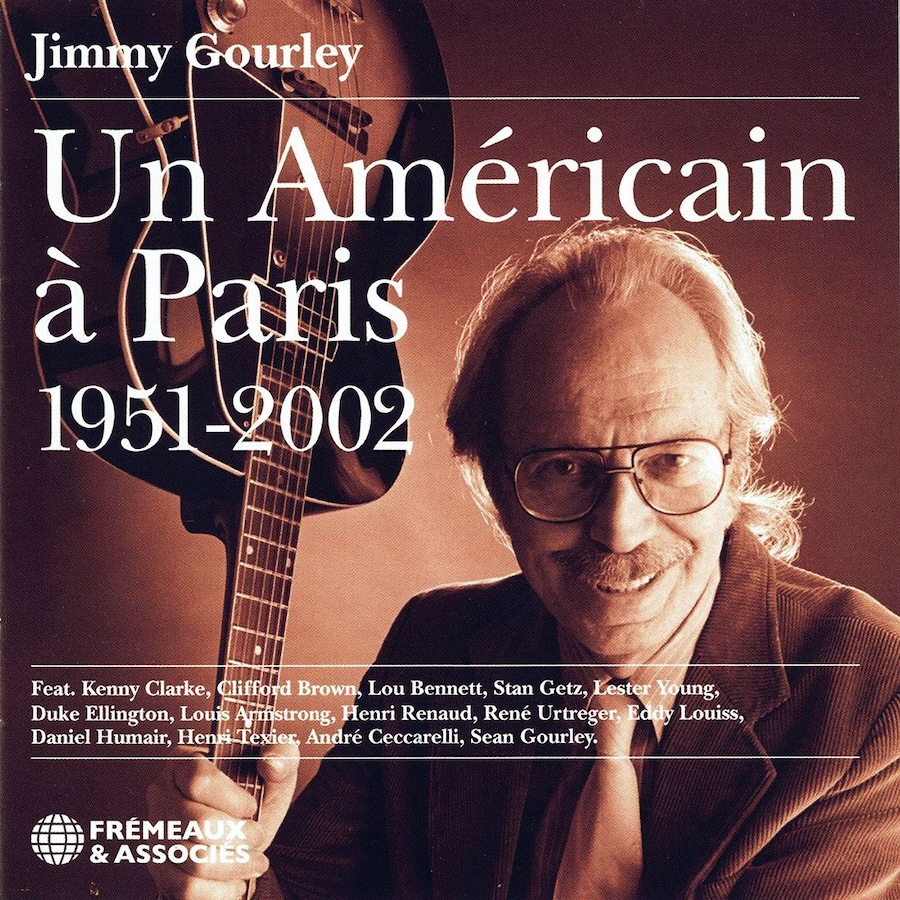
Jimmy Gourley’s importance is underscored by a timely selection of his recorded work presented across the three CDs of the box set Un Américain à Paris, 1951–2002, whose artistic direction was entrusted to Jean‑Paul Ricard and Jean Buzelin.
He is heard with the cream of the era’s French jazz scene (Pierre Michelot, Benny Vasseur, Jean‑Louis Chautemps, Jean‑Louis Viale and the ever‑present Henri Renaud) accompanying eminent visiting Americans such as Clifford Brown, Gigi Gryce, Roy Haynes and Bob Brookmeyer during the Saturne and Vogue sessions (CD 1). This level of excellence is matched on his Argo sides cut in the mid‑1950s alongside Sandy Mosse and Chubby Jackson during a stay in the United States (CD 2).
Back in France, Gourley took part in Lester Young’s final session in 1959—what Pascal Anquetil called “a desolating disaster or sublime swan song”—and recorded the celebrated album Amen (1960) with Kenny Clarke, Jean‑Marie Ingrand and Lou Bennett, whose success sent him on tour across Europe.
In the following decades two albums under his own name appeared: Jimmy and the Paris Heavyweights (Futura, 1972), only issued in 1984 on the Elabeth label, and Graffitti (Promophone, 1976). Later records with René Urtreger, Eddy Louiss (1972), Henri Texier, Daniel Humair (1981), Marc Johnson, Philippe Combelle (1983), André Villéger (1995) and his son Sean (2002) further display him to advantage (CD 3).
Taken together, these sides reveal the elegance of his guitar playing, rooted in the Charlie Christian/Jimmy Raney tradition, his sense of the right note, and a consistent refusal to yield to easy solutions. These qualities earned him a prominent place in Norman Mongan’s The History of the Guitar in Jazz (Oak Publications, 1983).
These recordings serve as the sonic complement to the biography written by his wife, Rolande Hugard‑Gourley.
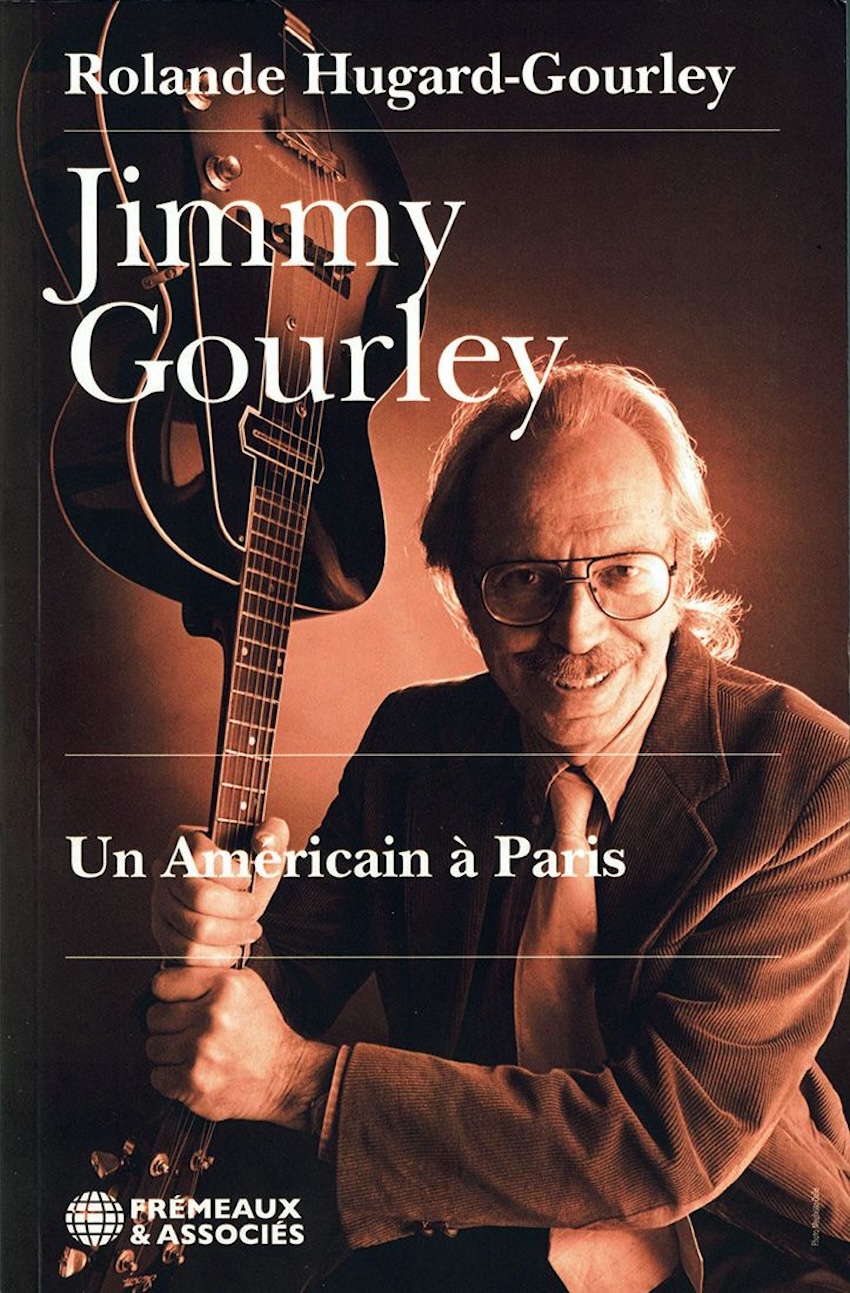
It offers a chronological, meticulous account of the pivotal episodes in his career, illustrated with photographs, drawings, press clippings (Jazz Hot and Jazz Magazine), testimonies from colleagues and a correspondence of considerable interest. Among the figures who appear are Henri Renaud, who opened Parisian club doors for him; Lou Levy, a longtime confidant and author of witty letters; Stan Getz, Zoot Sims, Dexter Gordon, Christian Escoudé, Félix Lemerle — and even Line Renaud and Nicoletta.
These two releases from Frémeaux & Associés constitute a welcome tribute to the talent of a great guitarist.
Jimmy Gourley, Un Américain à Paris, 1951–2002 Three‑CD box set, Frémeaux & Associés FA5901
Un Américain à Paris by Rolande Hugard‑Gourley Éditions Frémeaux & Associés, 2025, 235 pages
*The complete discography of Jimmy Gourley compiled by Christian Oestreicher is available at: https://guitardiscography.com/jimmy-gourley-bebop-guitarist/.


















RECENT COMMENTS