
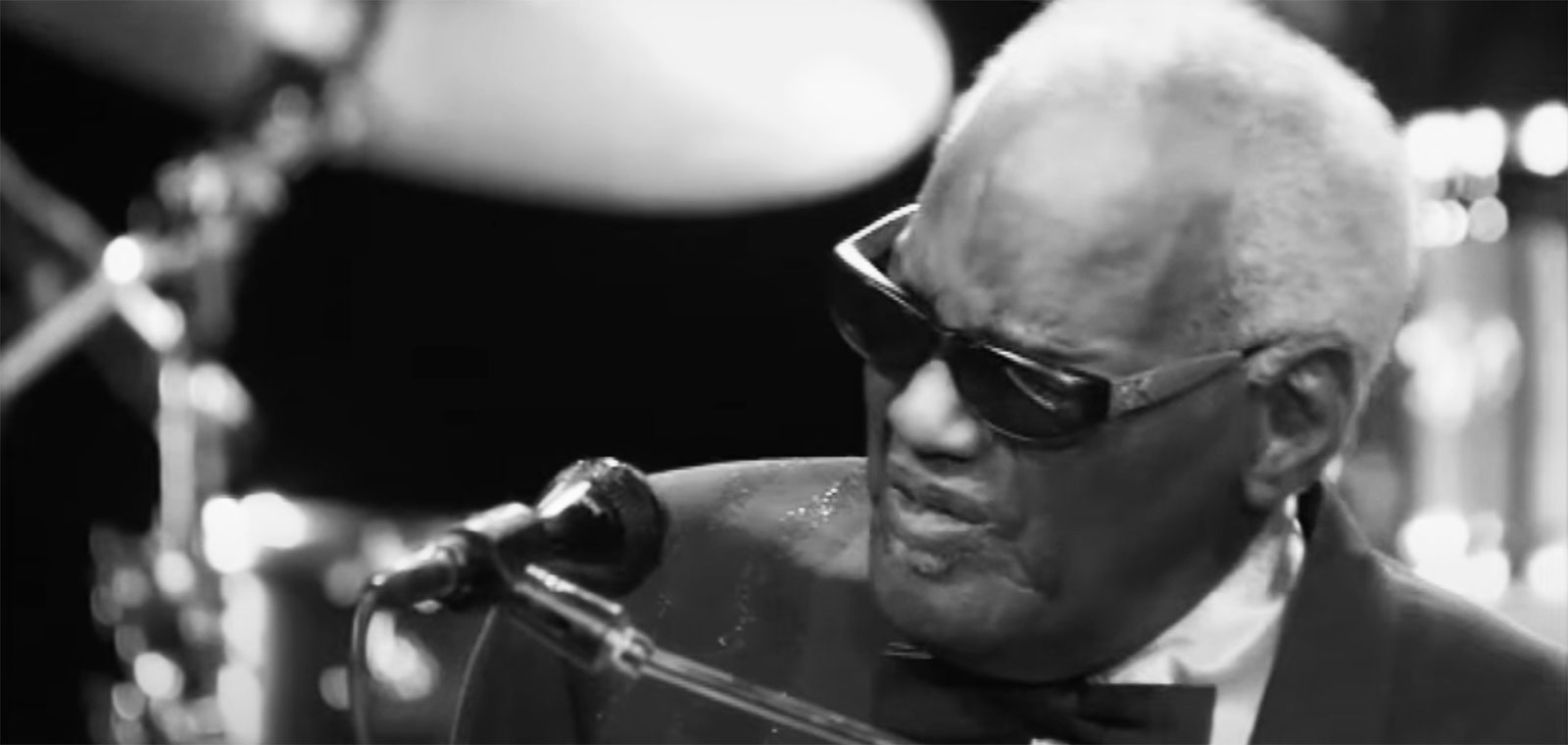
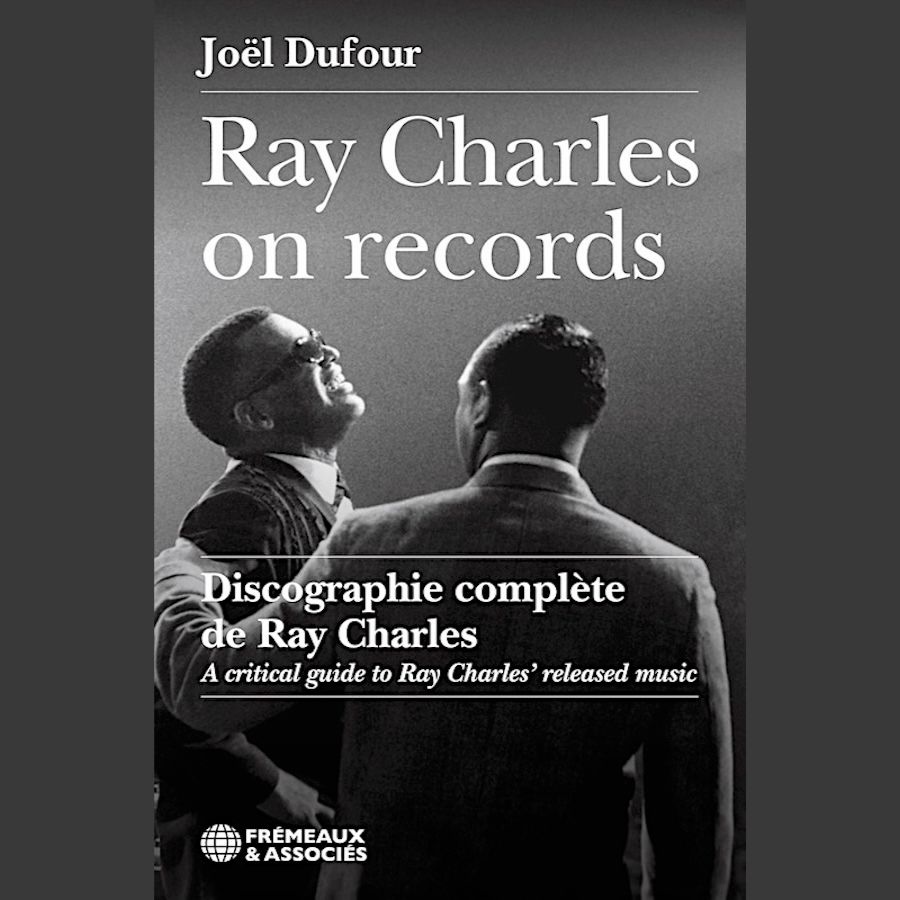
Joël Dufour’s new book is, in his own words—outlined in a preface warning to the reader—a personal tribute by an American music enthusiast who, at the age of fifteen, fell under the captivating spell of a Ray Charles 45 RPM record on Atlantic featuring “What’d I Say,” “Blackjack,” and “Heartbreaker.”
Over the years, Dufour has become a leading expert on Ray Charles, sharing his passion and knowledge through various channels: writings—including over 50 years of contributions to the French magazine Soul Bag—collaborations as a research assistant on releases of the “Genius” by American record labels (Pablo, Rhino, Concord), and ultimately as the creator of CD box sets for French publisher Frémeaux & Associés. These sets, most of which are previously unreleased, compile recordings from Ray Charles’ golden era—the early 1960s—a period considered a defining chapter in his musical legacy.
The book begins with a chapter dedicated to the key milestones of Ray Charles’s biography. It then offers a remarkable overview of his entire catalog, whether studio or live recordings. Dufour traces his early influences from Nat King Cole and Charles Brown, leading into the prestigious Atlantic years (1952-1959), during which the “Genius” successfully forged a rich synthesis of blues and gospel. This period saw him refine and expand his sound with his vocal group, the Raelets.
These formative years laid the groundwork for Charles’s repertoire, which he expanded by drawing heavily from his contemporaries—an approach thoroughly explained in the detailed liner notes of the box set “Ray Charles The Grand Master,” curated by Dufour for Frémeaux & Associés.
The narrative then shifts to Ray Charles’s time with ABC-Paramount (1959-1962), marked by a growing incorporation of country standards that appealed to white audiences and sparked controversy within his community. Despite this, his artistic and commercial success continued to soar, and he also recorded high-quality jazz albums, playing alto inspired by Charlie Parker.
The chapter concludes with a comprehensive overview of the recordings Ray Charles made from 1962 to 2003 for his labels Tangerine, Crossover, and the Columbia and Warner labels, highlighting his enduring influence and versatility.
Subsequently, Dufour explores Charles’s collaborations on records and videos with artists he admired. We see him working alongside Percy Mayfield in a 1962 session for Tangerine, collaborating with Quincy Jones, Aretha Franklin, King Curtis, and ultimately contributing to the 2004 Concord album “Genius Loves Company,” where he performs duets with B.B. King, Gladys Knight, Norah Jones, and Willie Nelson.
The book is completed with a meticulous, 230-page discography and videography. Based on decades of research from institutions such as the Library of Congress and numerous interviews, this section is an invaluable resource filled with detailed data. Additionally, comprehensive indexes of producers, arrangers, musicians, vocalists, and track titles further enhance its usefulness.
Impeccably organized and carefully written, this bilingual French-English volume by Joël Dufour offers an erudite analysis of Ray Charles’s prolific career. It is a must-have for knowledgeable enthusiasts seeking firsthand information about the “Genius,” as well as for newcomers eager to discover his extraordinary music in the most engaging way possible.
Ray Charles on Records – Complete Discography of Ray Charles by Joël Dufour.
Frémeaux & Associés Editions (2025), 516 pages.
©Photo Header All Rights reserved
NB: The book is written in French.
















RECENT COMMENTS